Neverending fiascos become an art form in 5-Star Theatricals’ uproarious production of The Play That Goes Wrong at the Bank of America Performing Arts Center’s cozier Scherr Forum space in Thousand Oaks. For over two hours, audience members, including those who have previously seen the play, can expect the unexpected with a collection of actors who add their own personal touches to the foolery with characterizations that are familiar but also unique.
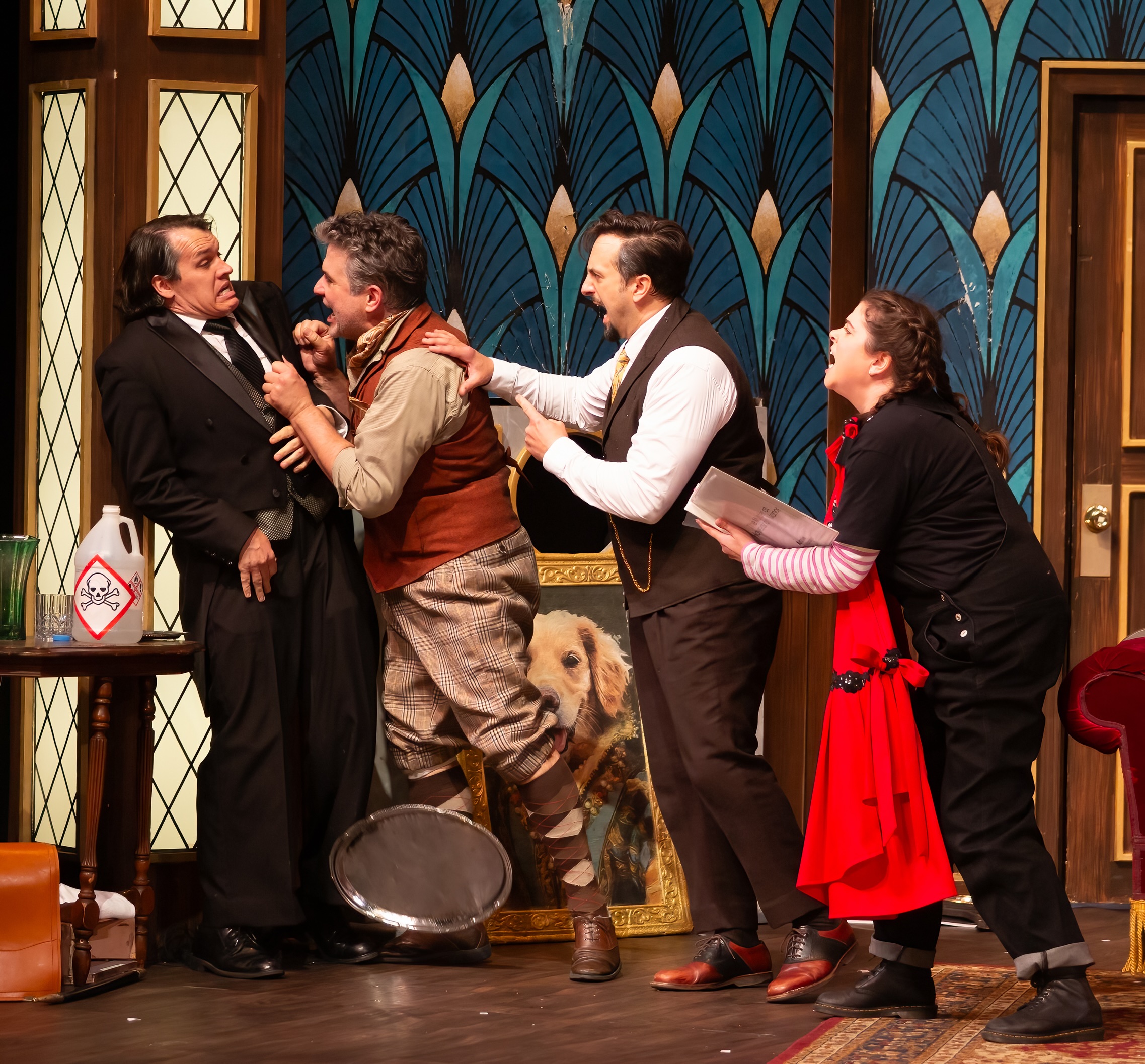
Directed with sharp comic discipline by Larry Raben, the spectacle thrives on the seamless presentation of catastrophe as a hapless troupe attempts to stage a traditional British murder mystery while everything around them collapses — often literally. The result is a carefully engineered outing of theatrical bedlam.
Written by Henry Lewis, Jonathan Sayer, and Henry Shields of London’s Mischief Theatre company, The Play That Goes Wrong has evolved from a cult-followed curiosity into a global hit. It has introduced audiences to the shoestring-budgeted Cornley Polytechnic Drama Society, an amateur cadre set on embarking on a 1920s-era whodunit despite their limited resources and even more limited competence.
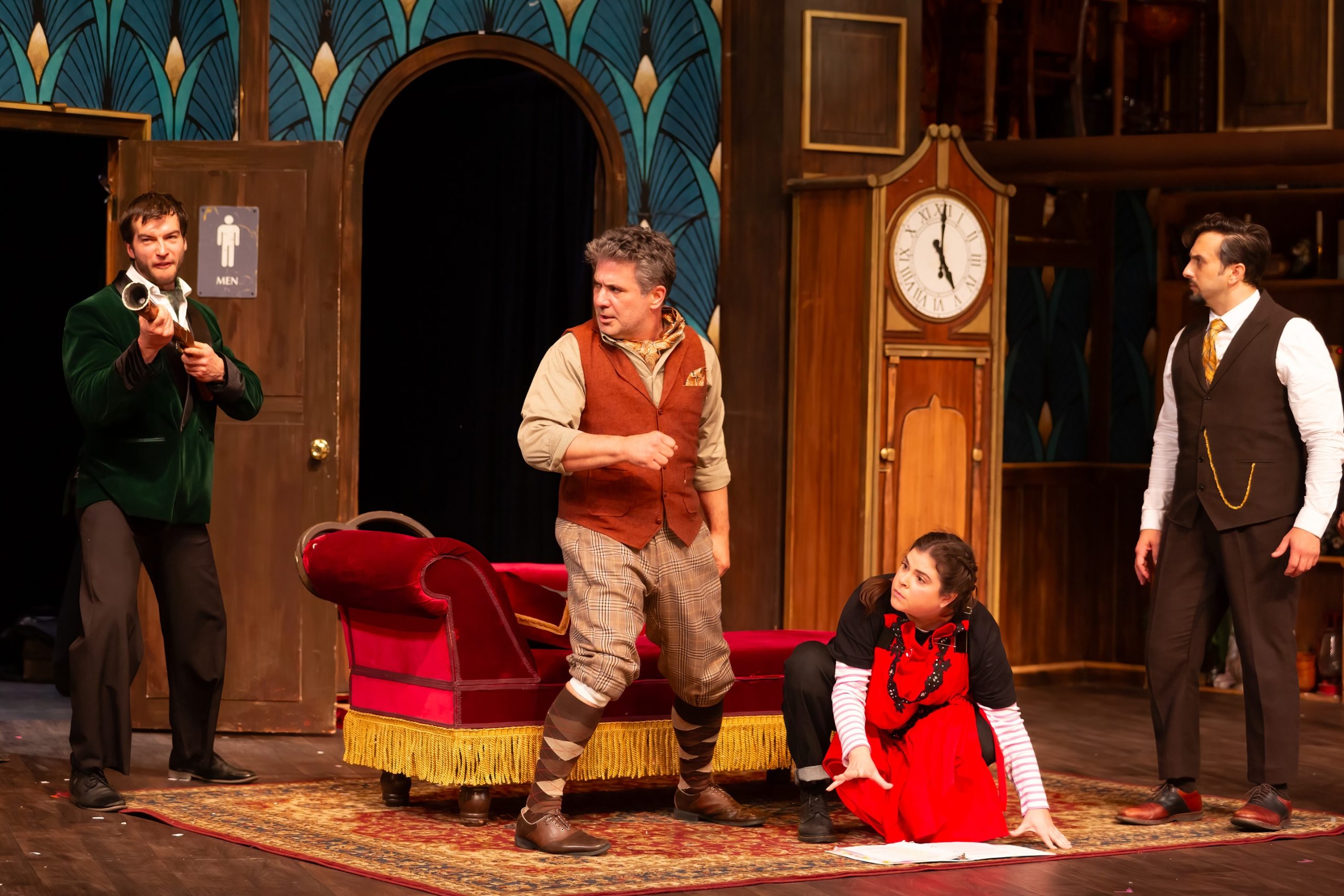
Broadway and now Off-Broadway have reaped the risibility of the show since 2017. In Los Angeles, the play gained renewed attention when the national tour visited the Ahmanson Theatre in summer 2019 and again with the acclaimed La Mirada Theatre production in early 2025. Those larger venues showcased the play’s mechanical ingenuity, but 5-Star’s staging reveals how effectively the comedy resonates in a 394-seater where every misallocated prop, mistimed entrance, and falling wall unfolds in plain view.
The premise is deceptively simple. The Cornley players have gathered to present The Murder at Haversham Manor, a drawing-room mystery filled with suspicious relatives and shadowy motives. Unfortunately, the play is plagued by myriad strokes of bad luck before the first scene finishes. A door refuses to open, a mantlepiece refuses to stay upright, and the actors — determined to dignifiedly finish the play at any cost — battle through increasingly absurd and cackle-inducing complications.
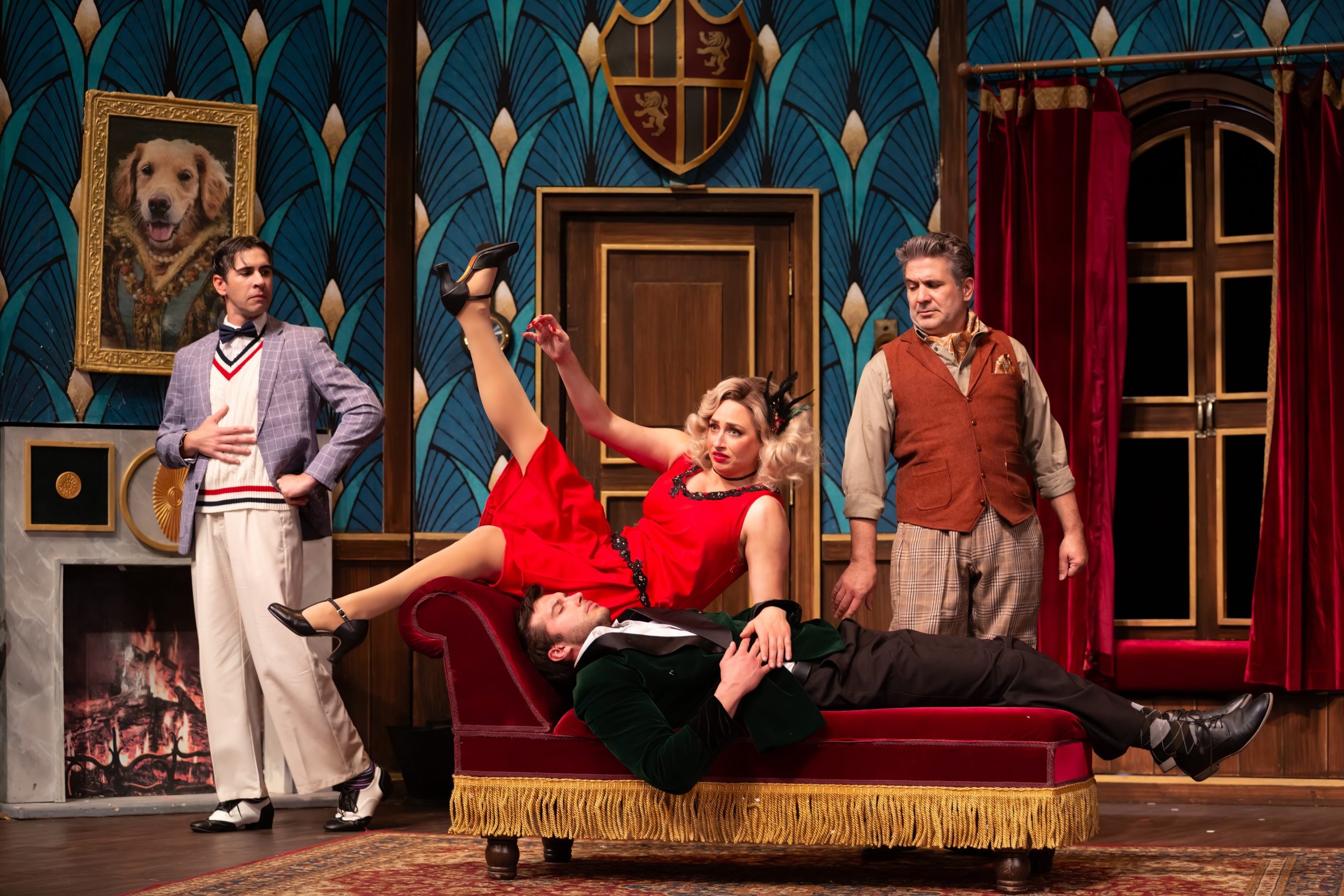
Raben’s direction understands chaos of this scale in tandem with the controlled comic rhythm it must subsist on. The set pieces and contraptions, moreover, function as silent conspirators in the proceedings, turning the stage into an obstacle course for the pliable actors.
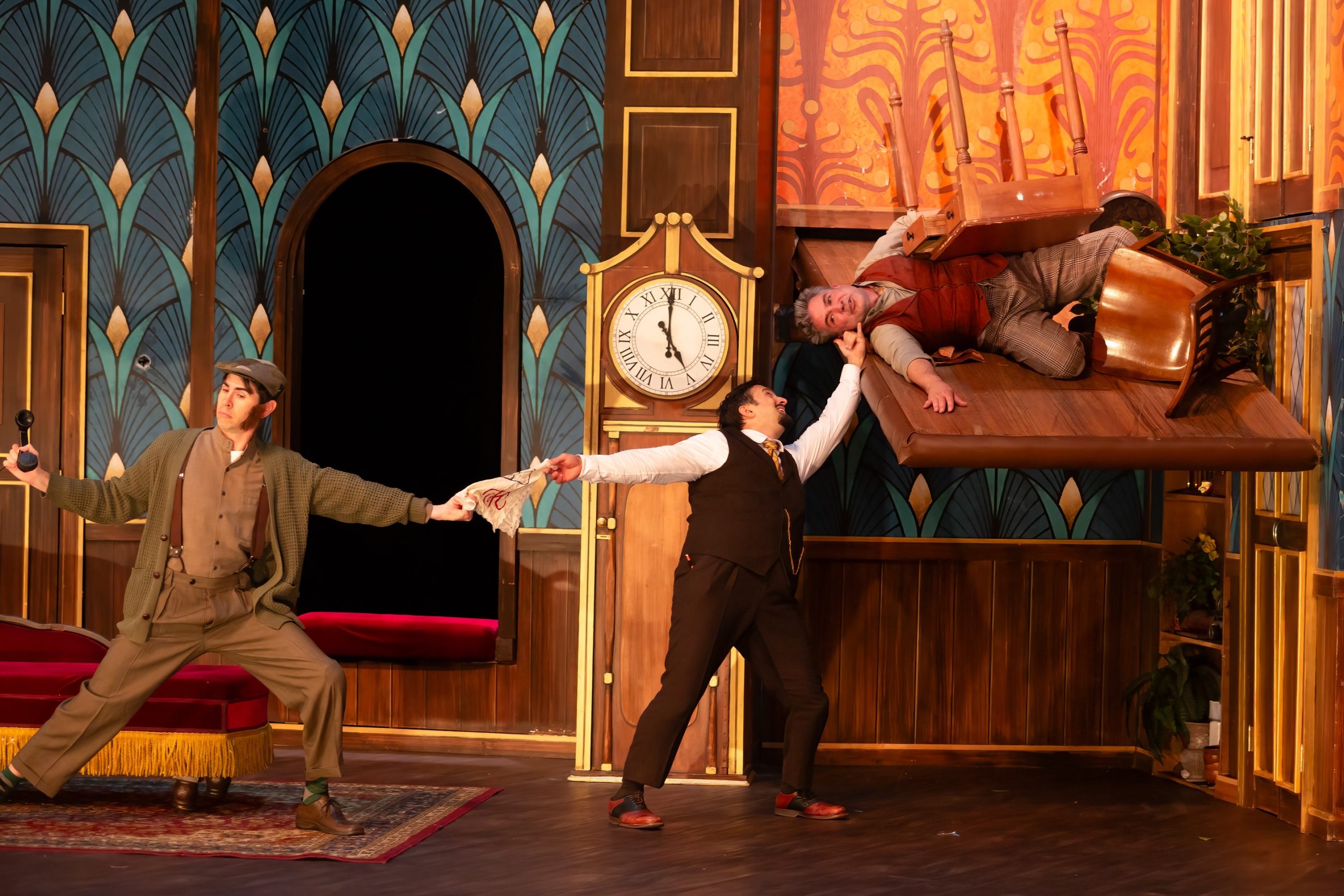
The technical elements support the illusion of collapse. Cody Rutledge’s all-in-one set, which is integral in conveying the stately living-room misadventures and is ever-resilient through breaks and botches, anchors the comedy just as much as any actor. Brandon Baruch’s lighting design heightens the drama while accommodating the deliberately malfunctioning environment, and Jonathan A. Burke’s sound design punctuates the evening with well-timed cues, “Hungry Like the Wolf” included, that underline the production’s spiraling disorder. Props designed by Alex Choate and costume design by Gale Garon and Chris Steele contribute to the visual storytelling, reinforcing the hilarious dichotomy between seemingly impressive sights and an exceedingly imperfect execution.
The ensemble cast commits fully to the play’s slapstick comedy. Justin Michael Wilcox introduces and partakes in the narrative as Chris/Inspector Carter, the all-too-honest director of The Murder at Haversham Manor whose growing exasperation as the on-stage authority figure becomes one of the show’s most reliable comic engines.
Lyndsi LaRose, who has had recent experience with The Groundlings Sunday Company, garners plenty of laughs as Sandra/Florence, the company’s leading lady, leaning into the melodramatic instincts of a performer who goes above and beyond with her “episodes” as setbacks ceaselessly engulf her persona. Gabi Manoukian contributes a delightful turn as Annie, the stage manager who is reluctantly, and without preparation, pulled into the performance. Manoukian captures the character’s mounting panic, and self-aggrandizing poutiness, while preserving the passionate sincerity that makes the role so amusing.
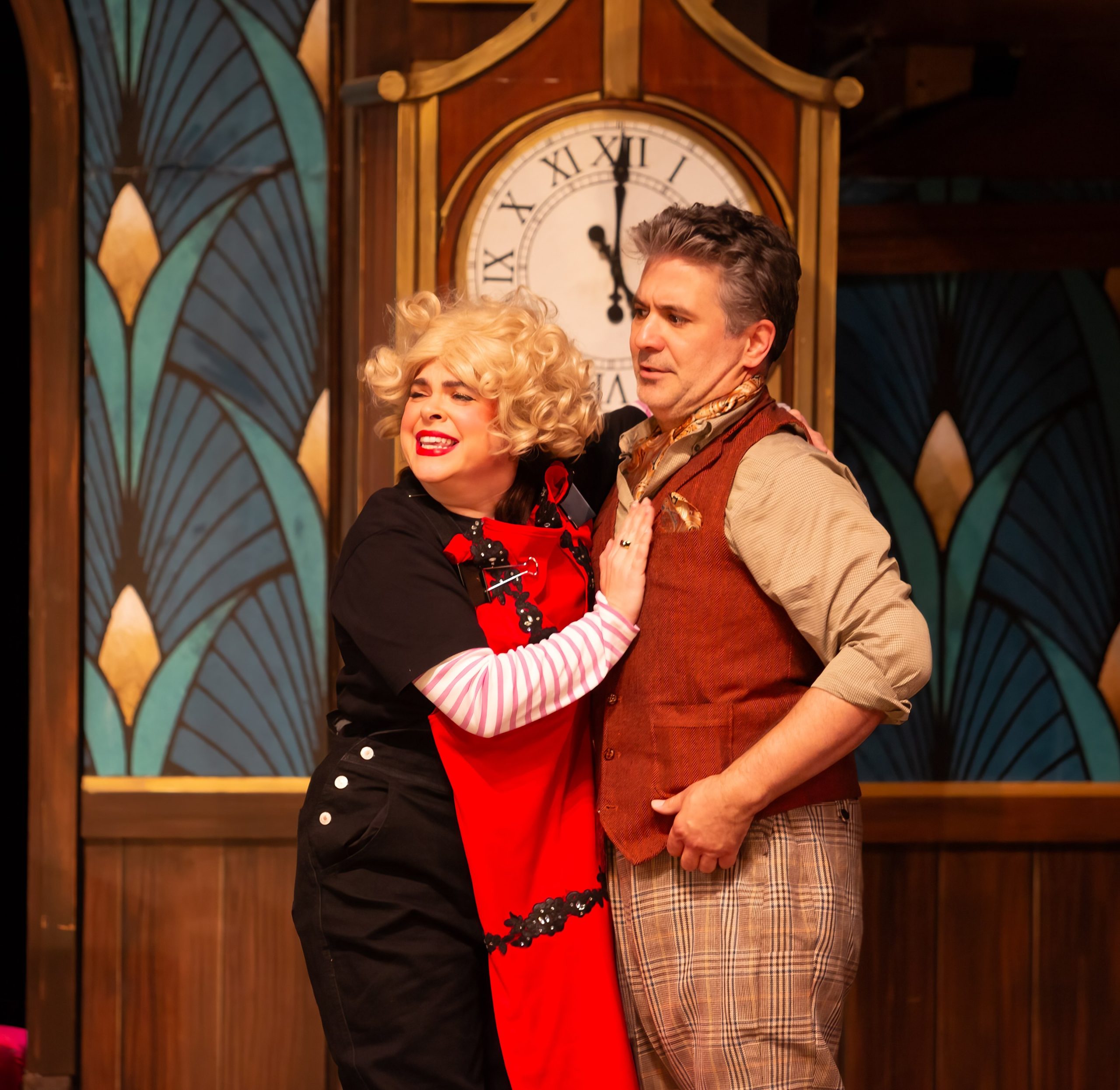
Mark Gagliardi’s Robert/Thomas contributes another layer of gut-busting invention, particularly as his character grapples with the increasingly unreliable stage mechanics — taking phone calls at the most inopportune times and unendingly running up (and inexorably sliding down) the wayward platform representing the second floor.
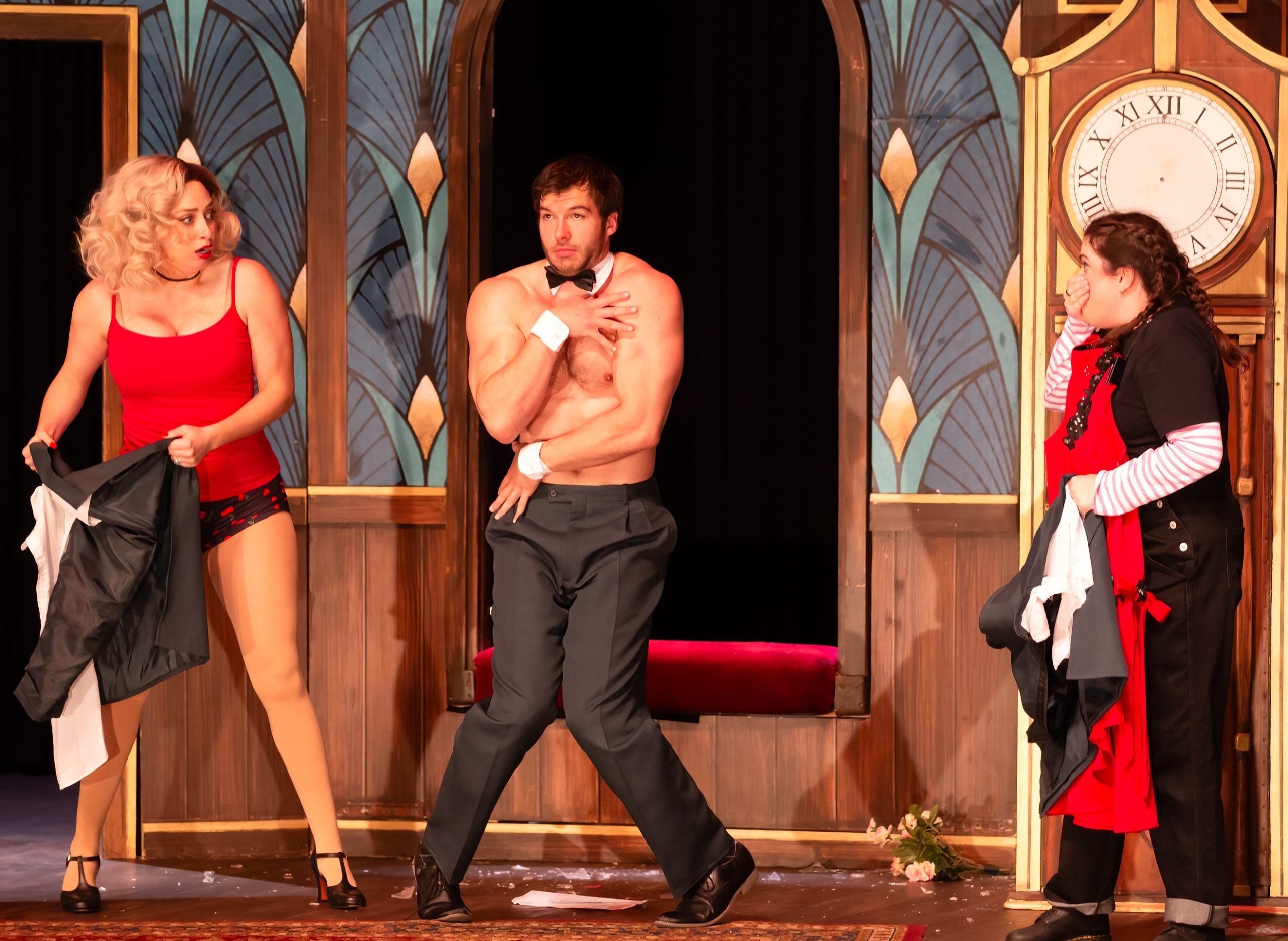
Adam Hagenbuch brings an earnest enthusiasm to Jonathan/Charles (i.e., “Not so fast, Inspector!”), the Cornley performer tasked with navigating the riddles of death before leaving quite the impression with a never-before-seen interpretation of when his Charles Haversham explains who tried to murder him. Let’s just say that many answers are strongly posited, if not posed, with a flexing gusto that would make Mr. Universe blush.
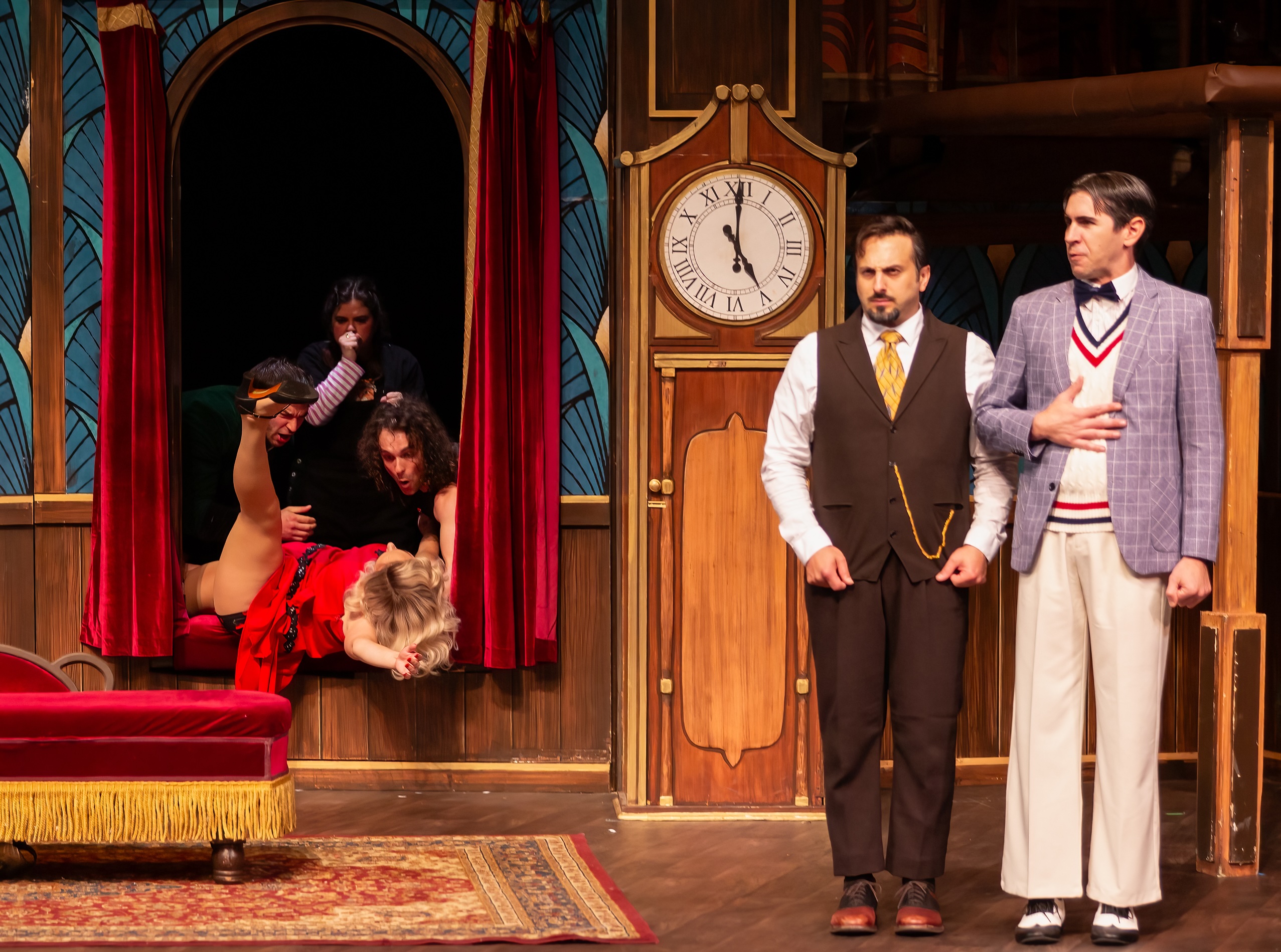
Travis Joe Dixon makes for a likeable Dennis/Perkins, the butler who helplessly acquiesces to the demands of the plot and scenery, pronouncing words to the best of his ability and getting caught in a hysterically scenic loop from hell. Timothy Willard charmingly depicts the oblivious tech in Trevor, a Duran Duran aficionado, who specifically shines in Act II when his character gets ensnared in an entanglement he is vehemently disbelieving of.
John Shartzer proves the overall standout as Max/Cecil, the exceptionally anomalous Cornley actor who approaches every scene with theatrical intensity, grandiosely crossing his arms and making the most self-assured expressions in a bid for the audience’s adoration; suffice it to say, a unanimous compliance is earned with every smirk and parry. Shartzer’s flair for physical comedy is immediately evident, and audiences who saw him as the vivaciously awkward Mr. Green in the national tour of Clue will recognize the same fearless commitment to tireless movement and scene-stealing timing. Not only does his Cecil barrel through the play with an infectious gleefulness, but his Arthur (the Haversham groundskeeper) wins the crowd over just as much with his singular sideburn.
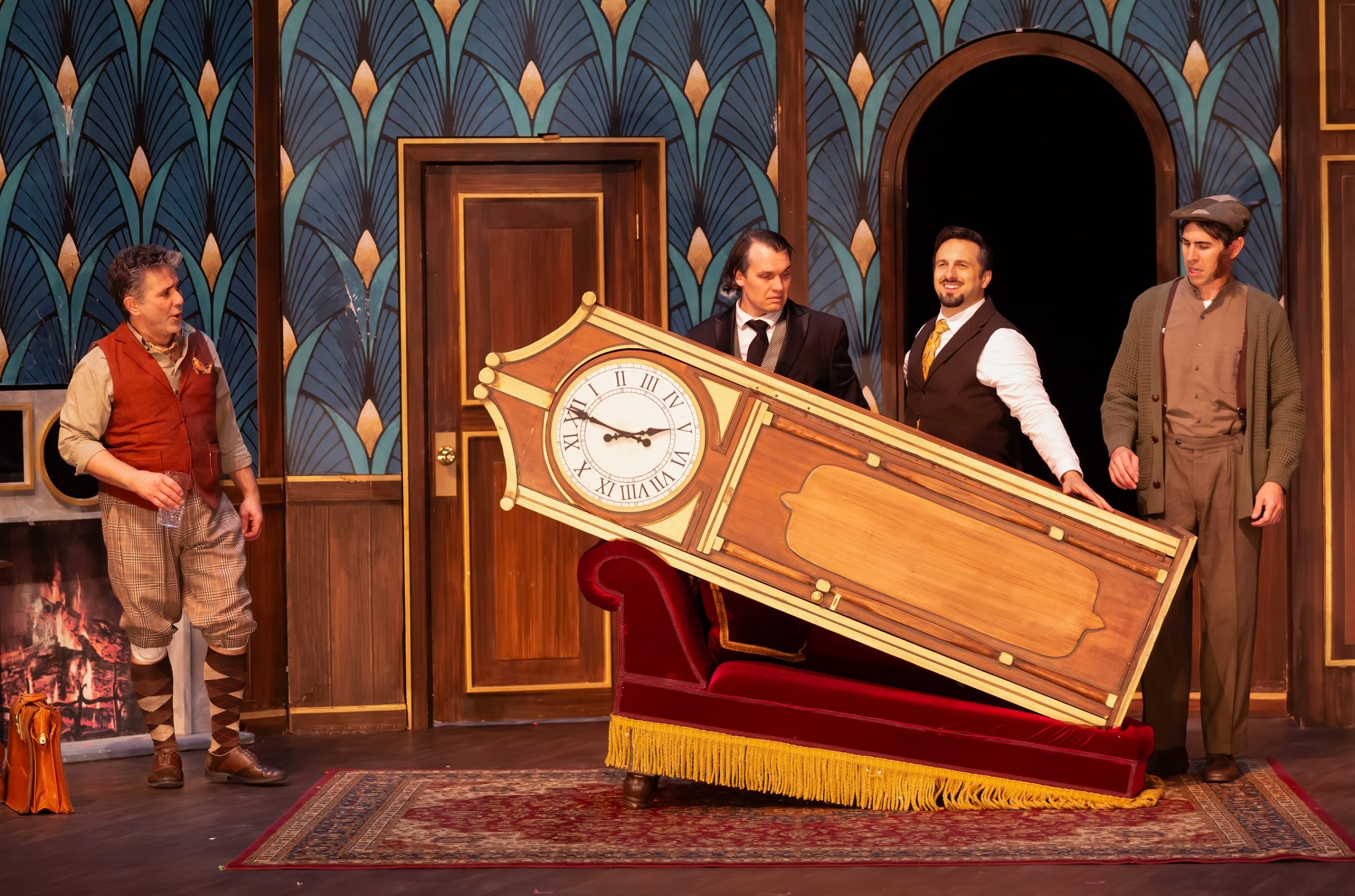
As the Cornley Polytechnic Drama Society battles its way toward the final curtain, the production celebrates the peculiar toughness of theatre itself. Even when everything goes wrong, the play continues to the audience’s delight, becoming its own genius work of artistry. In this lively 5-Star Theatricals production, that spirit fuels an expertly crafted farce that proves disaster, when properly and rollickingly orchestrated, can be very funny indeed. Not to mention, this isn’t The Play That Goes Wrong you’ve necessarily seen before, either, as there are surprises in the way some of the gags are played out. By the end of it, one will no doubt think to themselves, just like Gagliardi’s Thomas, that they “needed that.”
Cover image caption: Left to right are John Shartzer and Lyndsi LaRose in 5-Star Theatricals’ production of The Play That Goes Wrong at the Bank of America Performing Arts Center’s Scherr Forum Theatre in Thousand Oaks, CA. Photo is courtesy of Veronica Slavin.
5-Star Theatricals’ production of The Play That Goes Wrong runs through Sunday, March 29th. For tickets and further information, visit 5StarTheatricals.com.


