Anyone who has spent enough time with a dog has probably encountered that look — the long, unwavering stare that makes you wonder just what might be happening behind those eyes. For playwright Barra Grant, that familiar curiosity eventually became theatrical inspiration. Her answer is WOOF, a comedy that gives three dogs the chance to weigh in on the humans around them.
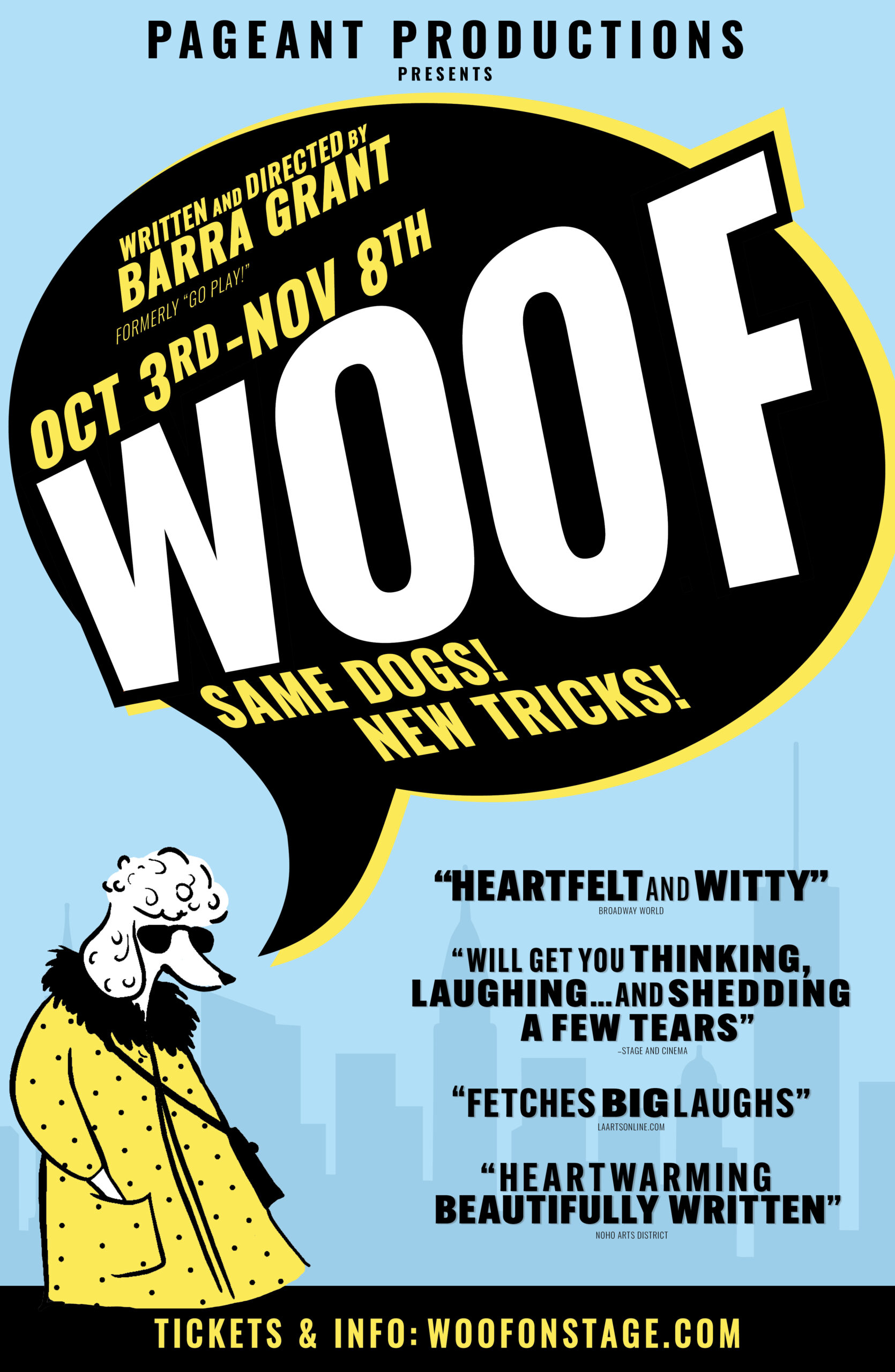
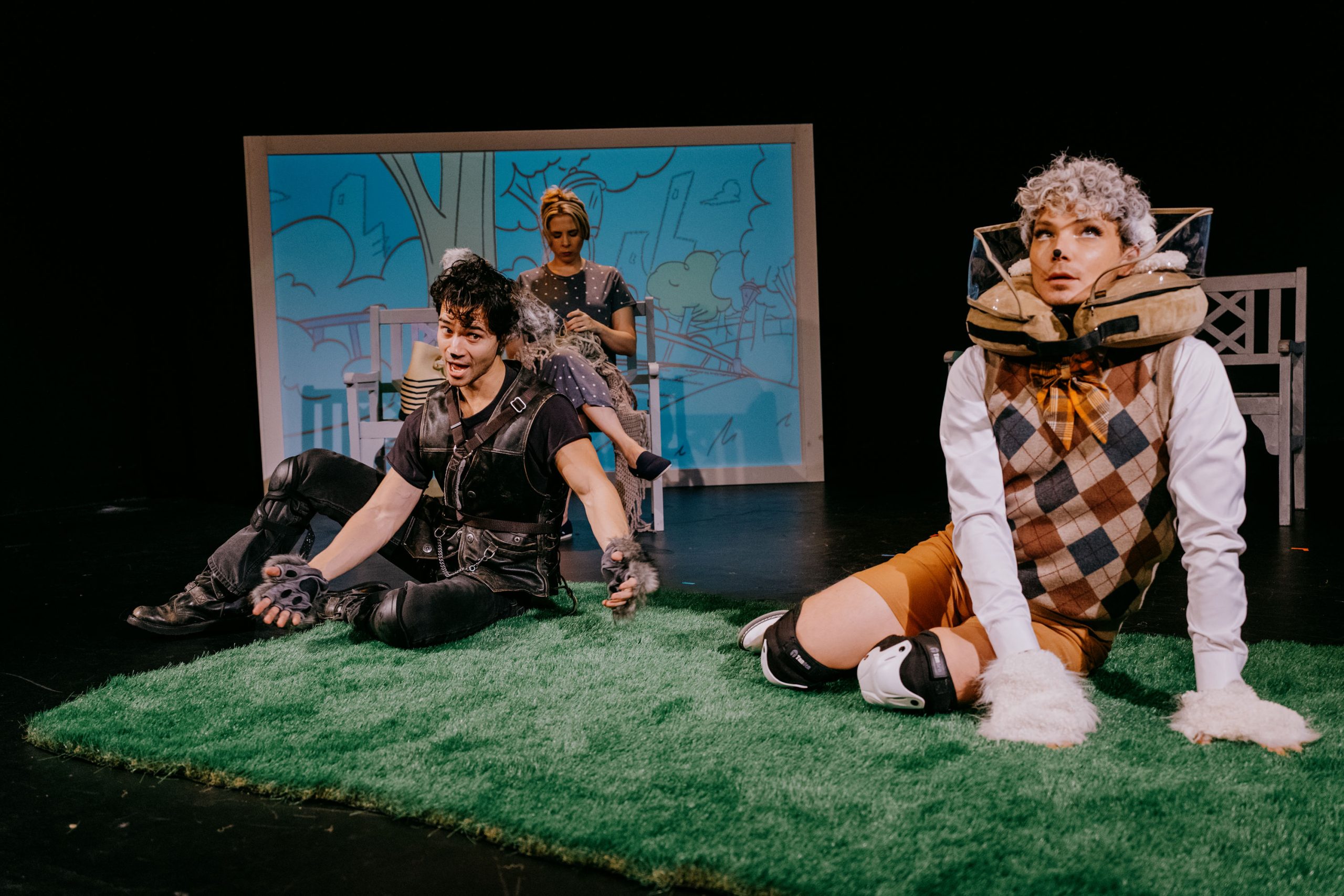
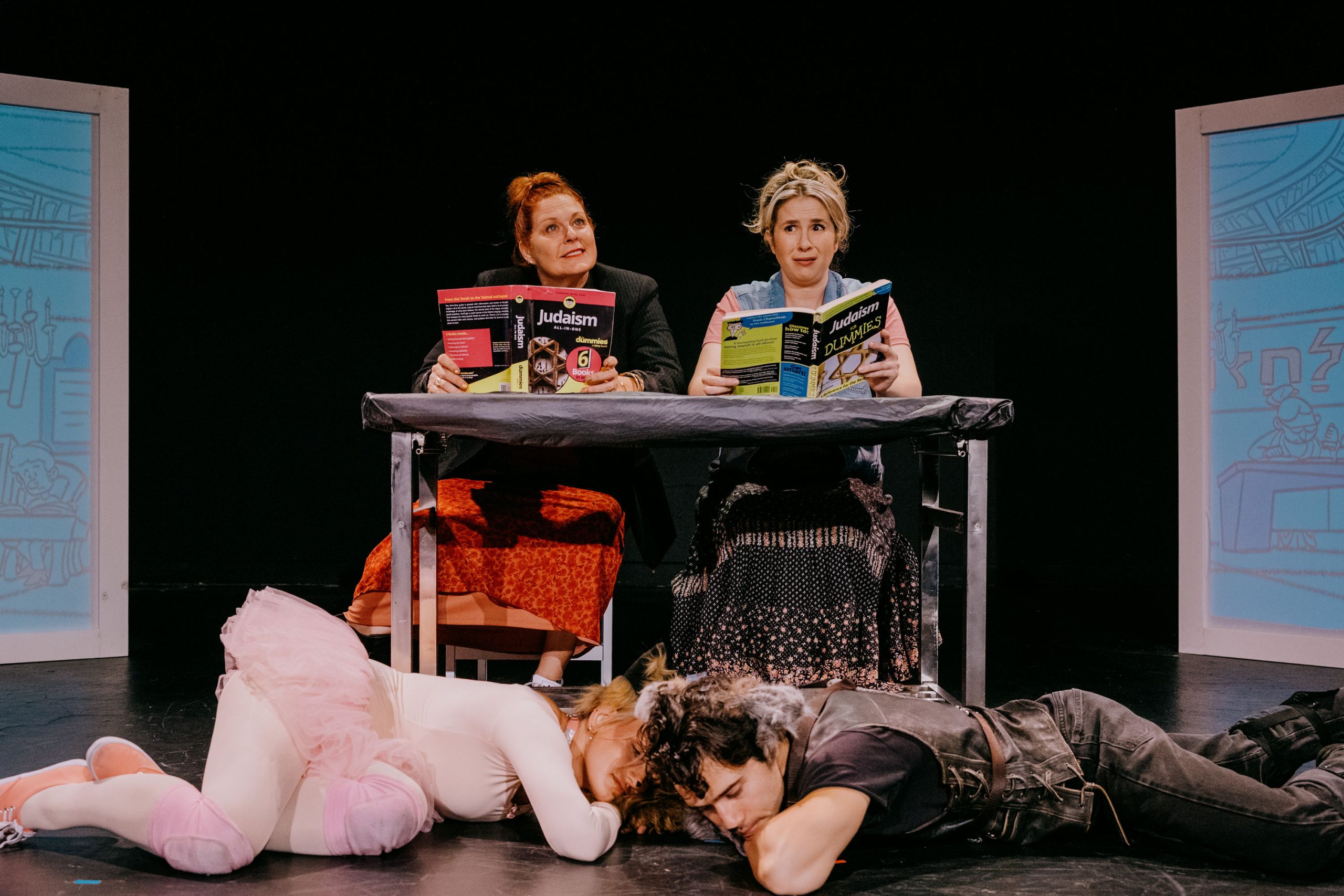
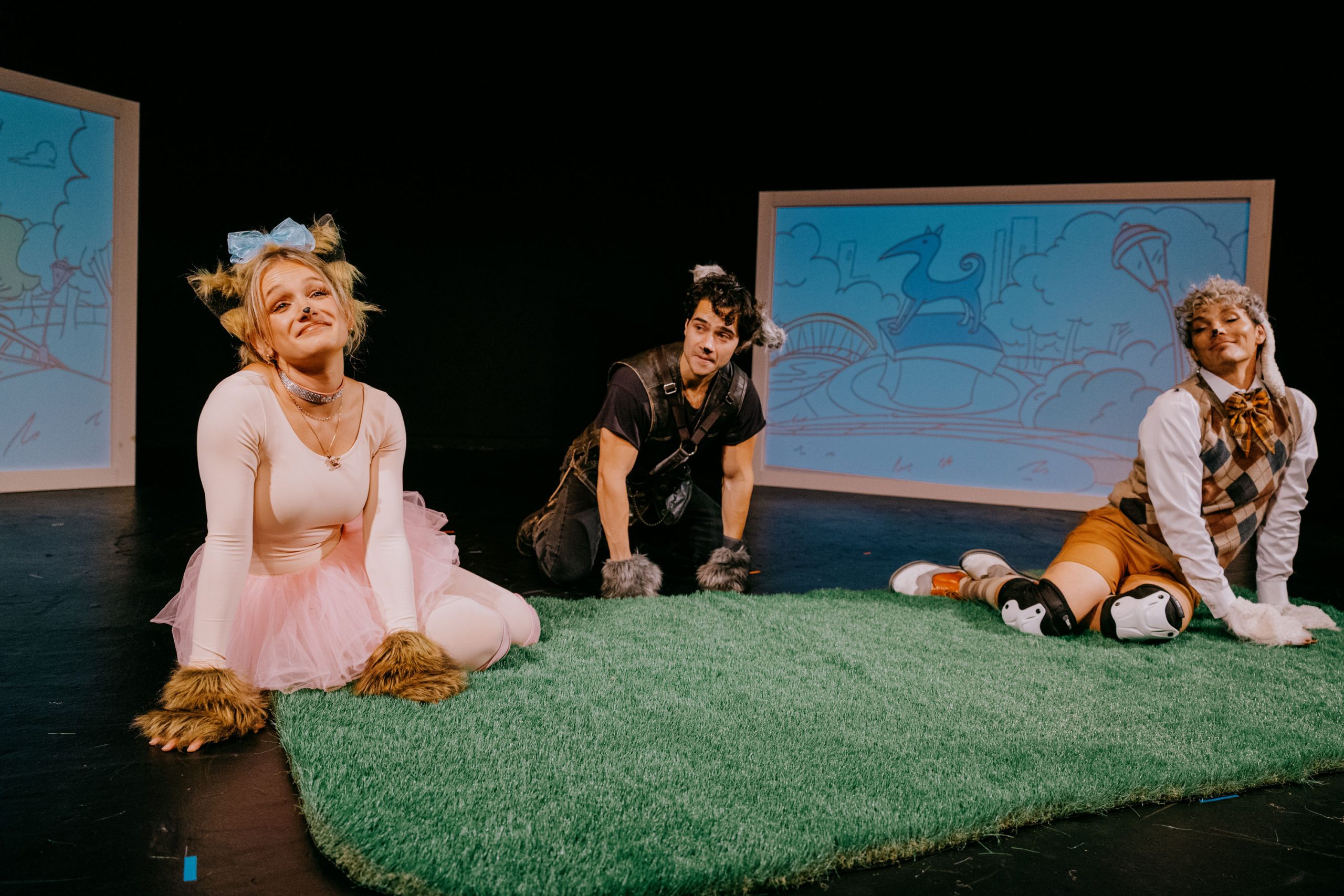
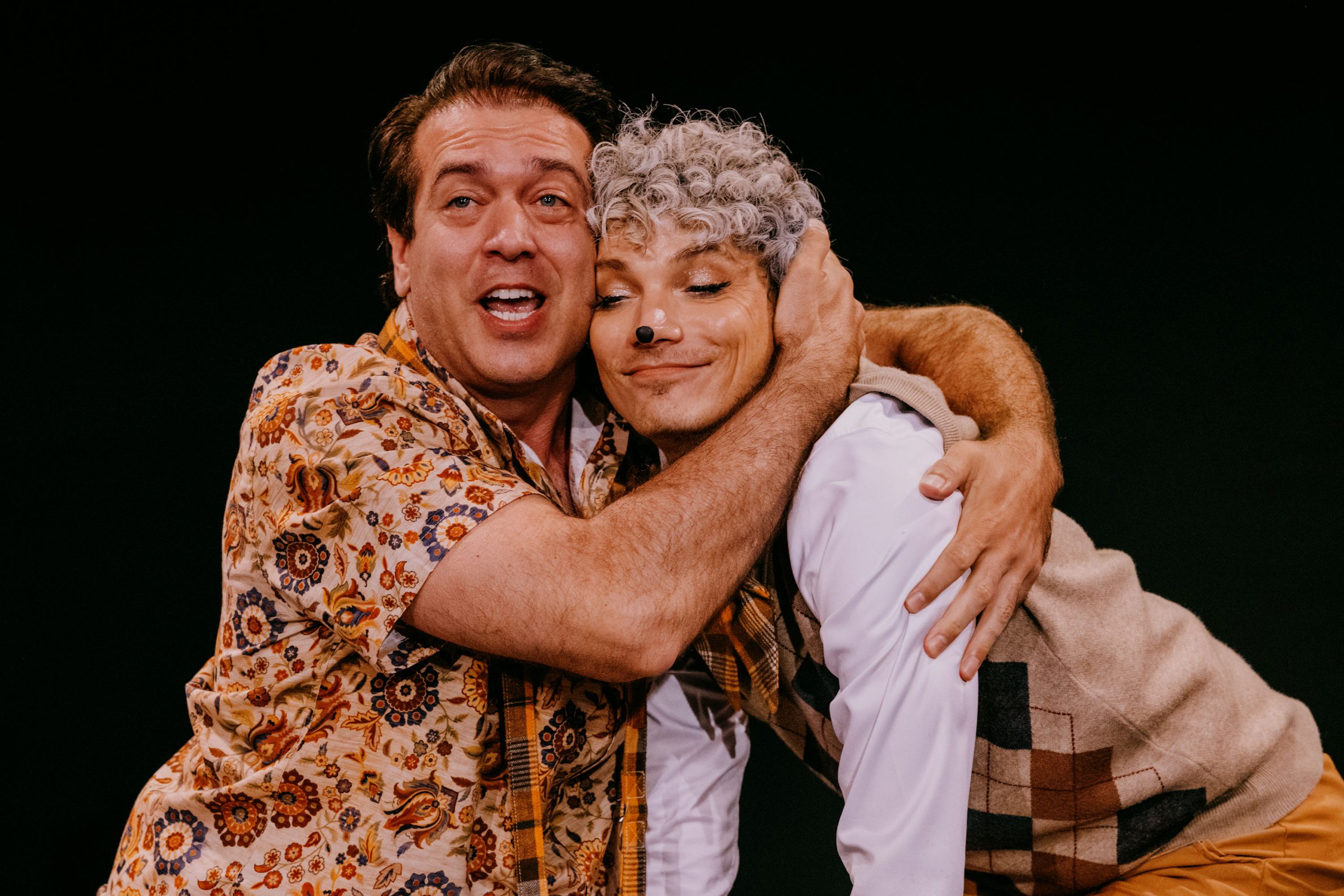
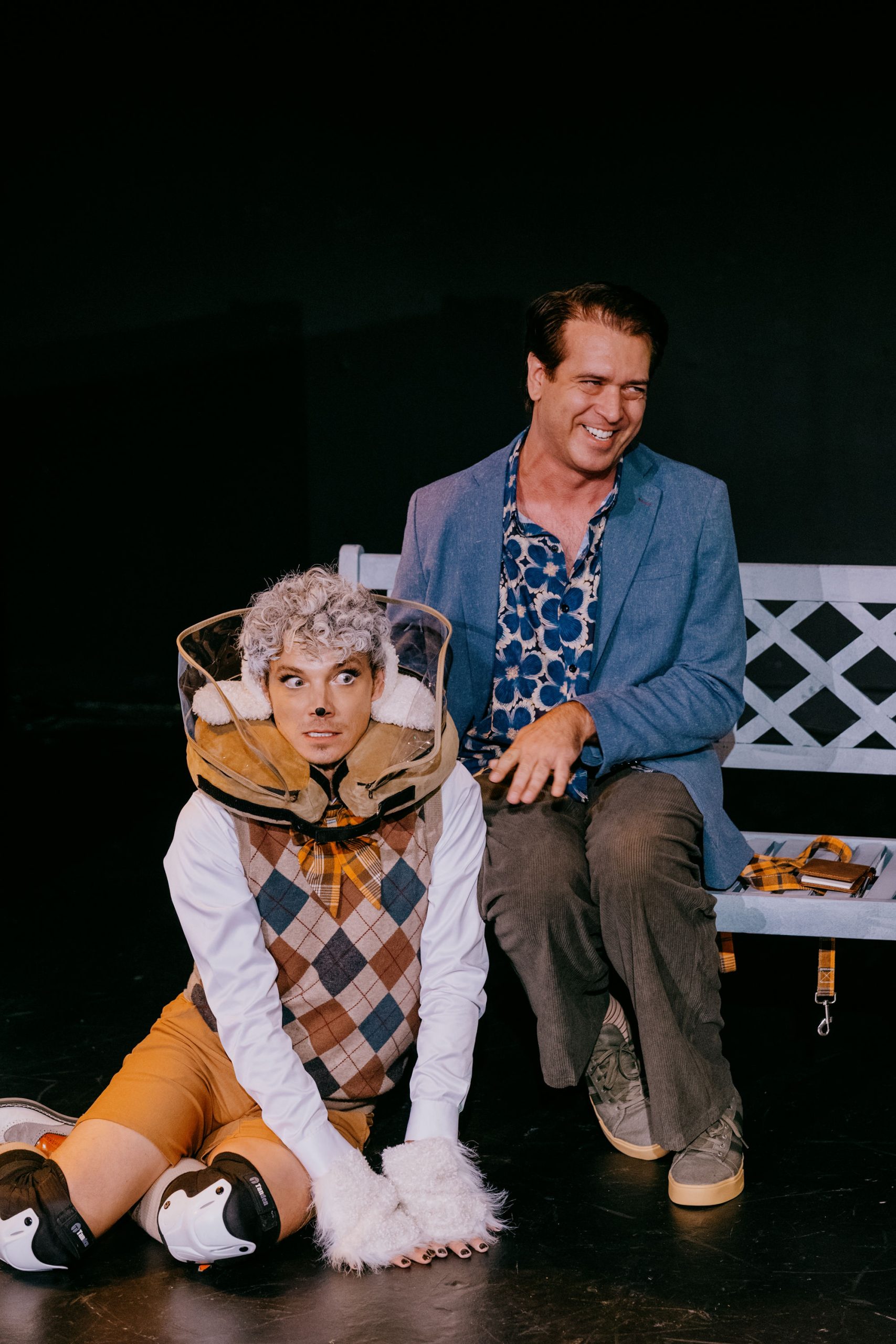
Presented by Pageant Productions at the Odyssey Theatre, playing now through November 8th, WOOF follows three strangers whose paths cross through their dogs at a neighborhood park as each navigates personal difficulties and unexpected connections. Watching closely are Zeus, a show poodle played by Christopher Schellenger; Lucille, a Yorkie portrayed by Annie Chase-Smith; and Drac, a rescue mutt played by Joe Balanza. Jenica Bergere appears as Arlene, Richardson Cisneros-Jones as Tyrell and Kate Woerner as Rose, with David Beeler taking on multiple roles.
The canine trio may sound familiar to audiences who visited the Odyssey last year. WOOF grew out of Grant’s GO PLAY!, in which the same three dog characters first took the stage and Schellenger originated Zeus. After seeing how audiences responded to that production, Grant revisited the material, developing new layers while delving further into both its humor and its characters’ emotional lives. The premise may begin with the amusing possibility that dogs have plenty to say about us, but it also opens the door to questions of companionship, loneliness and the ways people — sometimes with a little four-legged assistance — form bonds with one another.
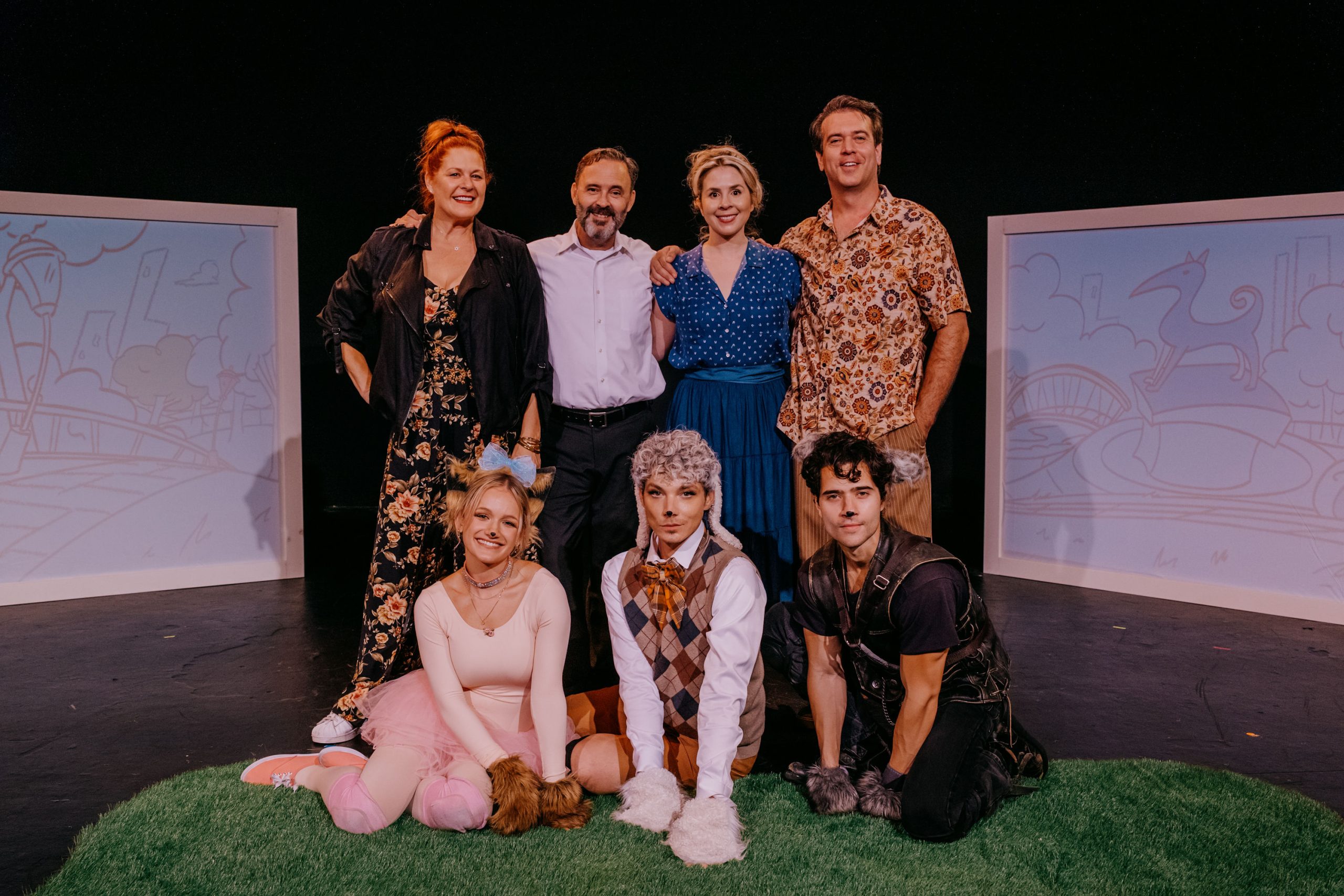
Grant writes and directs the production. Her previous stage work includes the one-woman show Miss America’s Ugly Daughter, drawn from her relationship with her mother, Bess Myerson, which played Los Angeles and Off-Broadway, as well as A Mother, a Daughter and a Gun, a play that has been staged in Los Angeles, Chicago and Off-Broadway, with the New York production starring the late Olympia Dukakis. Her film work includes writing and directing Life of the Party and Love Hurts. Joining her on WOOF are scenic and sound designer Jerry Buszek, costume designer Lisa Lupo and lighting designer Bosco Flanagan.
As WOOF continues its newly reimagined run at the Odyssey, LAexcites spoke with Grant about imagining what dogs might say if given the opportunity, building three distinctly different canine personalities, finding comedy alongside the play’s more heartfelt concerns, what she learned from GO PLAY! and the experience of directing characters she first created on the page.

The idea for WOOF began with you looking into your own dog’s eyes and wondering what was going on in there. Once you decided to give dogs a voice, how did you determine what they would actually have to say about us?
Grant: It was kind of like a creature who would normally be silent reacting to things that I would never share with another person. Taking the place of another person, it entered my very private world, the world of my secrecy, my true feelings about my mother, my best friend, tacos — anything you can think of — and spit it back to me.
In other words, what was the dog’s opinion? And I found it very funny what they would say back to me, which would be different from what a person would say because a person would have a kind of barometer for hiding their true feelings because it wouldn’t be correct. They would censor themselves before they told me the truth. So the dog became the truth teller.
The play features three very different dogs — a show poodle, a pampered Yorkie and a scrappy rescue — alongside three humans whose lives unexpectedly intersect. What did creating those distinct dog personalities allow you to reveal about their human companions?
Grant: Well, all the dogs have their attitudes toward their owners, good and bad. One dog, for instance, is in love with his owner and excuses him for his foibles. He thinks he’s very talented and very unique and truly loves him. That’s the poodle, and he feels great sympathy for his owner.
The Yorkie is with a very high-strung woman, an events planner, and because the Yorkie goes to therapy with her owner, she knows everything about her. She kind of looks down on her because she thinks her owner’s issues are ridiculous and that she should grow up already and stop needing all this help.
The third dog is a mutt who looks and dresses like Sylvester Stallone in Rocky. He’s taken for granted and ignored and doesn’t feel appreciated. They’re all in their own universes with very different issues.
There is obviously a lot of comedy in imagining dogs commenting on human behavior, but WOOF also deals with loneliness, friendship and our need for connection. How do you balance the humor with those more emotional parts of the story without letting one overwhelm the other?
Grant: Well, I take comedy very seriously. So it might be funny, let’s say, or elicit humor, but I write for reality and for the depth of the feeling that the person has, and that’s the kind of comedy I enjoy.
So when I get to a spot that’s pure drama, I go for that. But mostly the way I write is dark comedy, and it has the purpose of being dramatic. And when I want to communicate the drama, I go for it. But in the way I work, the drama has to be earned, and the comedy has to build to a place. If it’s going to fall into drama, I would have had to earn it through comedy.
What’s a comedy that you think is a masterpiece, maybe within the realm of dark comedy?
Grant: The Kominsky Method. Everything Alan Arkin does is an example of great comedy because he takes it so seriously. Everything in that show he takes very seriously, and he’s hilarious.
Tony Soprano is hilarious in The Sopranos, and he takes himself very seriously in The Sopranos.
WOOF evolved out of last year’s GO PLAY! at the Odyssey, and you’ve said that watching audiences respond to that production led you to discover new layers in the material. What did you learn from having the play in front of an audience, and how did that shape what you wanted WOOF to become?
Grant: I wrote more. I added more layers to everything I had and thought a lot more about who everybody was in the show and gave them more depth, more resonance, and really let it rip with what was going on.
I felt angry with myself that I didn’t get it right the first time, and I thought, well, I’ll do it a second time. And I know it’s unusual, but I didn’t destroy the entire show. I got myself to a much better place with it and felt satisfied that I reached the level that should’ve been there the first time. And now I got it.
What was it about GO PLAY! that you thought wasn’t working? Did the audience not respond in the way you hoped?
Grant: For me, there was a flatness to the show. It didn’t move forward in a way that was satisfying. It was good, it was funny, but it wasn’t theatrically interesting enough. I wanted it to be better. So I hope I’ve made it better.
I just hope it’s better. We have all new actors except for one. One of our actors is coming back, and everyone else has been recast, and it will be exciting because I don’t know what I have.
You’re both the playwright and director of WOOF. When you’re in rehearsal, how do you know when to protect what you wrote and when to let the actors or something unexpected in the room take the play somewhere you hadn’t anticipated?
Grant: Because I have a good ear, and I can hear it. And there are certain times, too, when I thought an actor’s interpretation was better than what I had on paper, and we went with that.
You describe dogs as being more reliable than people, and the play ultimately seems interested in what humans might learn from them. After spending so much time writing these three dogs, has the experience changed the way you look at your own relationships with either dogs or people?
Grant: Boy, oh boy. Well, it’s made me more appreciative of both, I guess. I ascribe more human qualities to dogs than I did before and more heart to people than before, so it’s been a win-win situation. It’s given me more feeling for both.
Cover image caption: Left to right are Annie Chase-Smith and Christopher Schellenger in WOOF at the Odyssey Theatre in Los Angeles, CA. Photo by Jeff Lorch Photography.
WOOF runs through Sunday, November 8th at the Odyssey Theatre, 2055 S. Sepulveda Blvd. in Los Angeles. Performances take place Saturdays at 2 p.m. and 7 p.m. and Sundays at 2 p.m. For further information and to purchase tickets, visit odysseytheatre.com.

