Some musicals transcend their genre with melodies that linger in the recesses of the listener’s mind. Yet even the most stirring works depend on the artistry of those entrusted with bringing them to life. With its sweeping production of Les Misérables, 5-Star Theatricals reminds audiences what happens when extraordinary voices, assured direction, and a company operating at full emotional capacity intertwine. The result is arguably the company’s finest achievement in at least a few years, an exhilarating conclusion to its 2026 season at the Fred Kavli Theatre in Thousand Oaks.
From the propulsive opening strains of Claude-Michel Schönberg’s score, the audience is plunged into a forbidding world of prisoners, guards, and brutal conditions. The grim surroundings establish the cruelty of a society that has little patience for redemption, while the orchestral music surges with a palpable urgency that rarely subsides.
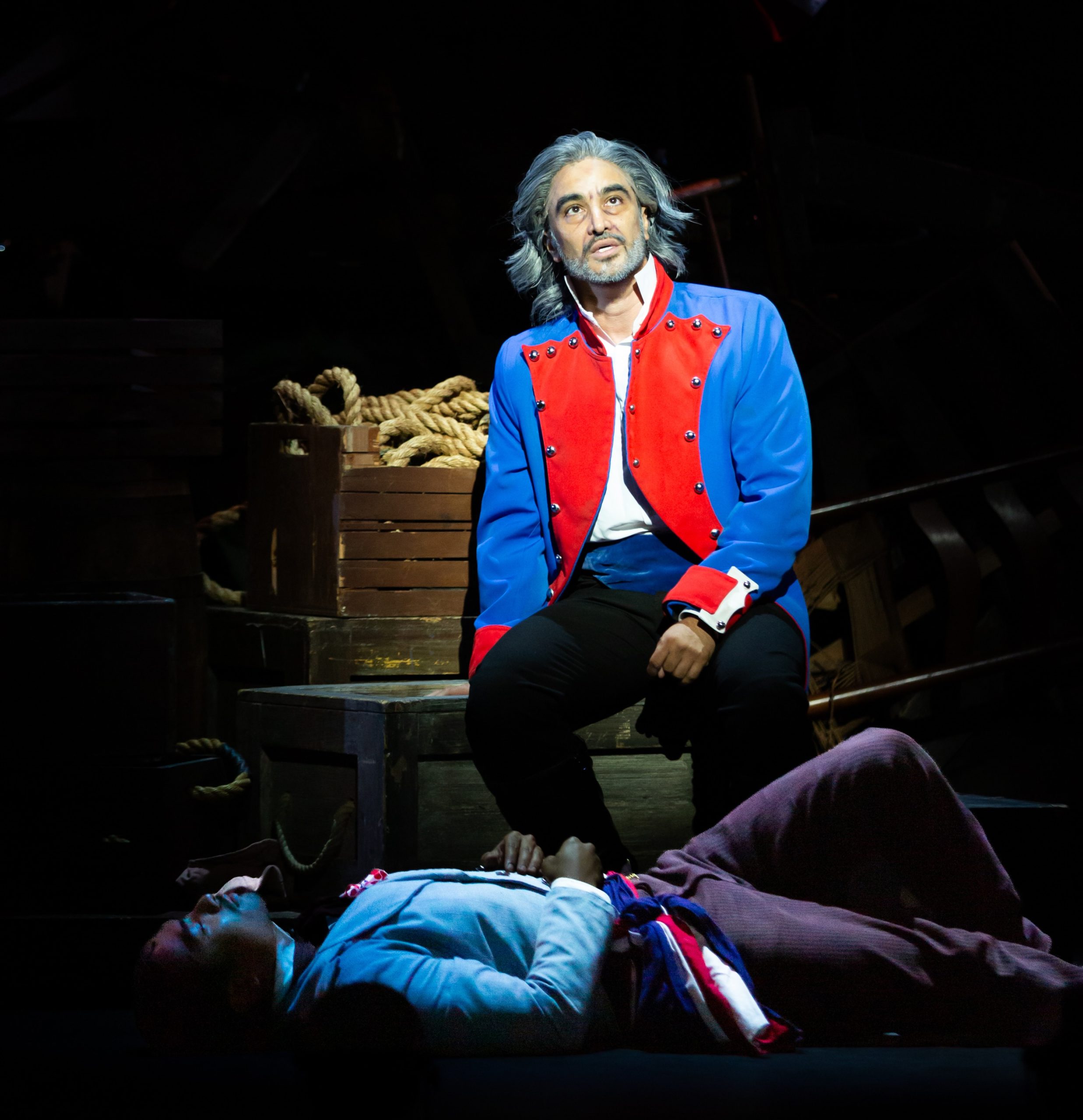
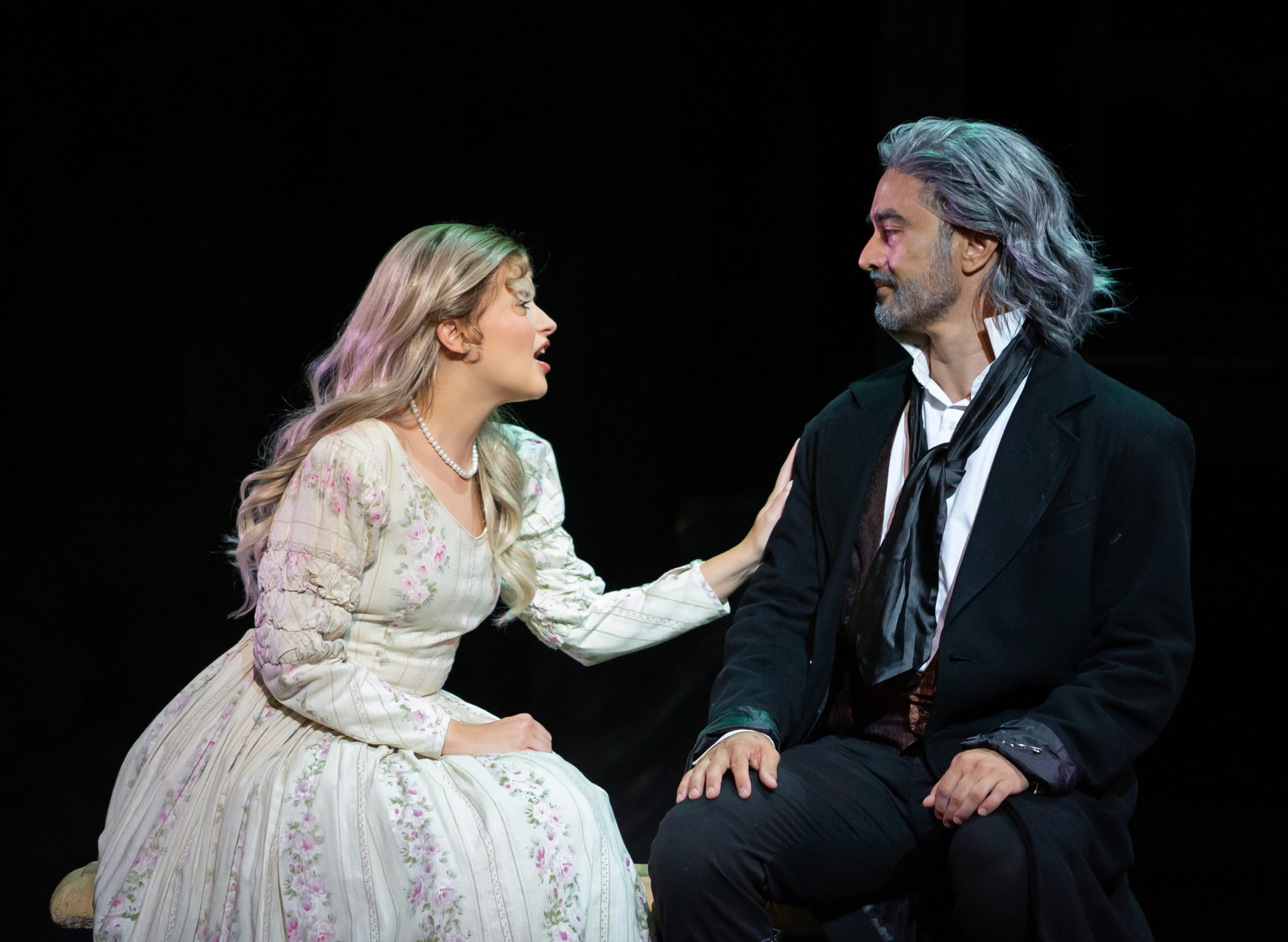
At the center is Jean Valjean (Richard Bermudez), a man released after 19 years of imprisonment for essentially stealing bread to feed his sister’s son. Unfairly branded an unreformable criminal, he encounters an unexpected act of mercy from the Bishop of Digne (Richard R. Rosales), whose quietly dignified presence makes a brief but consequential appearance resonate. Valjean resolves to rebuild his life, only to find himself relentlessly pursued by Inspector Javert (Peyton Crim), a man whose rigid conception of justice leaves scant room for forgiveness.
Based on Victor Hugo’s novel and adapted for the stage by Alain Boublil and Claude-Michel Schönberg, with English lyrics by Herbert Kretzmer, the musical follows Valjean across decades of personal reinvention, intertwining his fate with an impoverished mother, her daughter, young lovers, and idealistic students swept into the June Rebellion of 1832. Beneath the barricades and revolutionary fervor lies a more intimate struggle over identity, conscience, and whether a person’s past must dictate his future.
Bermudez delivers a performance of remarkable emotional and vocal breadth, arguably his finest this year following excellent appearances in Musical Theatre West’s Man of La Mancha and La Mirada Theatre’s Anastasia. His Valjean is initially a forsaken figure, his anguish visible in every expression as society rejects him. But Bermudez never mistakes intensity for mere volume; rather, he demonstrates an expert command of the ebb and flow of each phrase, drawing upon every resource in his vocal toolbox to emphasize his character’s complex turmoil.
That versatility makes “Who Am I?” particularly arresting, as Valjean is weighed down by a crisis of conscience over allowing another man to suffer for his crimes. His upper register rings out like a battle cry, but the quieter passages are equally astonishing because of the control demanded of them. Overall, Bermudez gives Valjean a humanity that is earned rather than imposed.
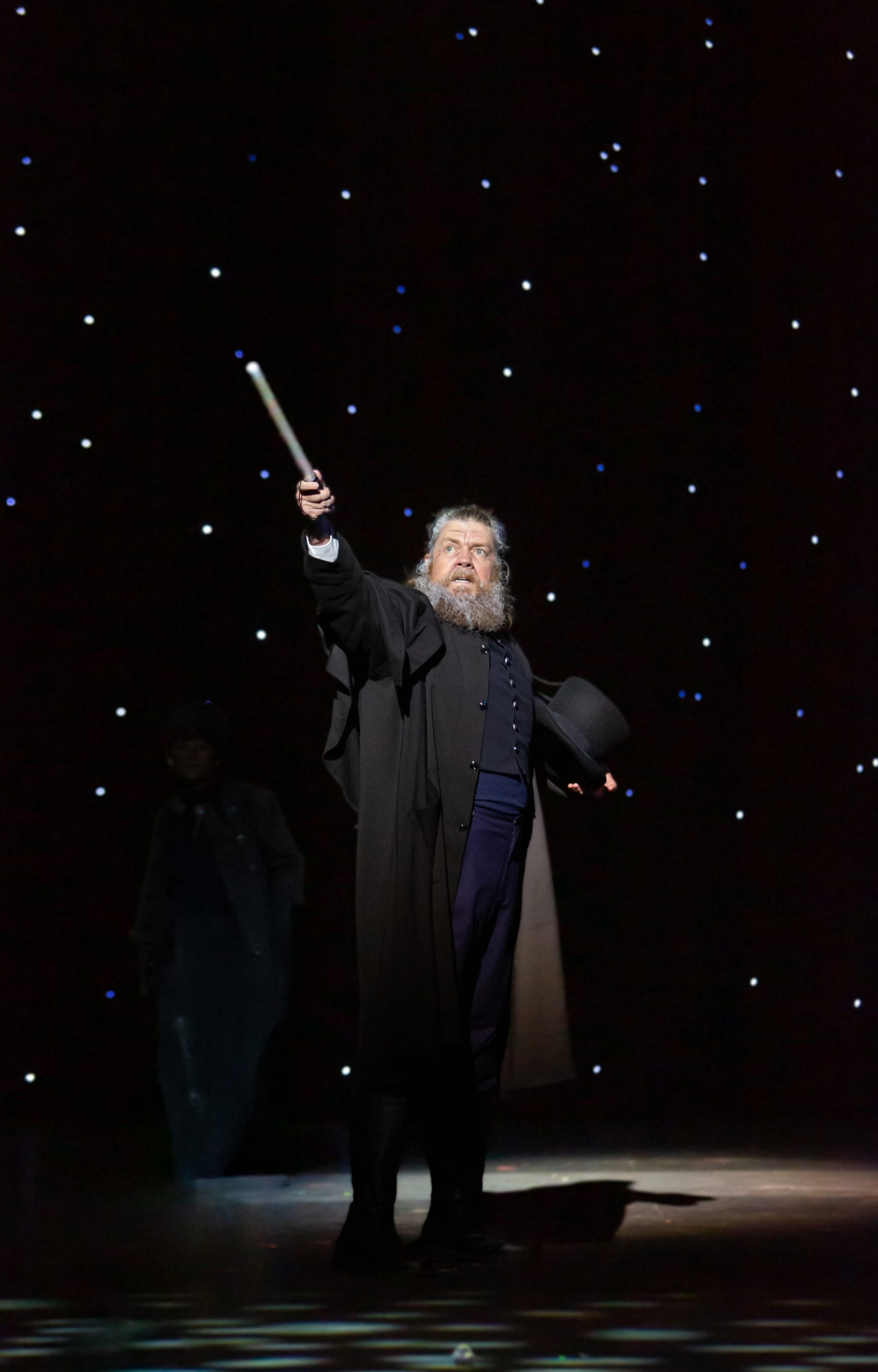
Crim proves a formidable counterpart. His Javert wears an intimidating countenance and a voice capable of moving from a predatory snarl to a richly resonant, almost devotional beauty. During “Stars,” his conviction becomes momentarily persuasive, revealing a man who genuinely believes himself a vessel of righteousness. Crim makes that certainty both frightening and fascinating. The inspector’s obsession with capturing Valjean is ultimately as much a prison as the one from which his quarry escaped.
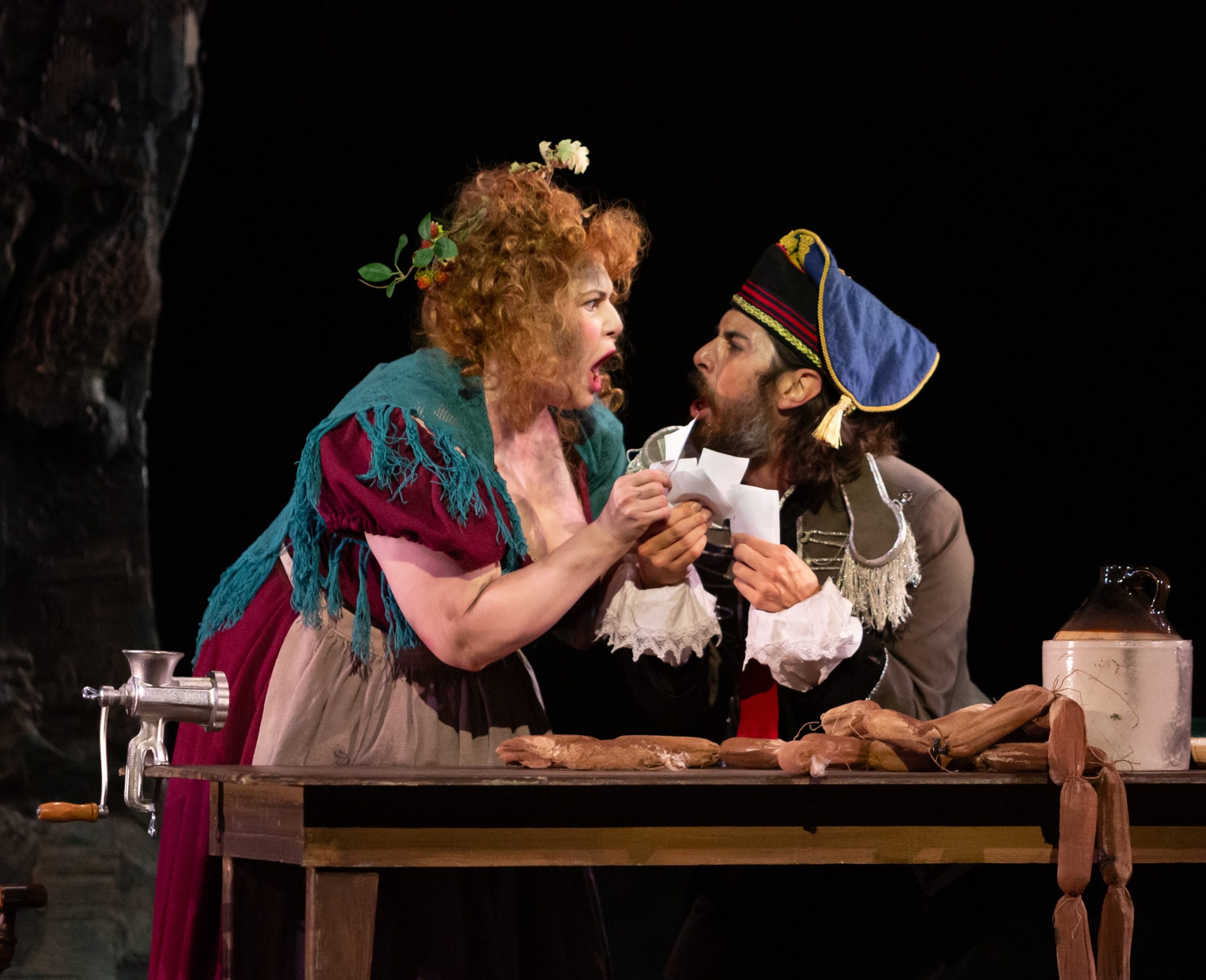
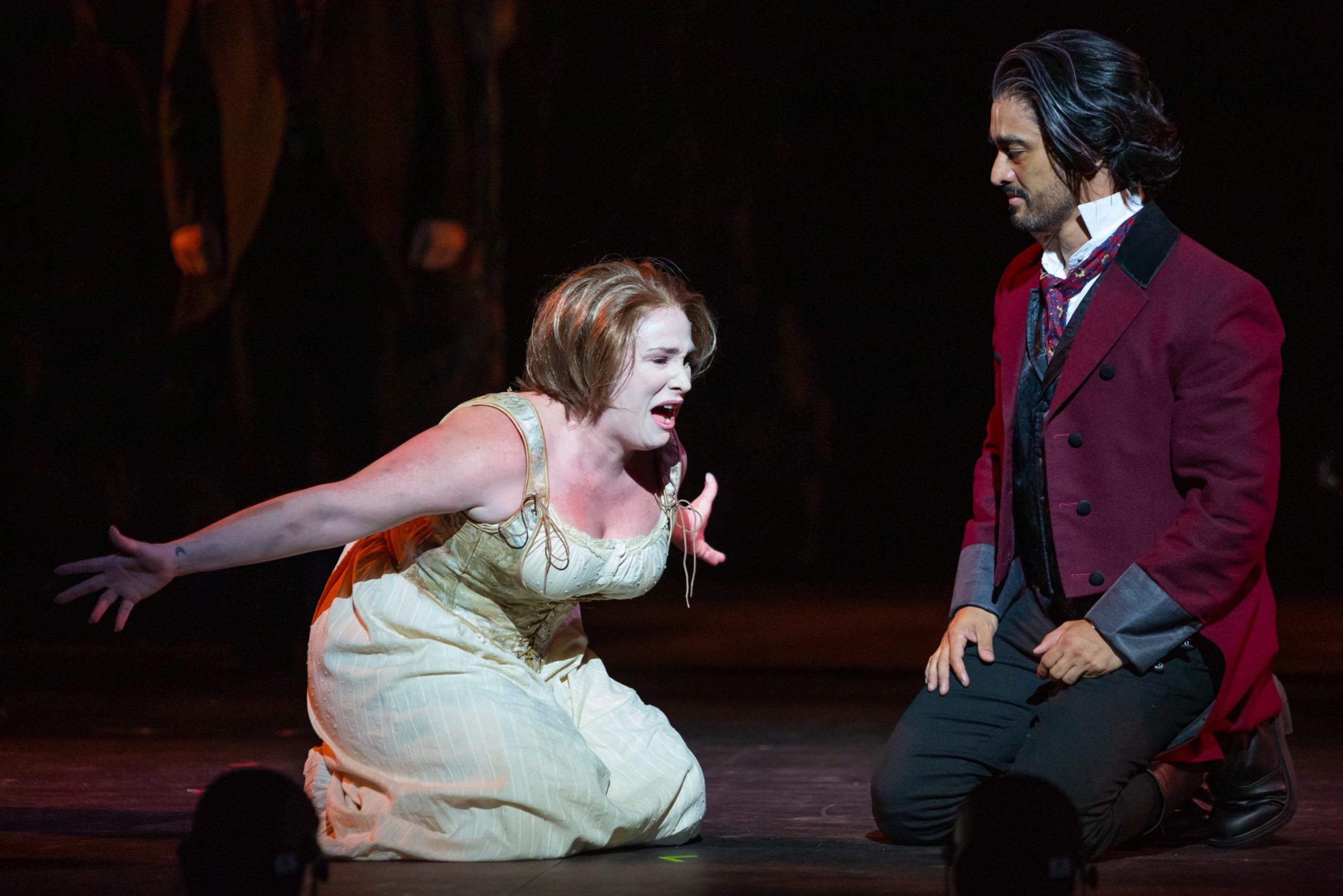
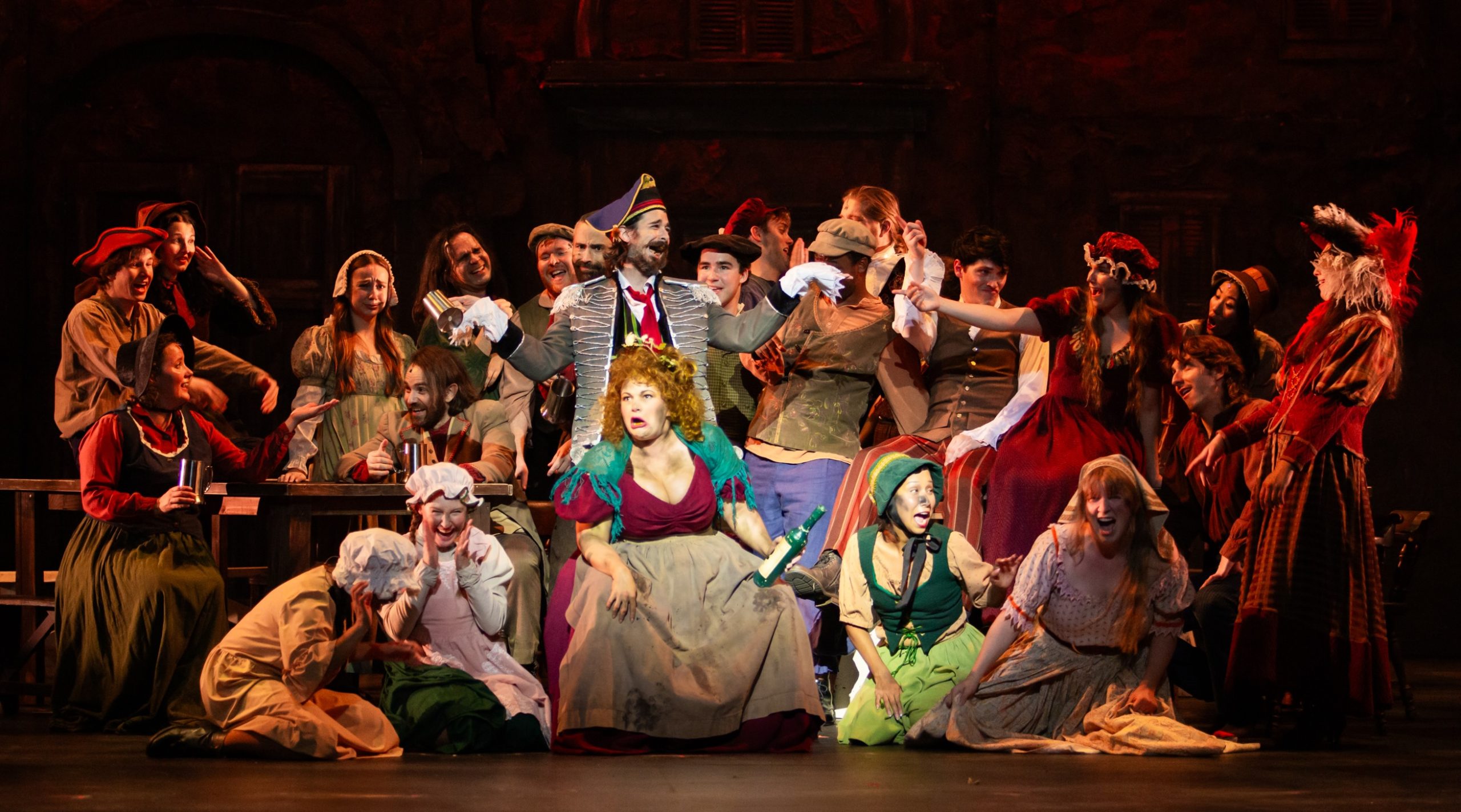
Emma Hunton, who began her career with Les Mis, offers another of the show’s defining performances as Fantine. Her “I Dreamed a Dream” is exquisitely affecting, but its power extends beyond the purity and meaningful reach of her voice. Hurt, desperation, and maternal devotion register in her eyes and bearing, lending the lyrics the immediacy of lived experience. Hunton sings as though each confession is being summoned from the depths of Fantine’s soul. The bawdy irreverence of “Lovely Ladies” provides a jarring counterpoint to her worsening circumstances, marked by a lively ensemble energy unable to conceal the tragedy unfolding beneath the revelry.
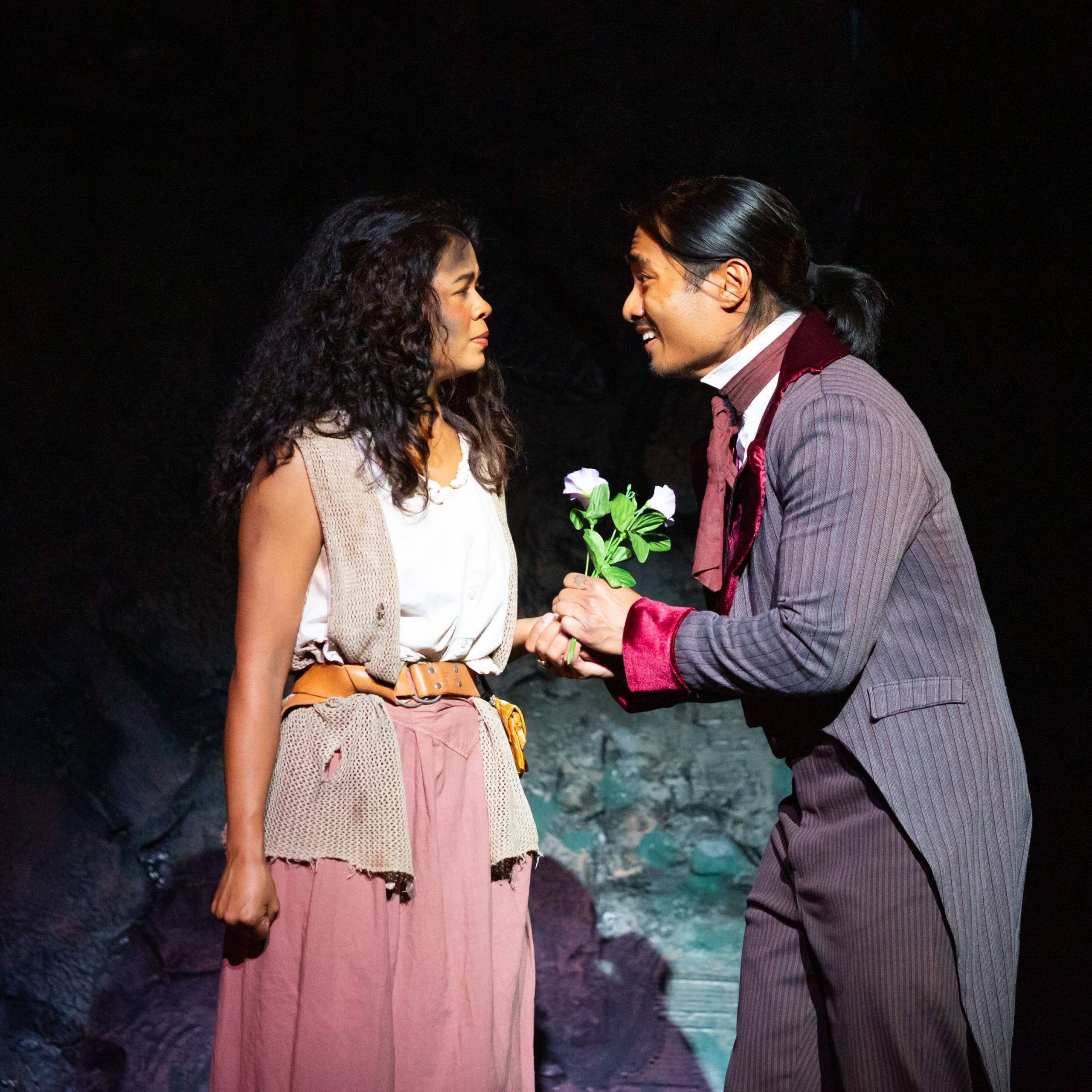
The production’s younger characters are equally well served. Maile Masako Brady brings a distinctive, crystalline timbre to Éponine, whose unrequited affection for Marius is conveyed through a touching mixture of hope and resignation. Her “On My Own” mixes vocal clarity with aching vulnerability. JeffLorenz Garrido gives Marius a soulful vocal presence, while Jena Allen, making her 5-Star debut as Cosette, possesses a sweet, nightingale-like quality that suits the character’s innocence. Together, they lend the romantic triangle compelling poignancy.
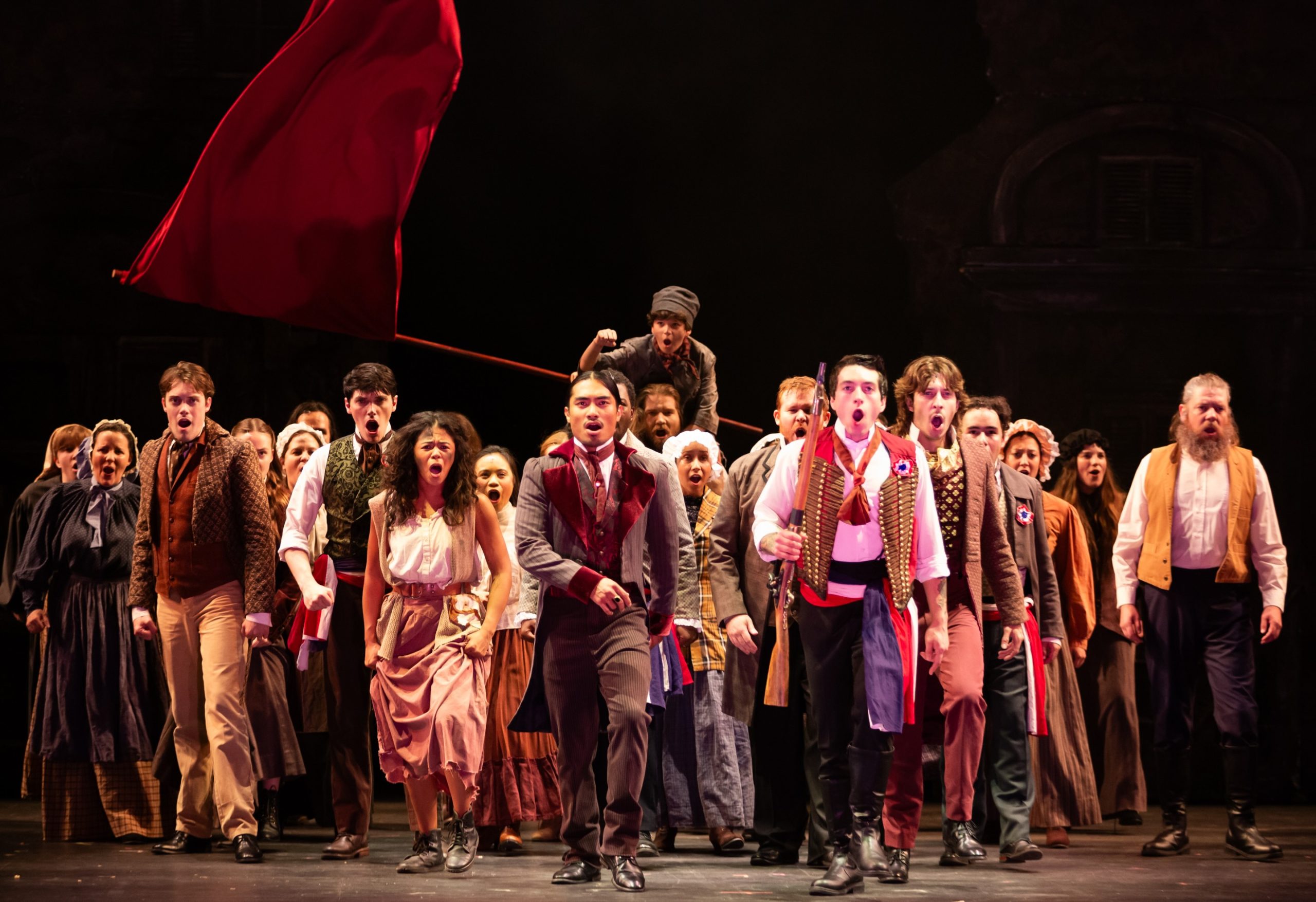
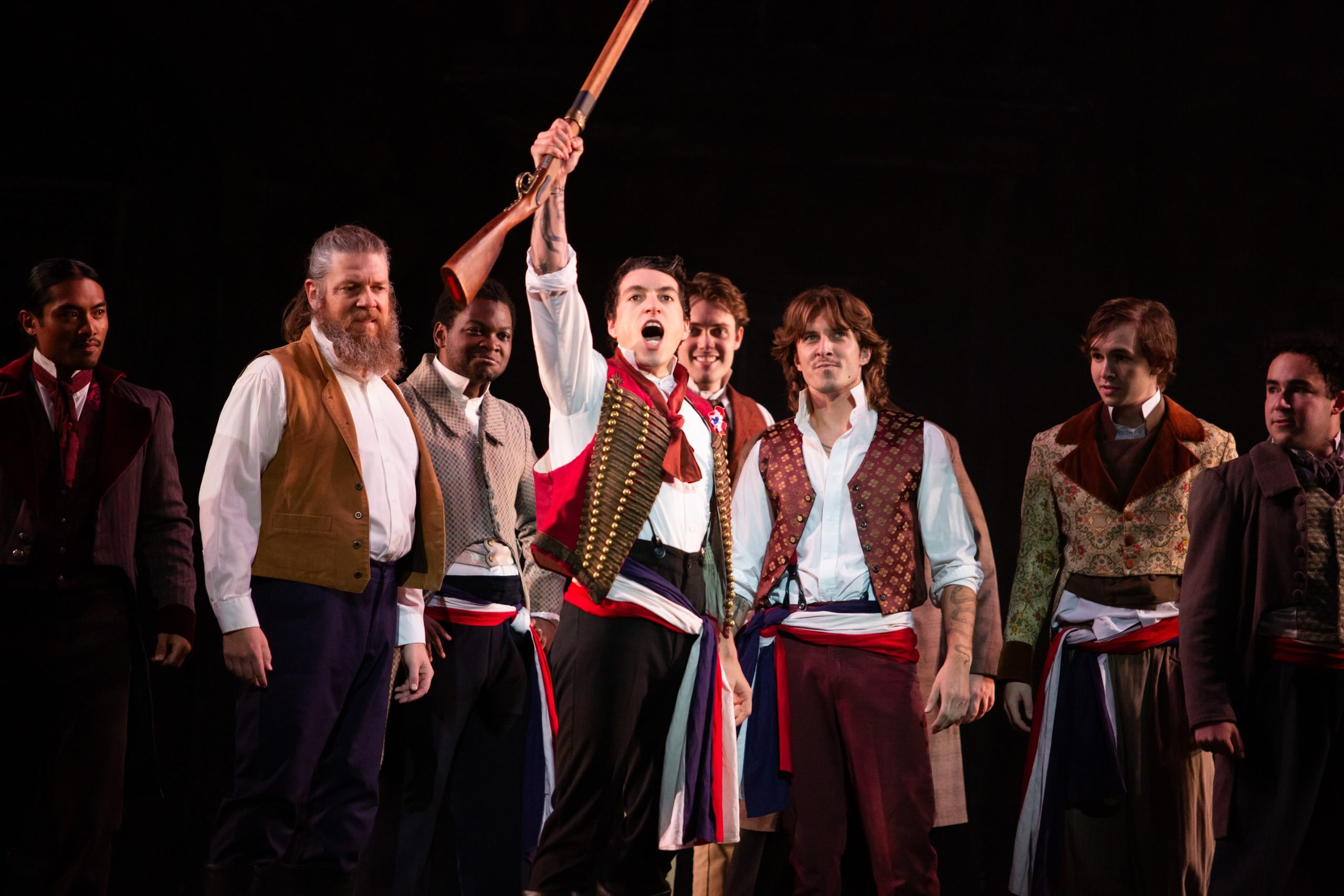
Julian Comeau is especially impressive as Enjolras, the impassioned student revolutionary. Singing with the authority and polish of a seasoned leading man, Comeau electrifies “Red and Black” and helps propel “Do You Hear the People Sing?” into a thrilling declaration of collective resolve. The male ensemble responds with a galvanizing fearlessness via raised fists and indignant voices that makes the cause register undeniably.
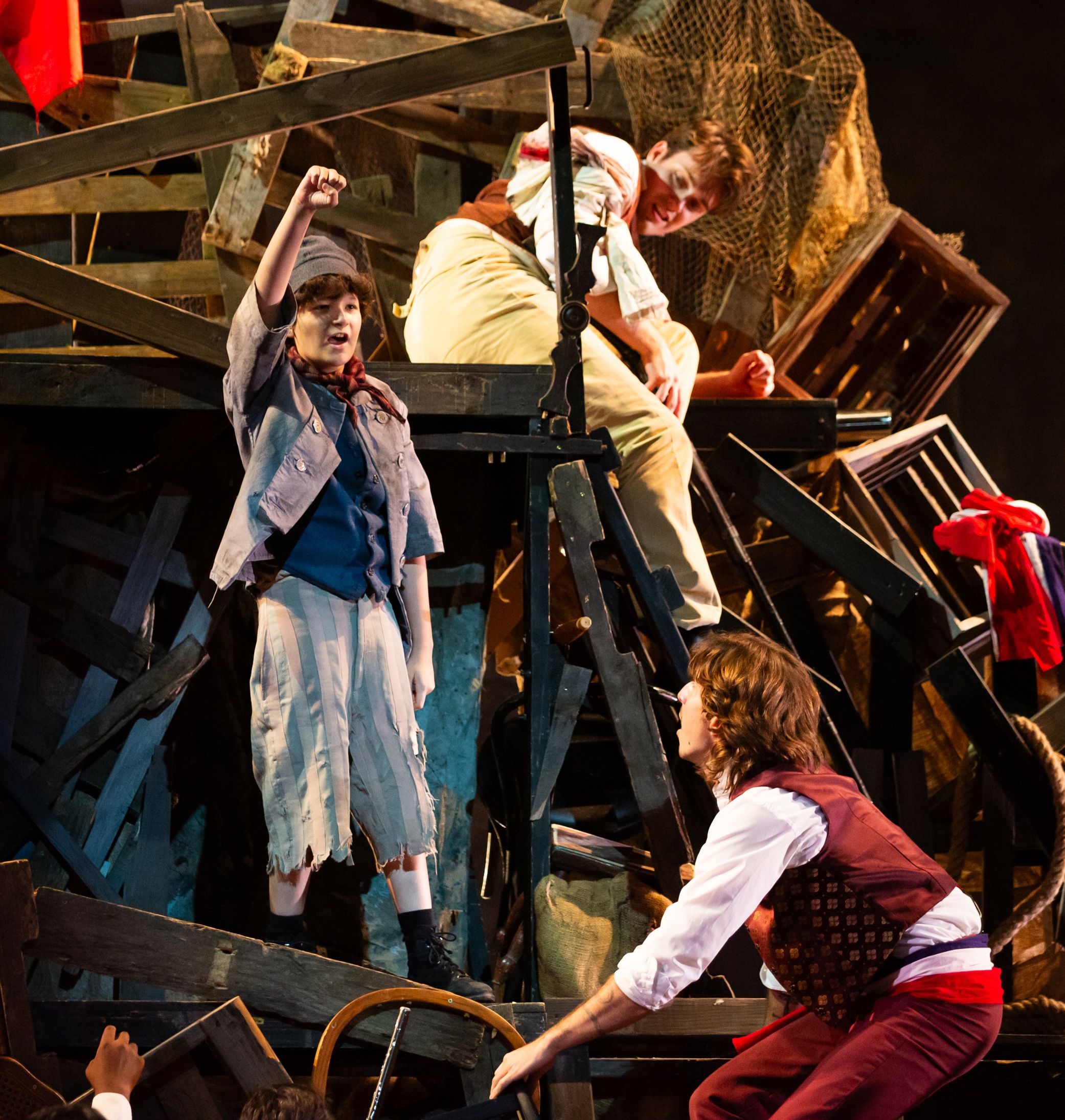
Few performers, however, are as immediately disarming as young Santiago Rodriguez. His Gavroche is precocious, fearless, and overflowing with charisma, delivering his rhythmic proclamations with such remarkable assurance that he could comfortably hold his own on a Broadway stage today. His confidence and instincts suggest a performer with an exceptionally promising future. Danica Coscino also makes a lovely impression as young Cosette, singing wistfully while clutching her broom.
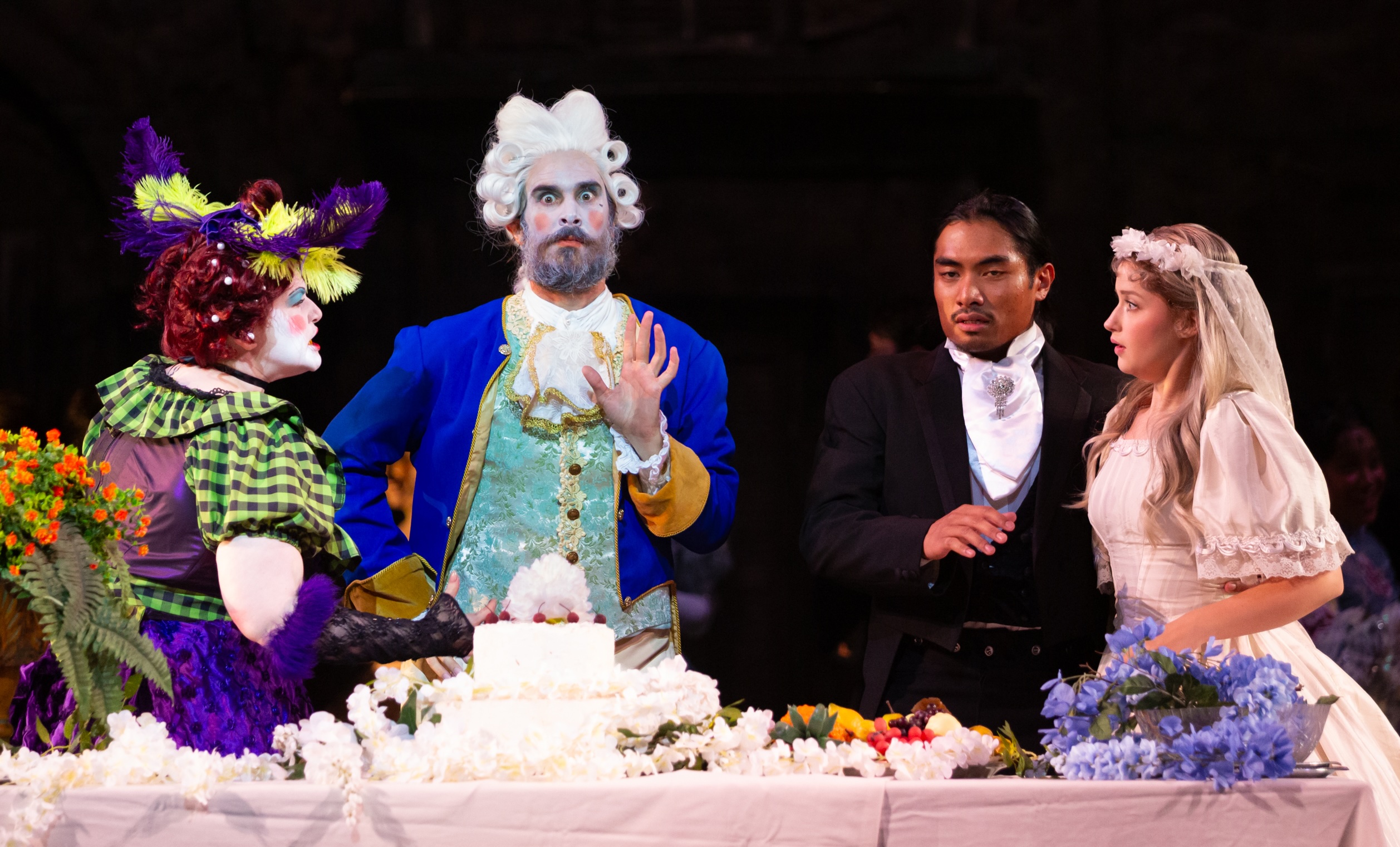
Providing welcome comic relief are Joey Richter and Francesca Barletta as the spectacularly unscrupulous Thénardiers. Their chemistry is irresistible as they imbue characters whose moral bankruptcy is matched only by their talent for shameless self-preservation. Richter’s crazed smiles, askance glances, and uninhibited physicality are particularly entertaining, while Barletta proves an equally mischievous accomplice. “Master of the House” becomes a riotous ensemble showcase, bursting with ribald humor and colorful characterizations. They may be thoroughly reprehensible, but they’re tremendous fun to watch.
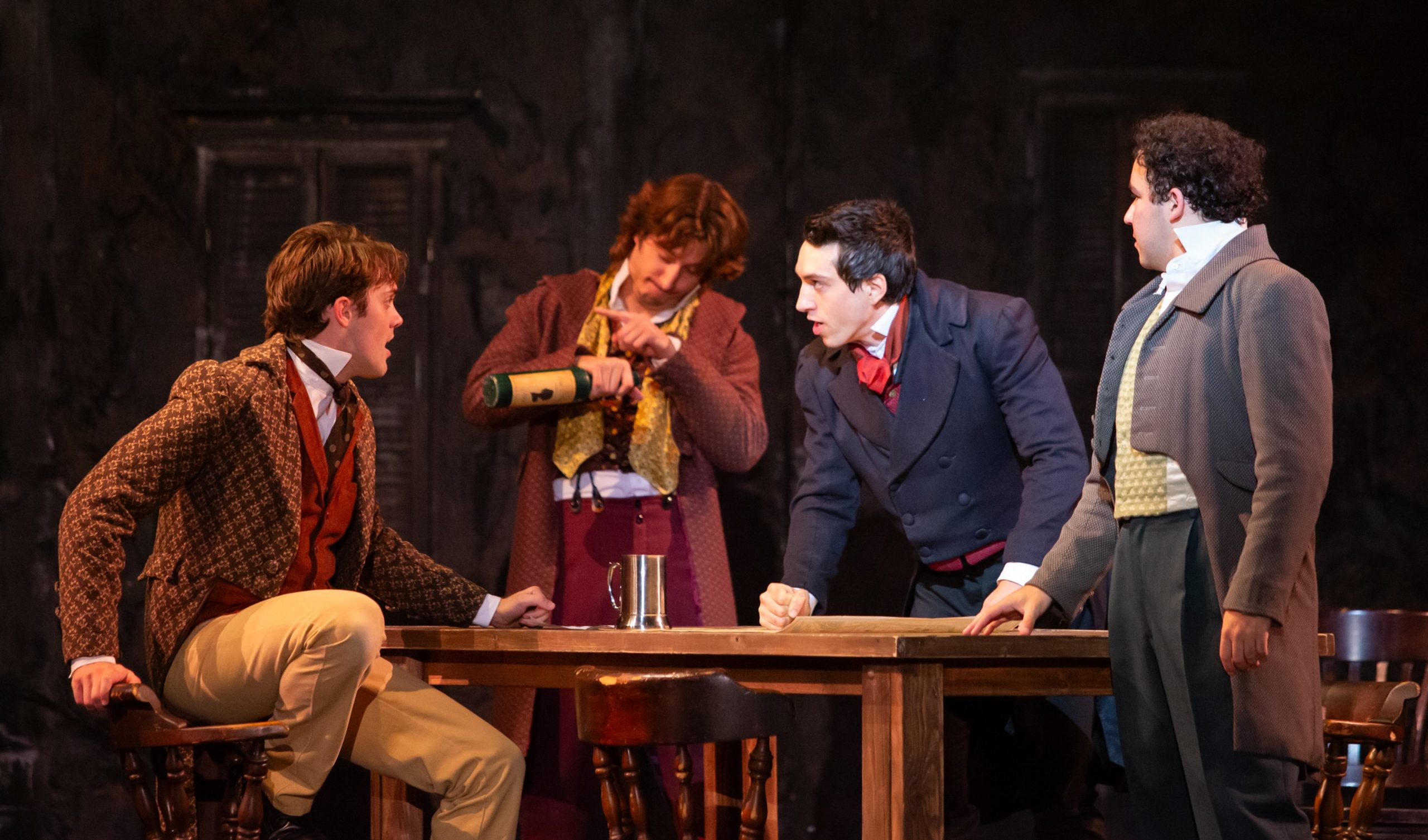
The supporting company contributes considerably to the production’s richness. Aaron Gibbs lends vocal ballast to the freedom-seeking roars, as do Coby Rogers, Ethan Drew, and Trevor Elzey who offer impressive singing and unceasing physicality in defiance of oppression; Kahlil Leneus brings affecting vulnerability to the worker rescued from beneath a heavy cart; Natalie Vatcher, Lauren Han, Katie Lee, and Amanda Lopez maintain visages of contemplation and solemnity even when away from the central action; and Andrew Diego contributes to the darker characterizations surrounding Fantine’s plight.
Director Doug Kreeger, who also oversees the musical staging, deserves considerable credit for coordinating his expansive cast without allowing the events to become unwieldy. His blocking is clean and purposeful, guiding the eye naturally across crowded scenes where the company act in unison toward the goal of optimizing the narrative pull.
Anthony Lucca’s musical direction and conducting give the score tremendous vitality, allowing its surging crescendos, mournful passages, and intricate vocal harmonies to unfold with an almost preternatural clarity. Jonathan A. Burke’s sound design preserves the fullness of the orchestra and the intelligibility of the singers, while Brandon Baruch’s lighting moves effectively between intimate isolation and the fiery red fervency of insurrection. Aaron Michael Camitses’s fight direction lends credibility to the one-on-one skirmishes and battles, where bursts of gunfire heighten the spectacle.
Scenery supplied by Gateway Set Rentals establishes an environment of weathered walls, scaffolding, crates, and an imposing makeshift barricade. Costumes supplied by Maine State Music Theatre and Studio 17, coordinated by Gale Garon and Heidi Aden, complement Luis Martinez’s period-conscious hair and wig design. Alex Choate’s props further enrich a theatrical world that is cohesive and convincingly inhabited.

At approximately three hours, Les Misérables can occasionally test one’s endurance due to a sprawling story that feels drawn out during certain stretches, perhaps compounded by the opera-reminiscent, sung-through components of the piece. However, that is more an inherent characteristic of the musical than a shortcoming of this staging, which sustains its dramatic intensity admirably.
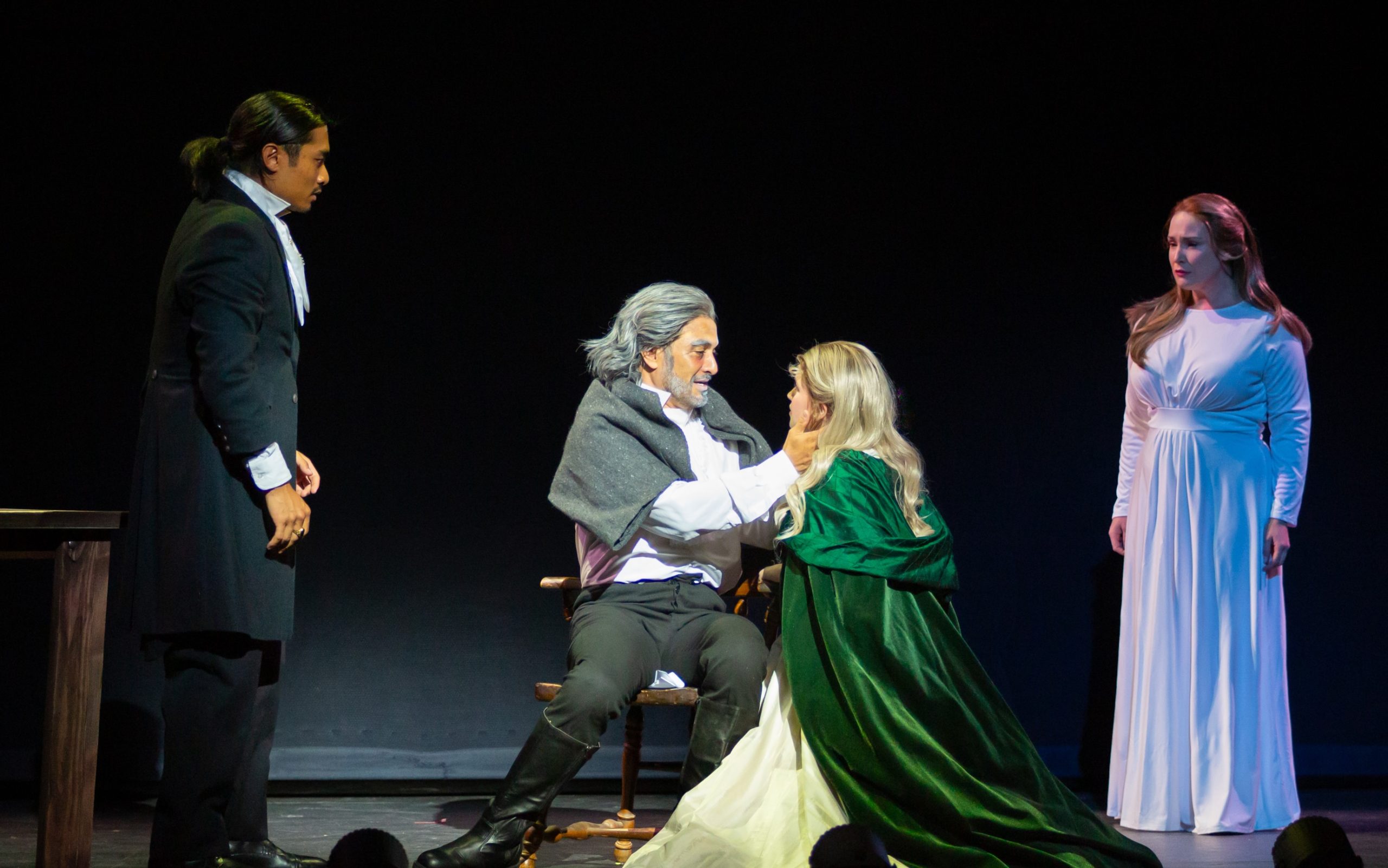
What distinguishes 5-Star Theatricals’ production, above all, is not simply the grandeur of its music or the pageantry of revolution. It is the extraordinary caliber of a company that finds tenderness within suffering, courage amid chaos, and redemption out of bleak despair. Led by Bermudez’s magnificent Valjean, this Les Misérables achieves something rather breathtaking, making a monumental work feel profoundly and unmistakably human.
Cover image caption: Richard Bermudez and Peyton Crim star in 5-Star Theatricals’ production of Les Misérables at the Bank of America Performing Arts Center in Thousand Oaks. Photo by Veronica Slavin.
5-Star Theatricals’ production of Les Misérables runs through Sunday, October 18th at the Fred Kavli Theatre at the Bank of America Performing Arts Center, 2100 Thousand Oaks Blvd. in Thousand Oaks. For tickets and additional information, visit 5StarTheatricals.com.

