A century can change an extraordinary number of things, yet some of America’s most stubborn divisions have proved remarkably resistant to time. Rubicon Theatre Company’s Ragtime gives those conflicts a human face in a deeply moving, vocally magnificent staging that makes full use of the theater’s intimacy. Directed by J. Scott Lapp, the musical, which opens Rubicon’s 2026-27 season, continues in Ventura through November 15th. Here, the distance between an audience and the people confronting a nation’s prejudices is small enough to make their struggles feel uncomfortably immediate.
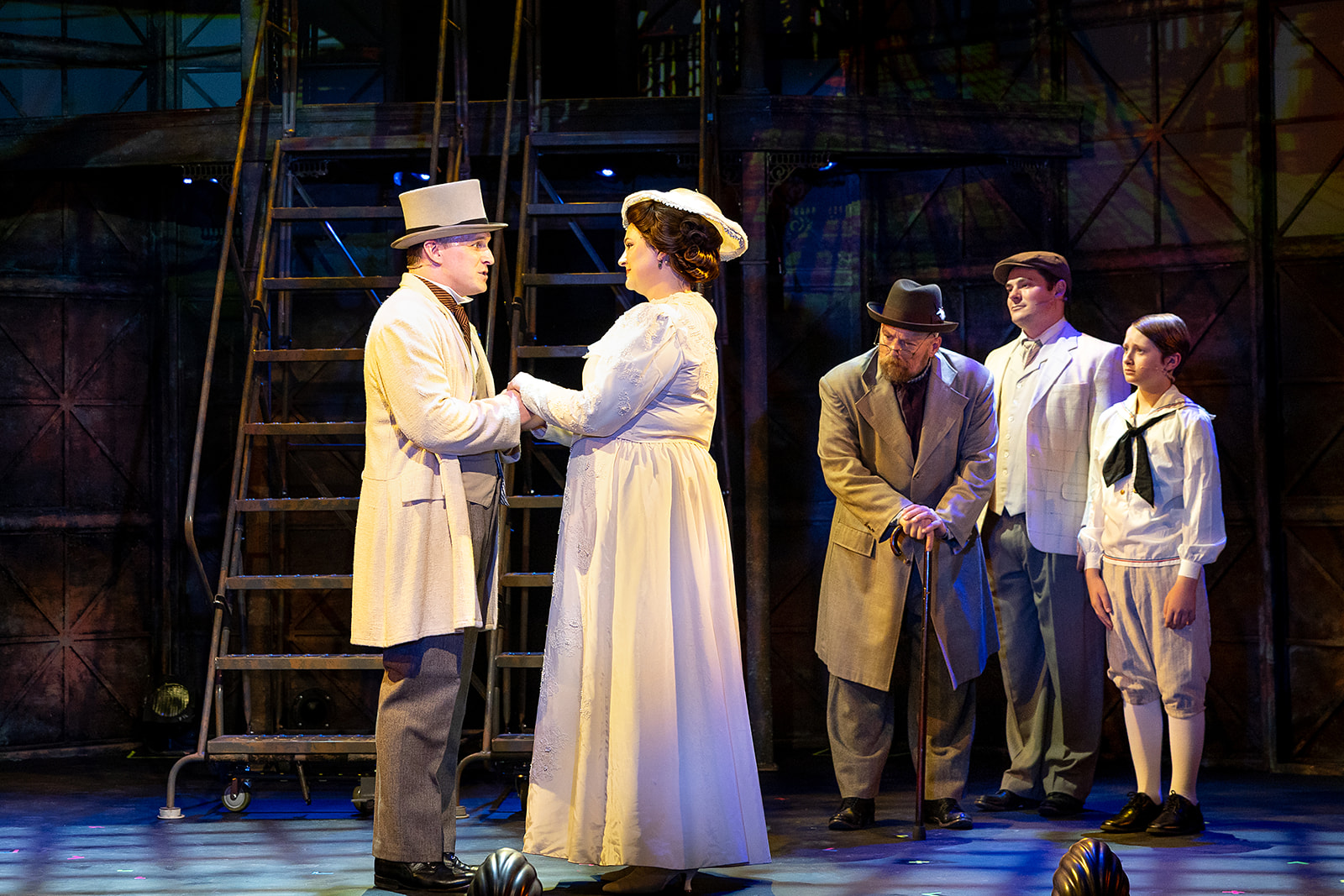
Set around New York at the dawn of the twentieth century, Ragtime follows three families pursuing very different versions of the American dream. Coalhouse Walker Jr. (Carter Michael), a gifted Black pianist, hopes to build a future with Sarah (Marisa Moenho) and their child. Tateh (Danny Becker), a Jewish immigrant from Latvia, fights to provide for his young daughter (Amy Sorensen). Mother (Chelle Denton), meanwhile, begins to question the expectations governing her prosperous New Rochelle household, which she shares with her husband (Ben Michael), their young son (Chance Challen), and her younger brother (Jacob Haren). Their stories gradually intersect, exposing a society in which opportunity and dignity are distributed anything but equally.
Adapted from E.L. Doctorow’s novel, with a book by Terrence McNally, music by Stephen Flaherty and lyrics by Lynn Ahrens, Ragtime arrived on Broadway in 1998 and won four Tony Awards from 13 nominations, including Best Book and Best Original Score. Southern California audiences may recall Pasadena Playhouse’s award-winning 2019 production. Rubicon’s approach is less expansive physically, but no less ambitious in what it asks its performers to communicate.
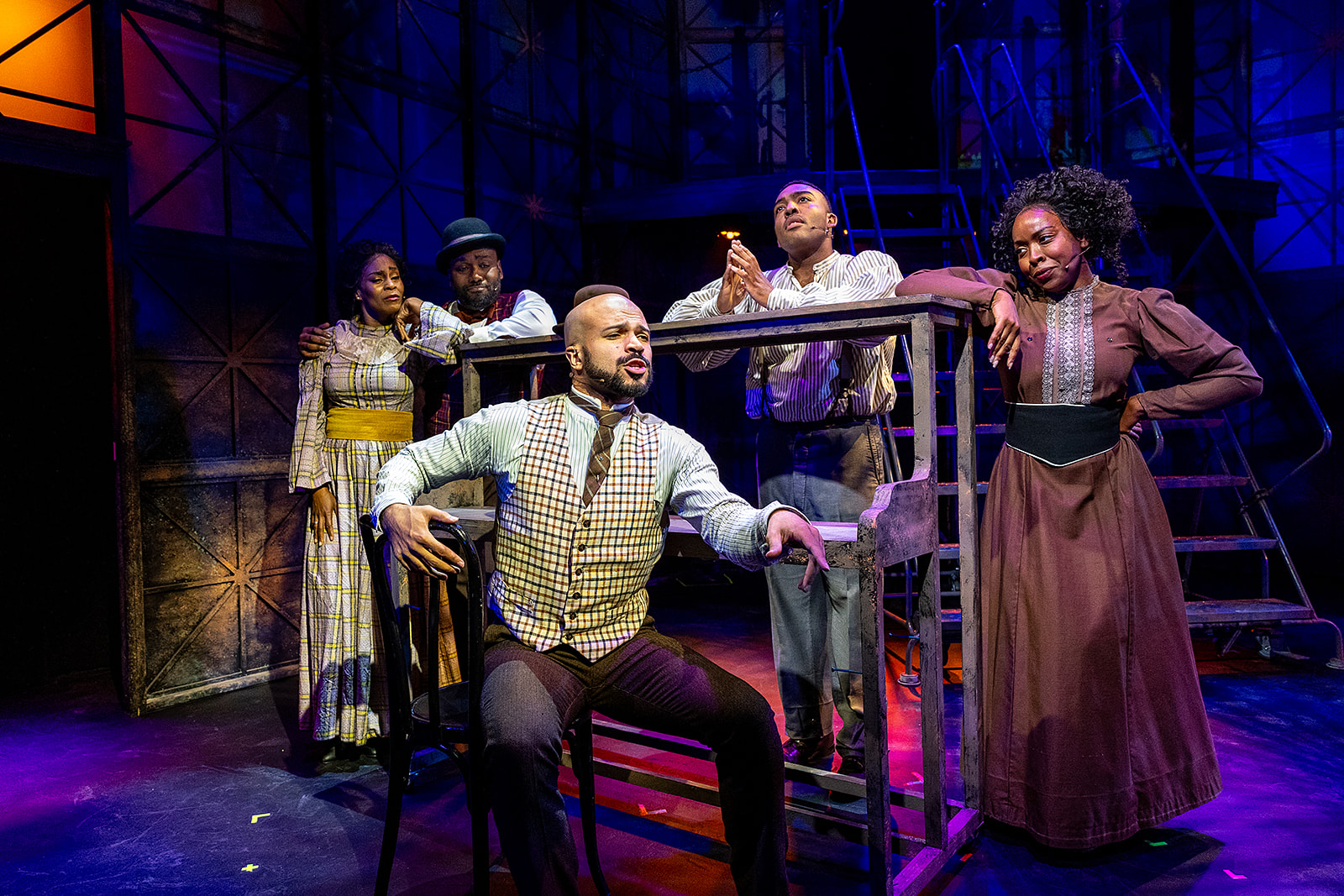
Carter Michael is superb as Coalhouse, initially conveying intelligence, good humor and self-possession through a reassuringly gentle voice that nevertheless carries tremendous strength. That equilibrium becomes increasingly difficult to maintain as racism and official indifference deny him the justice he expects. Michael handles the transition with formidable conviction, allowing Coalhouse’s righteous anger to become frightening without obscuring what gave rise to it. His rich, soulful singing is especially stirring in “Make Them Hear You,” where moral urgency finds an eloquence that violence cannot.
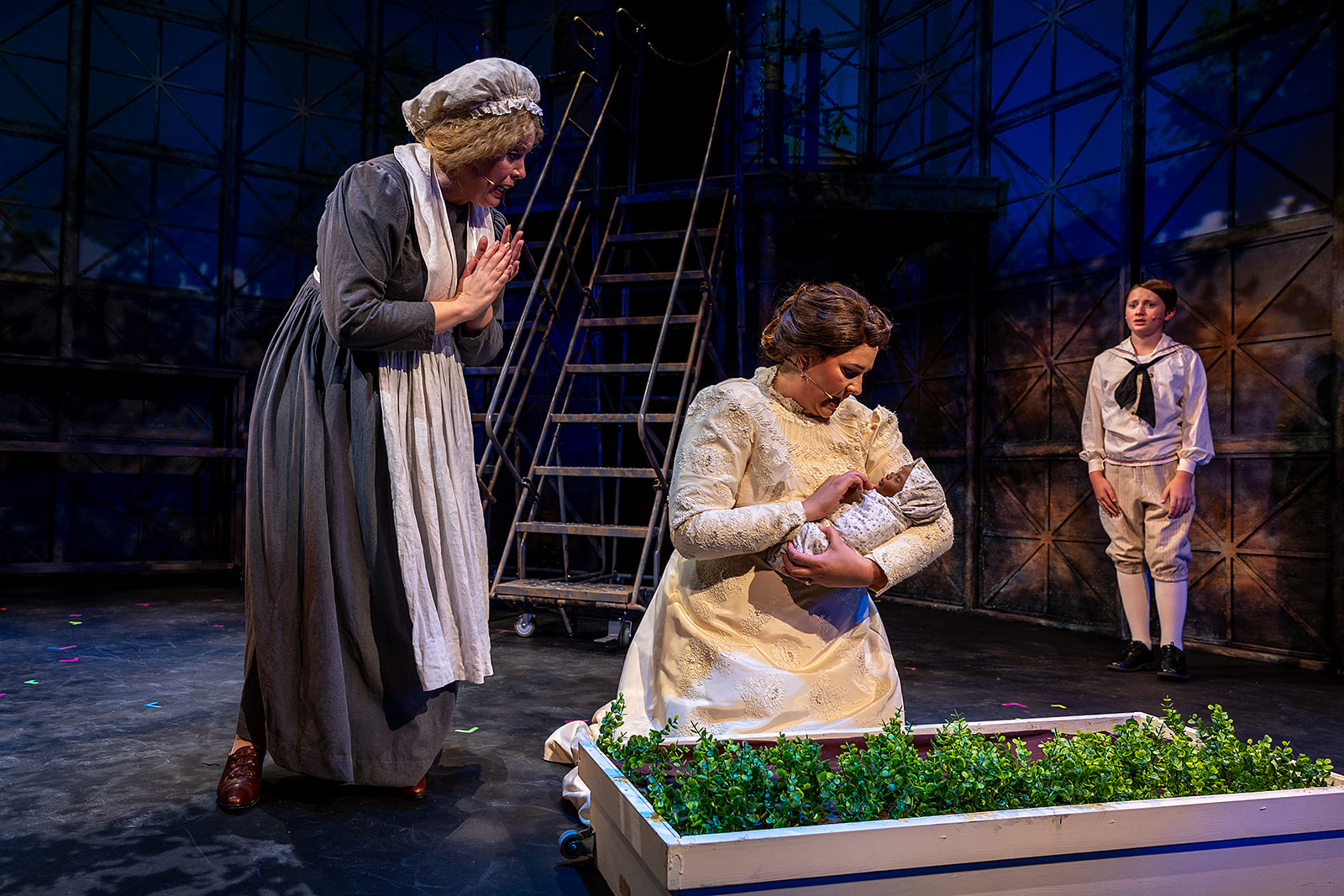
Marisa Moenho, seen only a few weeks ago as Chiffon in La Mirada Theatre’s Little Shop of Horrors, is an extraordinary Sarah. Her voice seems to swell effortlessly, acquiring a heart-tugging vibrato without losing its clarity. During “Your Daddy’s Son,” tears stream down her face as she clutches her baby, her anguish expressed as vividly in her eyes as in the aching phrases she sings. When she and Michael join in “Wheels of a Dream,” his deeper timbre and her tender upper register create one of the evening’s most beautiful musical partnerships.
Chelle Denton brings a wonderfully refined tone to Mother, sustaining notes that seem to linger after she releases them. What begins as instinctive compassion gradually becomes a firmer independence, particularly beside the stubborn certainties of her husband. Her “Back to Before” is a triumph of controlled feeling, blending wistfulness with the assurance of someone who knows she cannot return to her former life. Its closing notes send a genuine chill through the room. Equally lovely is “Our Children,” her duet with Tateh, which finds enormous tenderness in the simple recognition of what parents want for their kids.
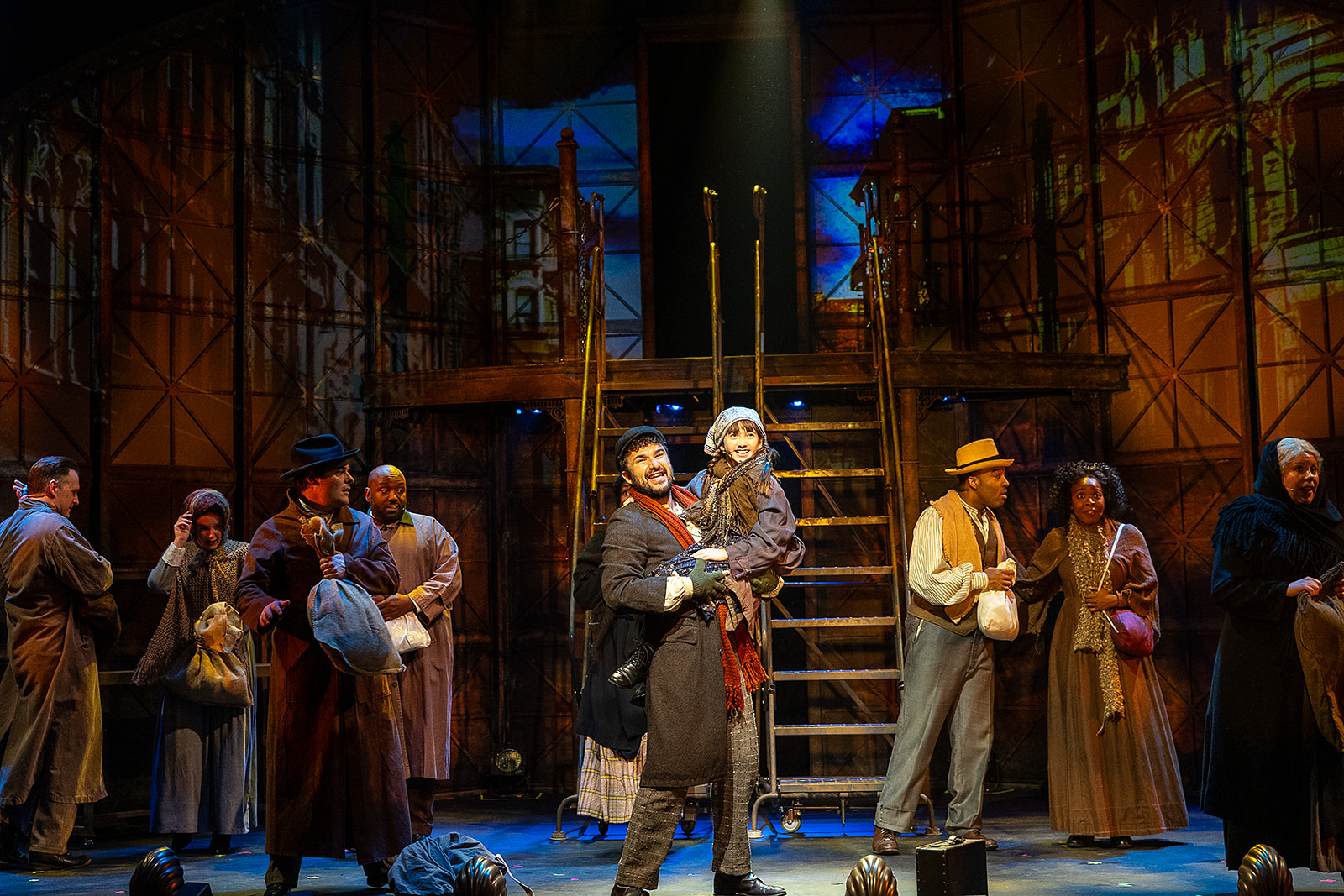
Danny Becker, making his American principal-role debut, is similarly exceptional as Tateh. His expressive eyes and carefully maintained accent, supported by dialect coach Joel Goldes, reveal the pride, exhaustion and intermittent fury of an immigrant determined to survive without surrendering his humanity. His affection for Amy Sorensen’s endearing Little Girl makes “Gliding” especially affecting, while his later celebration in “Buffalo Nickel Photoplay, Inc.” allows him to savor how much his circumstances have changed. Sorensen, previously Tiny Tim in Chance Theater’s Scrooge! The Musical, matches her onstage father’s sincerity with an appealing, unforced presence.
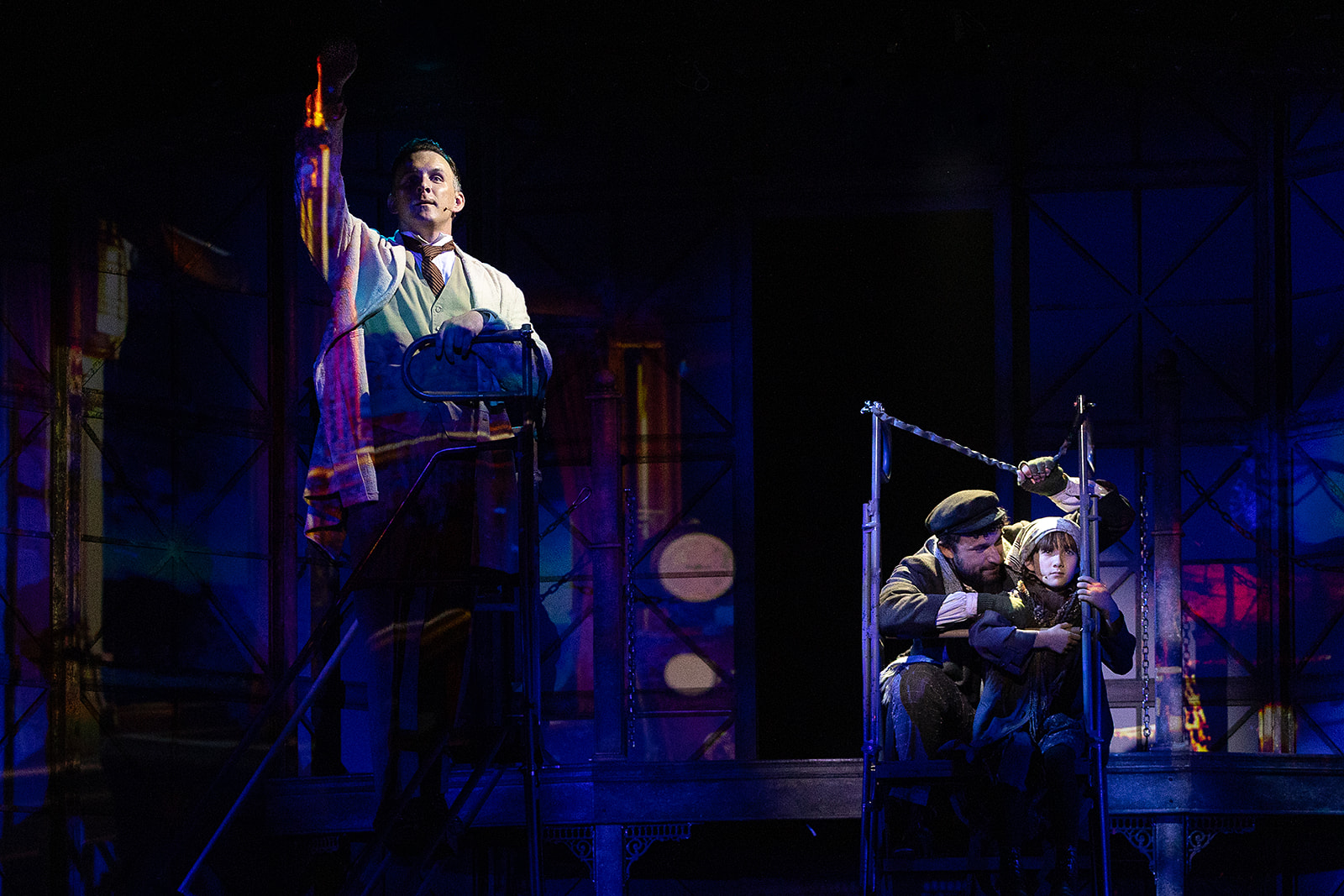
As Father, Ben Michael convincingly exposes the limitations of a man who mistakes social privilege for good judgment. There are flashes of warmth, notably during “Journey On,” but his outlook hardens even as Mother’s widens. His baseball outing in “What a Game!” becomes an amusing expression of the distractions he prefers to confronting injustice. Jacob Haren, as Mother’s Younger Brother, provides a volatile counterpoint, his mounting anger at Coalhouse’s treatment acquiring palpable indignation when he challenges Father’s prejudices. Both actors also assume other roles, with Michael appearing as Henry Ford and Haren bringing welcome comic flair to the enigmatic Harry Houdini.
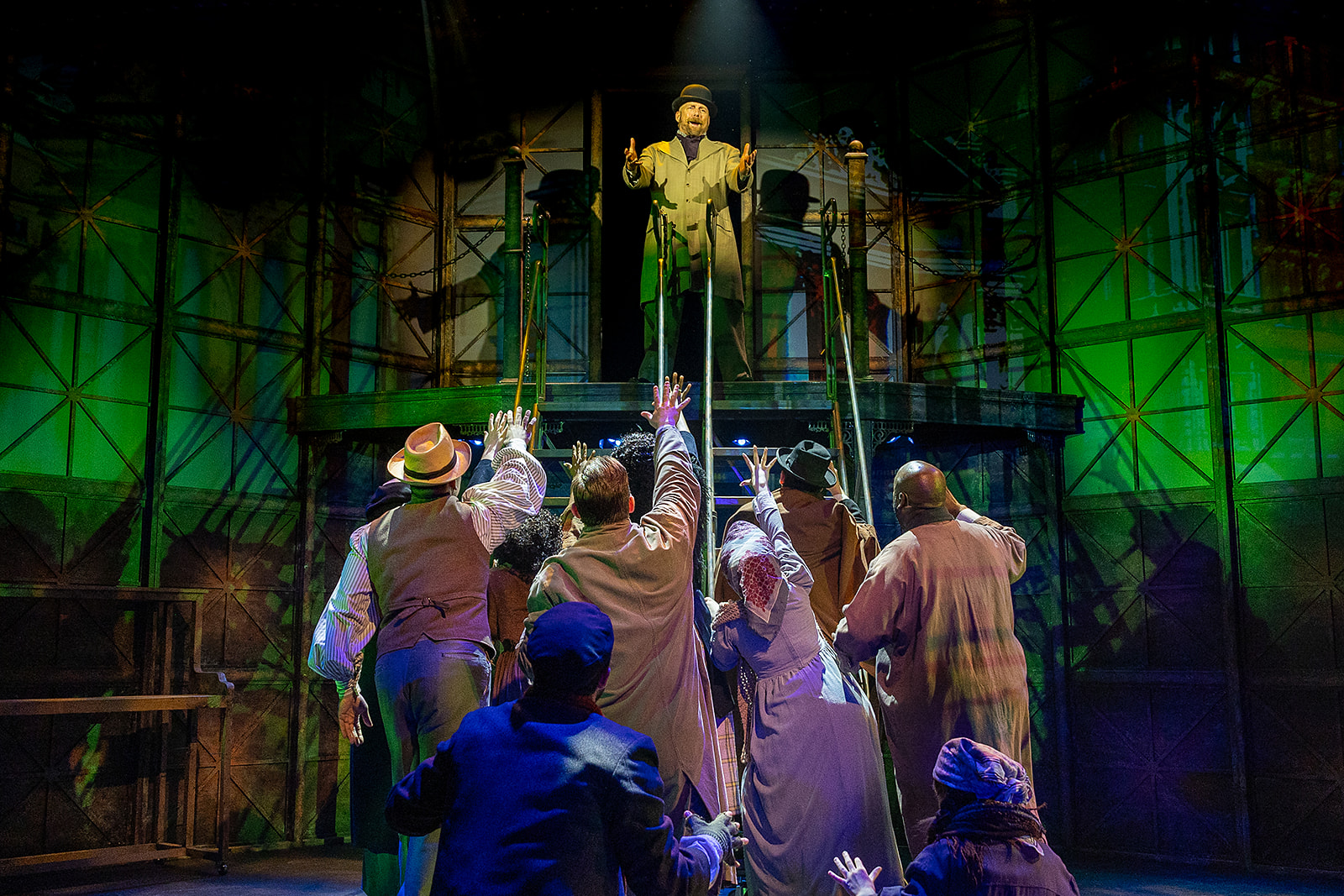
Kate Ponzio’s Emma Goldman provides a galvanizing political conscience, her fervent appeals helping clarify the stakes for those excluded from the nation’s prosperity. DeAndre Simmons lends Booker T. Washington imposing dignity and moral authority, while also portraying a judge, among others. Angela Griswold has tremendous fun as celebrity Evelyn Nesbit, her high-pitched exclamations brightening “The Crime of the Century” and the playful “Atlantic City” sequences. Most versatile of all is Guy Noland, whose doddering, lovable Grandfather bears almost no resemblance to his viciously racist Willie Conklin. Shifts in posture, expression and voice distinguish his many additional characters, including a constable, an umpire and financier J. P. Morgan.
Amber Wright, as Sarah’s Friend (and the show’s dance captain), gives the first-act finale, “Till We Reach That Day,” an astonishing emotional release. Her ringing upper notes seem to draw grief from somewhere intensely personal, with the surrounding ensemble magnifying the effect from positions that extend alongside the audience. Chance Challen is alert and engaging as Mother’s perceptive Little Boy. Deja Fields as a Harlem woman, Christopher James Hester as Matthew Henson, and Hillary Boyd as Kathleen help populate the changing American landscape without overwhelming its central relationships.
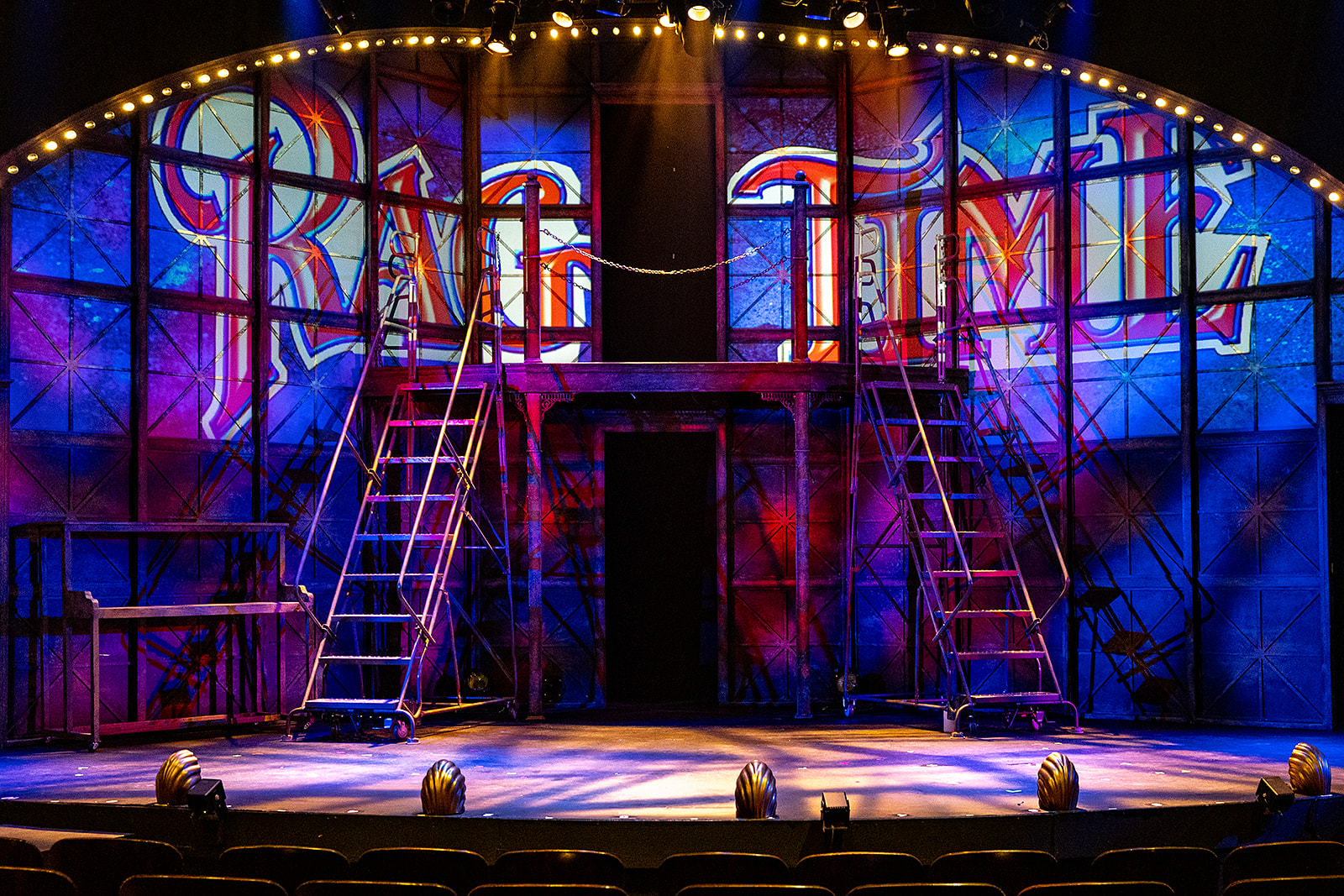
The production’s comparatively modest resources become an advantage in Lapp’s hands. Seventeen onstage performers assume a wide assortment of roles, with many depicting five to seven characters throughout. Mike Billings’ scenic, lighting and projection design is exceptionally resourceful, using two movable steel staircases and a wall of crosshatched, windowlike panels to suggest locations far beyond the stage. Alex Choate’s clever furniture and prop work even transforms the frame of Coalhouse’s piano into a Model T with the addition of tires. Pamela Shaw’s costumes and Danielle White’s wigs make the rapid changes of character immediately recognizable.
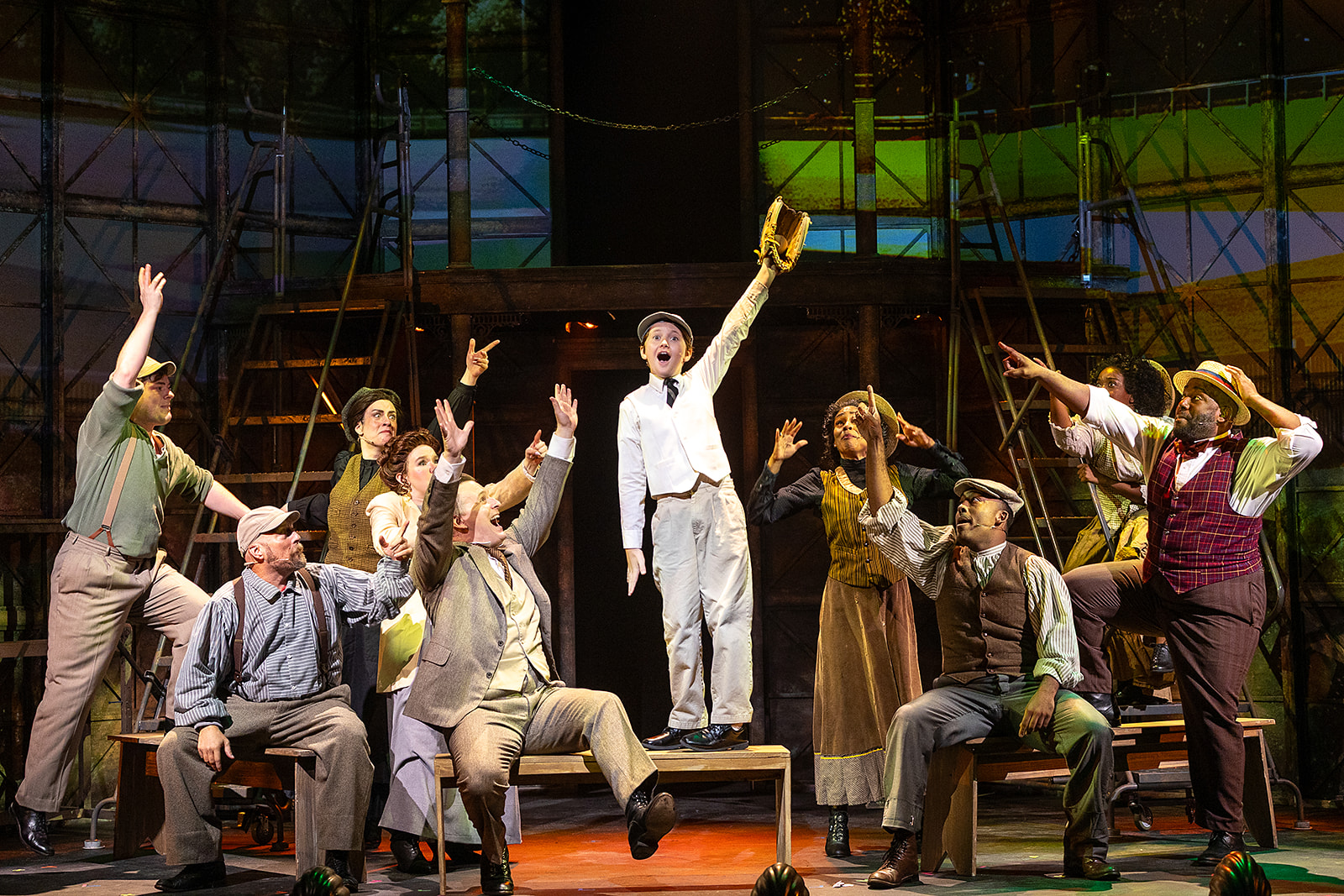
Natalie Iscovich’s choreography is often more concerned with placement and movement than elaborate dance, though the spirited Harlem sequences and the baseball number supply welcome bursts of levity. Under conductor and music director Abdul Hamid Royal, a five-piece band performs downstairs, out of the audience’s sight. Yet Ryan Touhey’s orchestrations, coupled with Danny Fiandaca’s clear sound design, create an admirably full musical presence. The rising voices of the opening number establish that richness at once, and the sound retains its warmth during the most intimate solos.
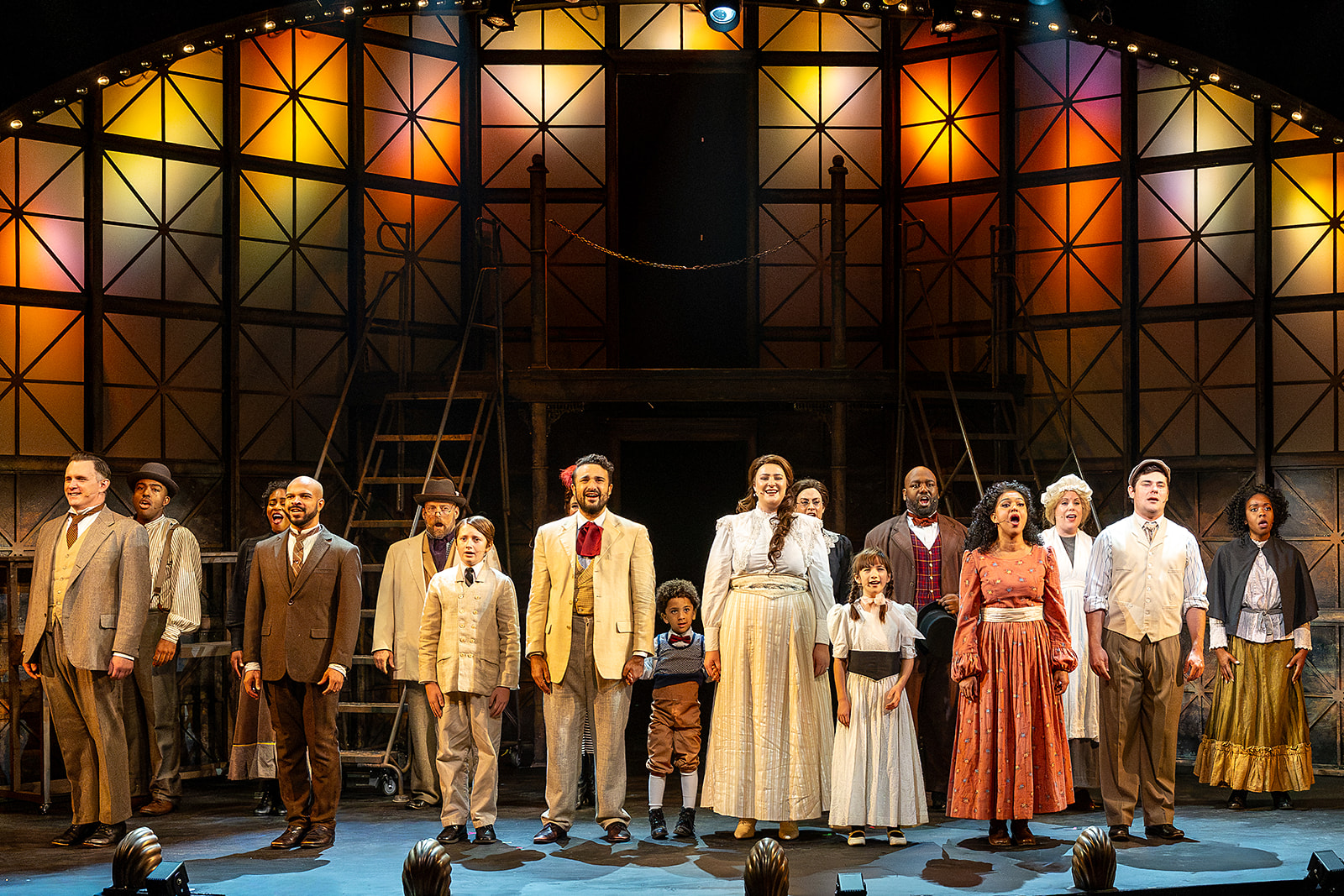
Overall, what sets apart Rubicon’s Ragtime is not simply its ability to make a large musical work in a small theater. It is how convincingly this cast connects private longing with the systems capable of nurturing or crushing it. There is sorrow here, but also humor, parental tenderness and the stubborn possibility of change. In 2026, its account of people denied the respect they have every reason to expect remains difficult to dismiss. Lapp and his company make its hard-won moments of compassion every bit as persuasive as its anger.
Cover image caption: Marisa Moenho and Carter Michael in Rubicon Theatre Company’s production of Ragtime in Ventura. Photo by Loren Haar.
Rubicon Theatre Company’s production of Ragtime continues through Sunday, November 15th, at The Karyn Jackson Theatre, 1006 E. Main Street in Ventura, California. For performance schedules, tickets, and additional information, visit RubiconTheatre.org.

