A London boy retreats from a world he can no longer bear, only to become an object of fascination for the very people who scarcely understand him. That unsettling contradiction gives The Who’s Tommy much of its dramatic charge. The North American tour of Pete Townshend and Des McAnuff’s rock opera, now playing at the Hollywood Pantages Theatre through November 15th, brings the familiar score to a visually arresting production whose theatrical ingenuity does not always translate into emotional resonance.
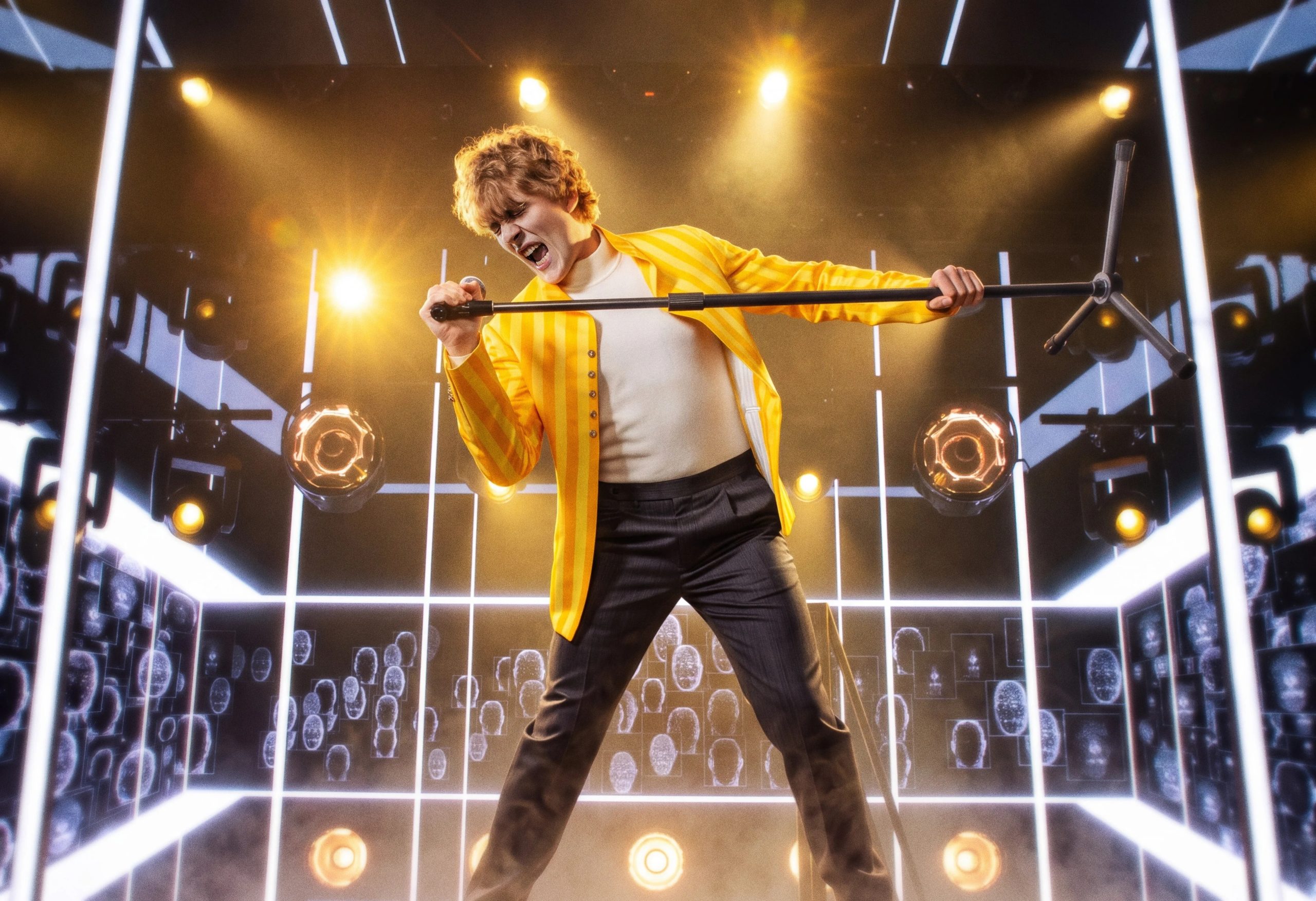
Adapted from The Who’s 1969 concept album Tommy, the stage musical premiered at La Jolla Playhouse in 1992 before reaching Broadway in 1993, winning five Tony Awards, including honors for Townshend’s score and McAnuff’s direction. The pair revisited the work at Chicago’s Goodman Theatre in 2023 before a Broadway return the following year. This touring version retains the revival’s creative approach but introduces a new cast, having opened in Cleveland earlier this month. Its brisk, approximately 100-minute running time hardly leaves room to recover between one musical episode and the next.
Against the backdrop of World War II, Royal Air Force Captain Walker (Zach Fogel) is presumed dead, and his wife (Mia Bergstrom) attempts to rebuild her life. His unexpected return leads to a violent confrontation witnessed by their young son, an event with irreversible consequences. Pressured into silence, Tommy withdraws from his surroundings, and the family’s efforts to reach him expose him to further cruelty. Yet the child discovers an extraordinary aptitude for pinball, a gift that eventually turns him into a celebrity and something approaching a spiritual figurehead.
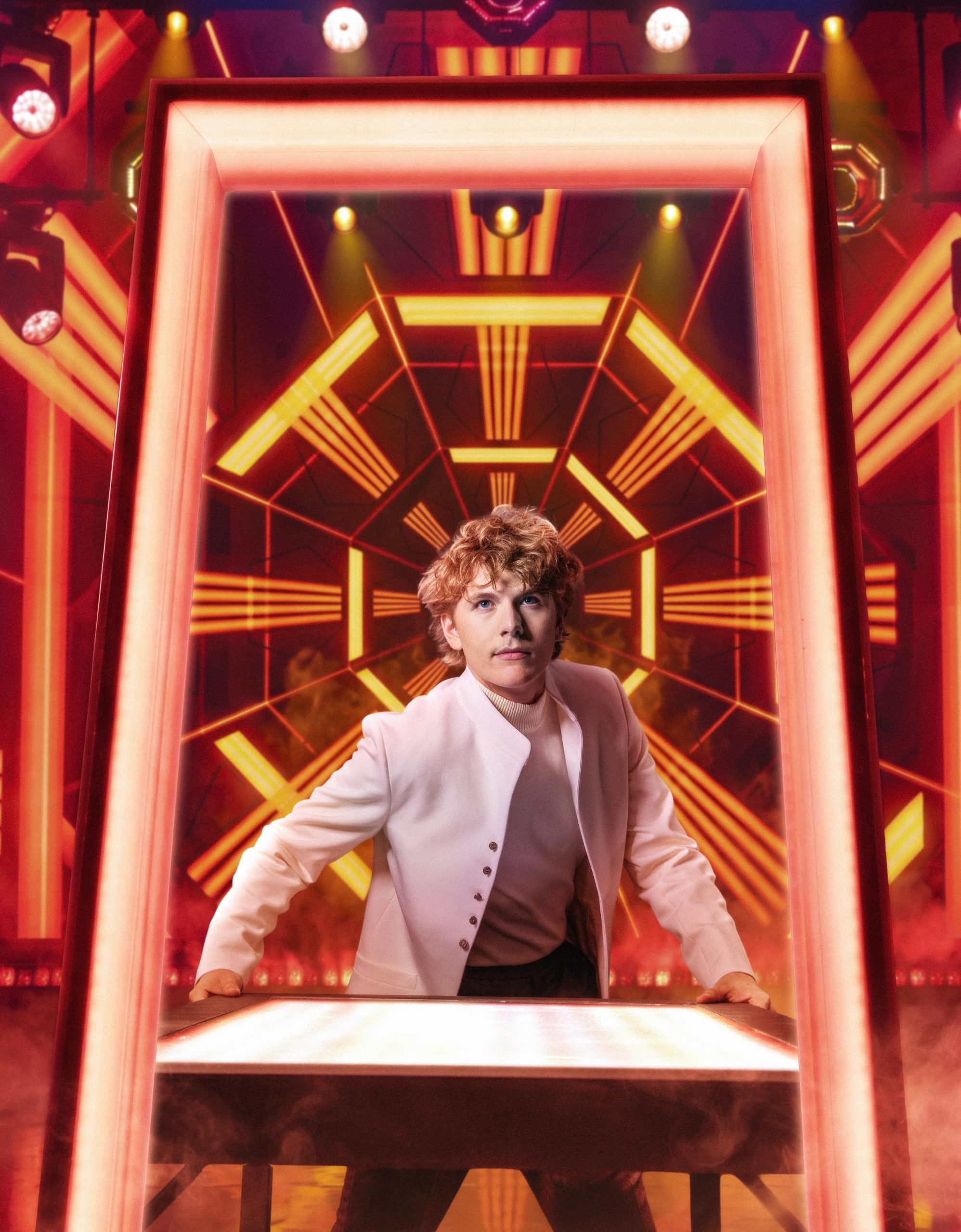
This is where Tommy moves beyond the familiar trajectory of a troubled boy finding success. Recognition does not necessarily bring understanding, and the crowds celebrating his unusual ability prove no more capable of seeing the person beneath it. The musical’s shifting perspective, often carried through songs rather than conventional dialogue, allows Tommy’s inner life to emerge despite his outward silence.
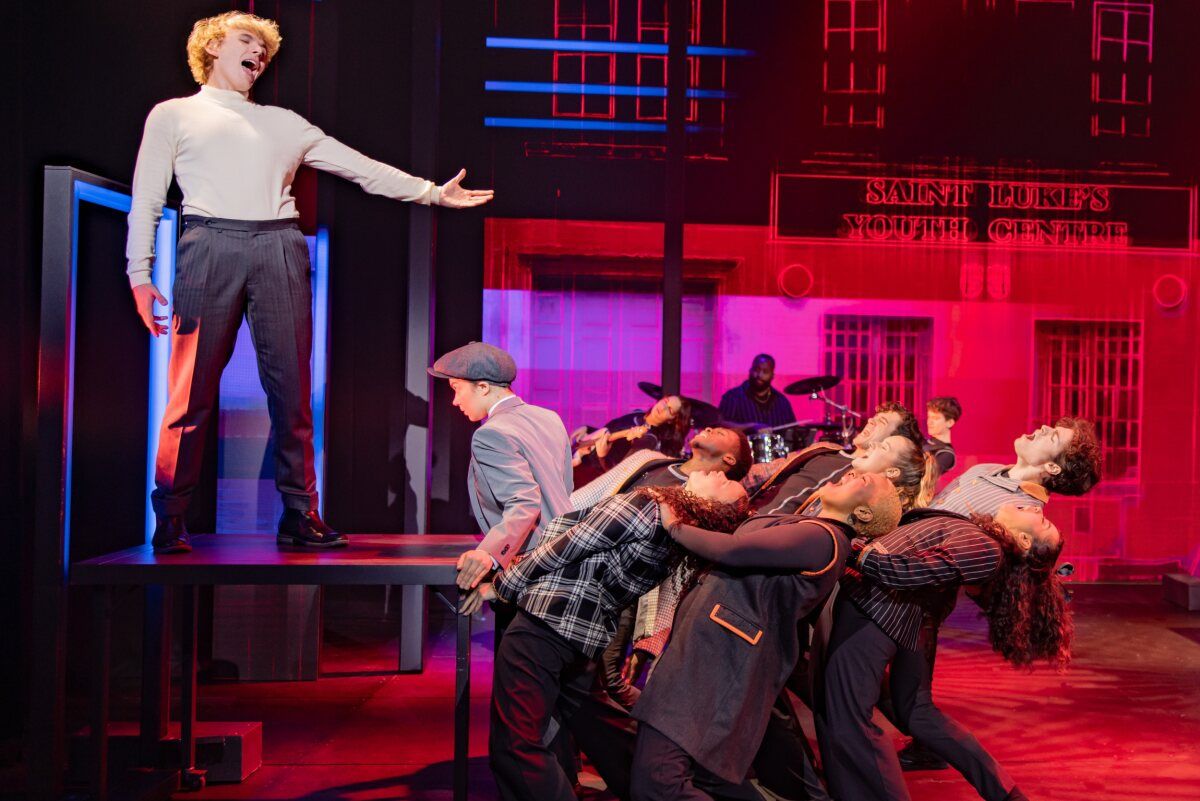
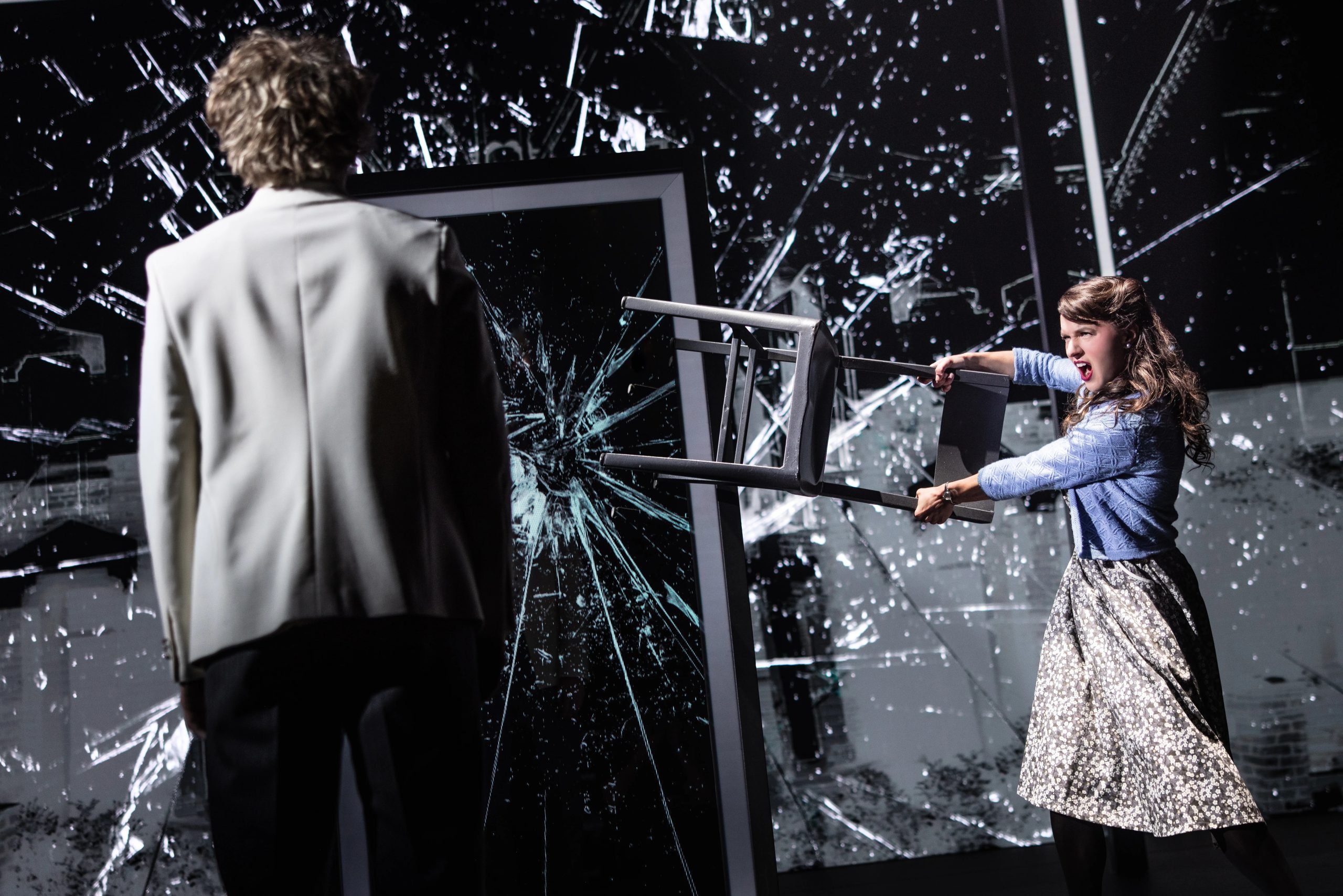
Some of the evening’s most persuasive storytelling comes from its design. David Korins’ scenery, Peter Nigrini’s projections, and Amanda Zieve’s lighting transform the stage into something approaching a rock concert, beginning with images that appear to acquire a third dimension behind a translucent scrim. During the wartime sequences, silhouetted paratroopers seem to plunge through the air as enormous shadows billow behind them, an ingenious illusion amid bursts of light and movement. Illuminated doorframes, sometimes edged in white or green, recur as the action moves through Tommy’s fractured world. Later, turquoise washes flood the pinball sequences, while live camera imagery gives his sudden celebrity an unnervingly public dimension. The visual language is remarkably assured and meticulously executed.
Music provides another genuine pleasure. The opening stretches lean heavily on instrumental passages that pulse through the Pantages with considerable force, establishing an almost hypnotic momentum. Gareth Owen’s sound design gives welcome prominence to the band, whose musicians remain visible at various points during the performance. Guitarist Talia Rose, bassist Cat Barker, and drummer Kelvin Newell generate much of that propulsion, joined by music director Calvin Hitchcock and associate music director Gregory Franz on keyboards. Under Ron Melrose’s music supervision, Townshend’s score retains its bite, and the instrumental playing is among the production’s strongest assets.
Collin Matthew Flanagan assumes the demanding title role, appearing as both Tommy’s inner voice and the young man who eventually confronts the world. In “Amazing Journey” and “See Me, Feel Me,” he gives expression to what the younger Tommy cannot articulate. Mari Grossmann, playing Little Tommy, suggests the child’s isolation through near-total stillness, often surrounded by adults unable to penetrate his silence. Bergstrom and Fogel bring credible concern to the parents’ predicament, their voices finding a particularly effective partnership in “I Believe My Own Eyes.” Bergstrom also sings with mounting urgency in “Smash the Mirror,” as frustration finally overwhelms her attempts to reach her son. Their exchanges suggest a wealth of guilt and confusion that the pace rarely permits them to explore.
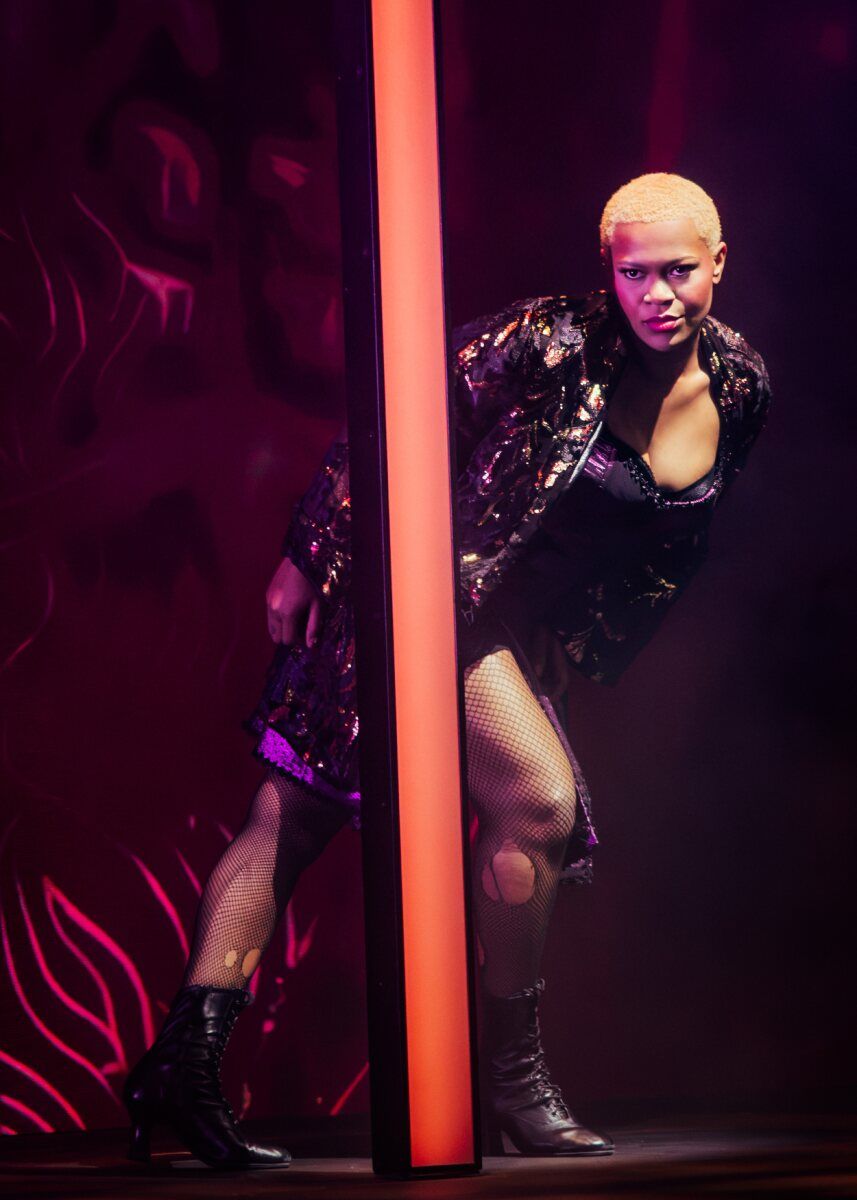
Tommy’s vulnerability is compounded by the exploitation and cruelty of Peyton Cassity’s Uncle Ernie and Kyle McFalls’ Cousin Kevin. The strongest individual vocal impression, however, belongs to Kris Lyons as the Acid Queen. Dressed in purple, she attacks her number with fierce conviction, her full-throated singing and rasping flourishes bringing a sudden, exhilarating change of temperature. Audrey Fisher’s Sally Simpson later provides a sobering glimpse of the devotion Tommy attracts and the damage that follows.
Lorin Latarro’s choreography takes full advantage of the ensemble’s athleticism. In “Pinball Wizard,” the performers launch into sharp kicks, spins, and exuberant movement under a glow of incandescent light, turning Tommy’s unlikely talent into a spectacle that earns the audience’s enthusiasm. The dancers are equally disciplined in the show’s tighter, more intricate formations, often moving around a central figure who barely responds. “Sensation” offers another spirited showcase of that physical vocabulary, though the familiar pinball anthem’s later returns, instrumentally or otherwise, cannot quite recreate the jolt of its first appearance.
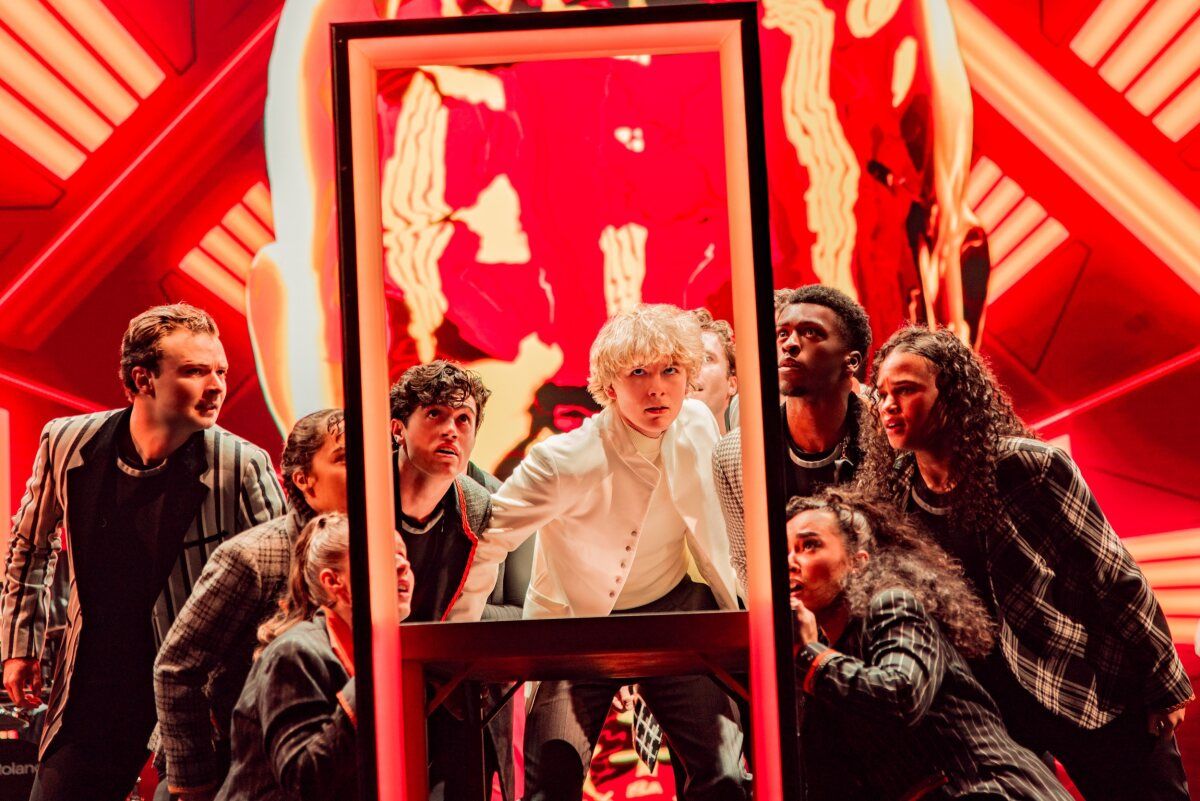
For all this technical accomplishment, the dramatic pulse remains curiously even. The narrative advances from one defining incident to the next with a directness that can feel schematic, and its succession of traumatic experiences seldom accumulates the emotional weight one might expect. The music is frequently loud, the staging almost constantly animated, yet all this activity rarely generates sustained tension. At times, it feels as though Philip Glass had written a rock musical, its insistent rhythms potentially absorbing for some theatergoers and wearying for others. Even Tommy’s breakthrough in “I’m Free,” aided by another impressive convergence of sound, movement, and imagery, registers more clearly as a theatrical event than as a deeply felt personal transformation. The cast sings capably throughout, though beyond Lyons’ standout turn, few performances overcome that distance.
There is a contemporary unease beneath the pageantry. Tommy’s followers elevate someone they barely know, investing his celebrity with meaning he never volunteered to provide. The disconnect feels familiar in an age when an online audience can confuse constant access with actually knowing someone. More troubling is how readily adults claim authority over Tommy’s body and experience, often while insisting that their actions are intended to help him. These are substantial ideas, but the production does more to identify them than to explore their implications.
The Who’s Tommy remains an unusual and ambitious work, one that can be fascinating in its psychological exploration of trauma, selfhood, and the seductions of fame. This tour offers dazzling design, a superb band, and moments of thrilling ensemble work, along with the unmistakable pleasure of hearing Townshend’s music at full strength. Devotees of The Who may find those qualities rewarding enough. As a theatrical whole, however, the outing is more difficult to embrace given that its considerable craftsmanship repeatedly draws the eye and ear, while the human story at its center never quite exerts the same pull.
Cover image caption: Collin Matthew Flanagan as Tommy Walker in the North American tour of The Who’s Tommy. Photo by Evan Zimmerman for MurphyMade.
The North American tour of The Who’s Tommy runs through Sunday, November 15th, at the Hollywood Pantages Theatre in Los Angeles. The production returns to Southern California from Tuesday, March 9th, through Sunday, March 14th, 2027, at Segerstrom Center for the Arts in Costa Mesa. Running time is approximately 100 minutes without intermission.
For performance schedules and tickets, visit Broadway in Hollywood for the Pantages engagement or Segerstrom Center for the Arts for the Costa Mesa engagement.

