Pulitzer Prize–winning playwright Sanaz Toossi’s English is primed to resonate with capacity crowds at the Wallis Annenberg Center for the Performing Arts for a limited run through April 26th at the Bram Goldsmith Theater. Directed by Knud Adams in the Atlantic Theater Company and Roundabout Theatre Company production, the play comes to Beverly Hills following its acclaimed Broadway engagement and earlier Off-Broadway premiere at Atlantic Theater Company in 2022.
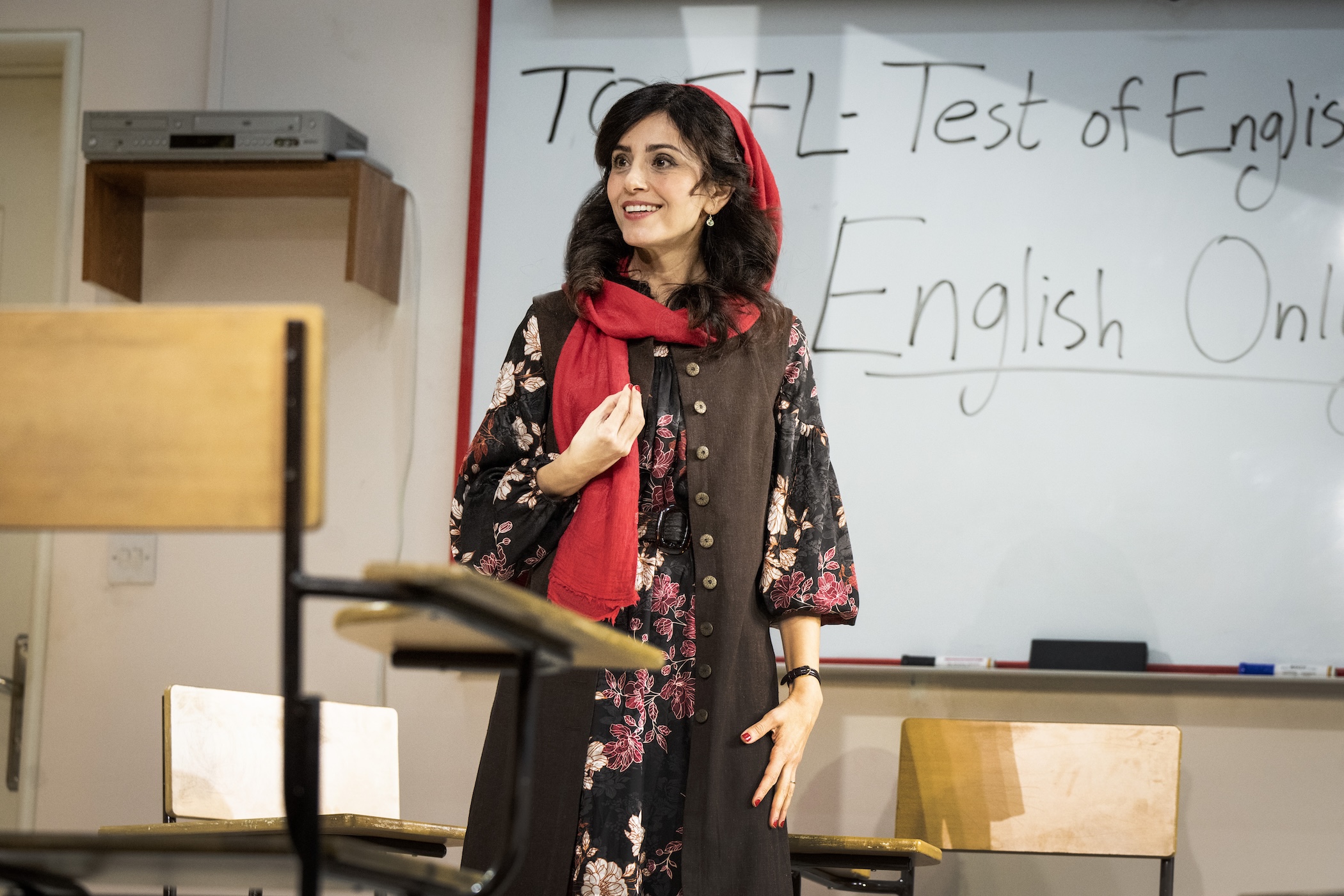
Toossi’s dramatic comedy has quickly become one of the most discussed plays of the past few years. English received the 2023 Pulitzer Prize for Drama and earned five Tony Award nominations in 2025 during its Broadway run, including Best Play and Best Direction for Adams. American Theatre magazine also included it among the most influential works of the new millennium. Raised in Orange County as the daughter of Iranian immigrants, Toossi draws on personal and cultural insight to craft a story that carries meaning beyond its classroom setting.
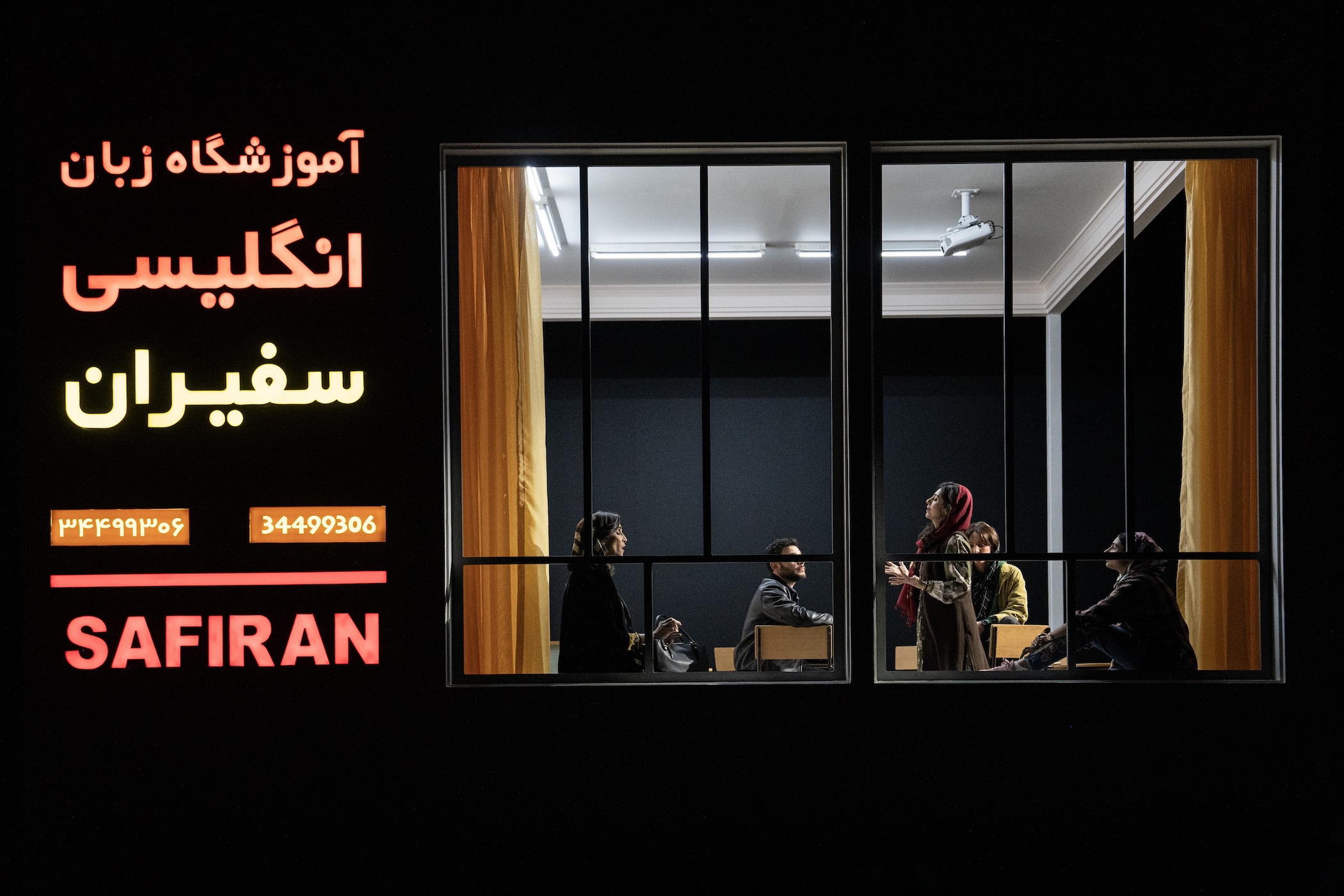
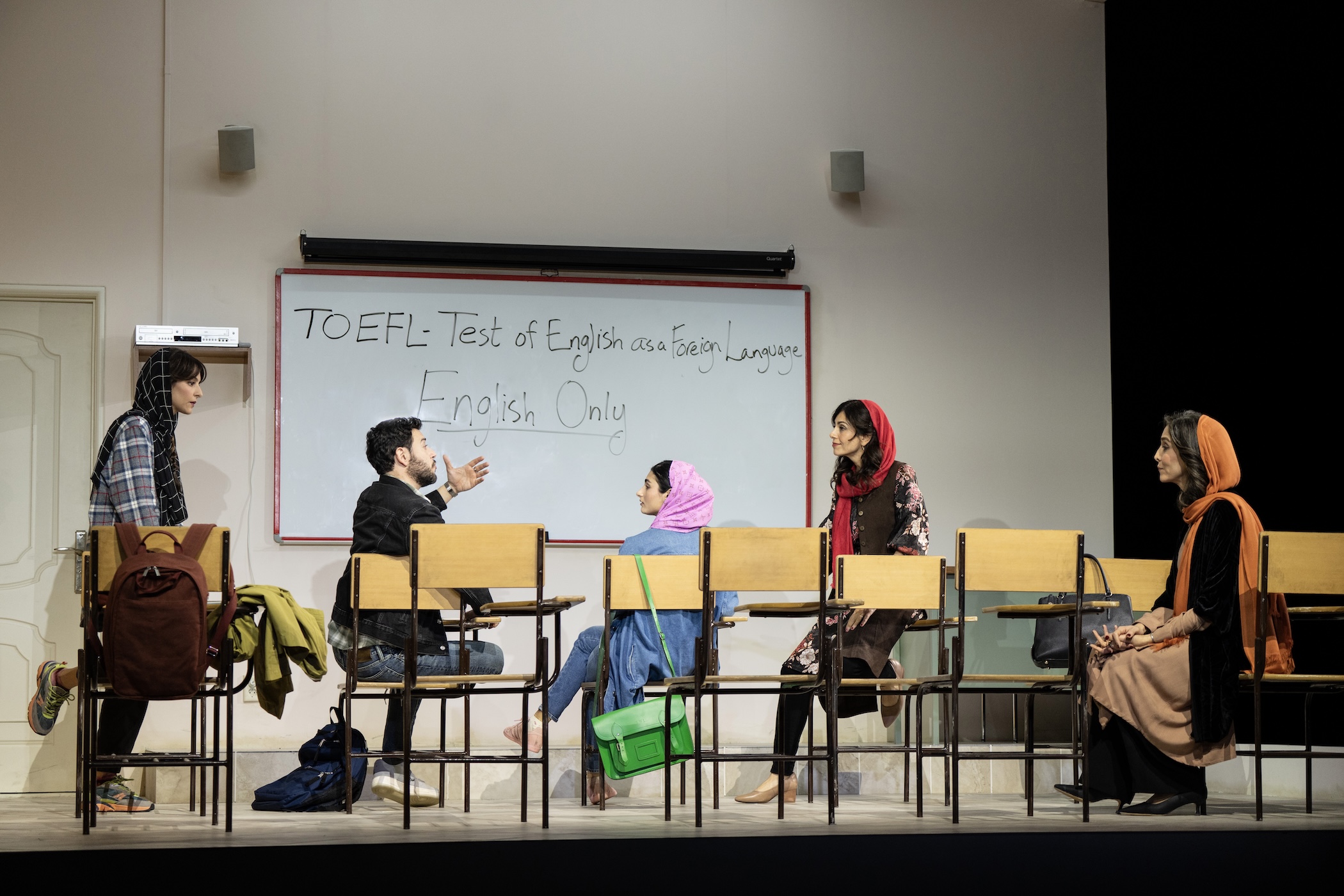
The play unfolds in a modest English-language institute near Tehran, where four adult students prepare for the TOEFL — the Test of English as a Foreign Language. Their teacher enforces a strict classroom rule: “English only.” As the students work through pronunciation drills, vocabulary exercises, and awkward show-and-tell assignments, the pursuit of fluency begins to expose deeper questions about identity, belonging, and the emotional cost of leaving one language behind for another.
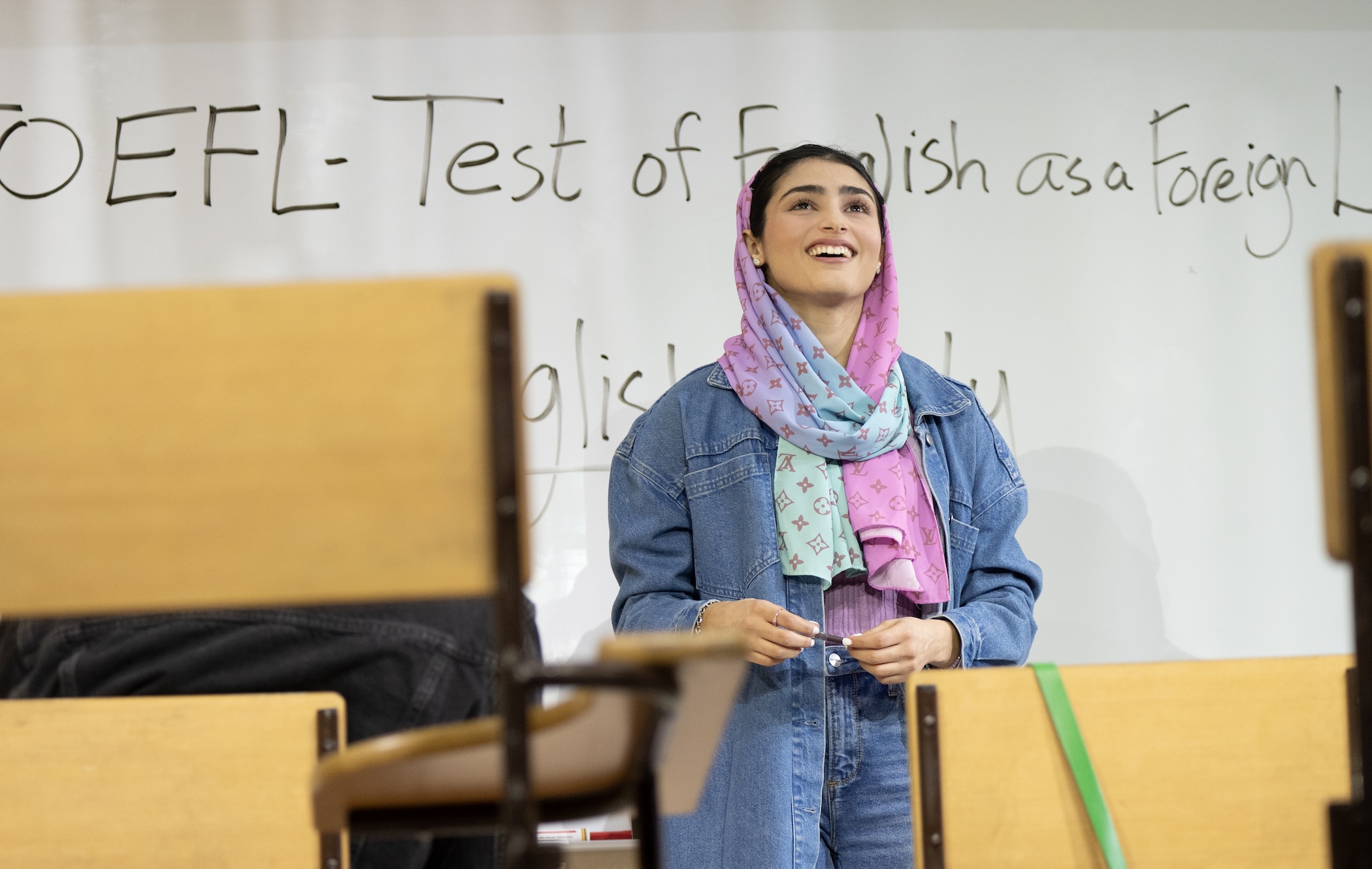
One of the play’s most striking theatrical devices shapes how audiences experience that tension. Inspired by Brian Friel’s Translations, the production reverses expectations of language and accent. As such, when the characters are speaking Farsi, the actors speak in an entirely unencumbered manner conveyed via unaccented American speech; however, when they attempt English within the classroom, their dialogue sounds restrained, which is communicated through an audible Persian accent. The effect highlights an ironic contradiction between what audiences intellectually understand and what their ears instinctively register, quietly revealing how accent and fluency can influence perception.
With Los Angeles home to one of the largest Iranian diaspora communities outside of Iran, English arrives at the Wallis with great import. Blending humor, empathy, and linguistic insight, the play gives attendees the opportunity to consider how language can both connect people and complicate their sense of self.
LAexcites recently spoke with Tala Ashe, who earned one of the play’s five Tony nominations — specifically for Best Featured Actress, an honor also earned by co-star Marjan Neshat — following her compelling Broadway turn as Elham, the very same character she revisits at the Wallis. Ashe, who immigrated to the United States from Iran before she was a year old, has earned a strong reputation both on stage and on screen, most notably in DC’s Legends of Tomorrow. She discusses her character as well as the layered complexities and intent of English.
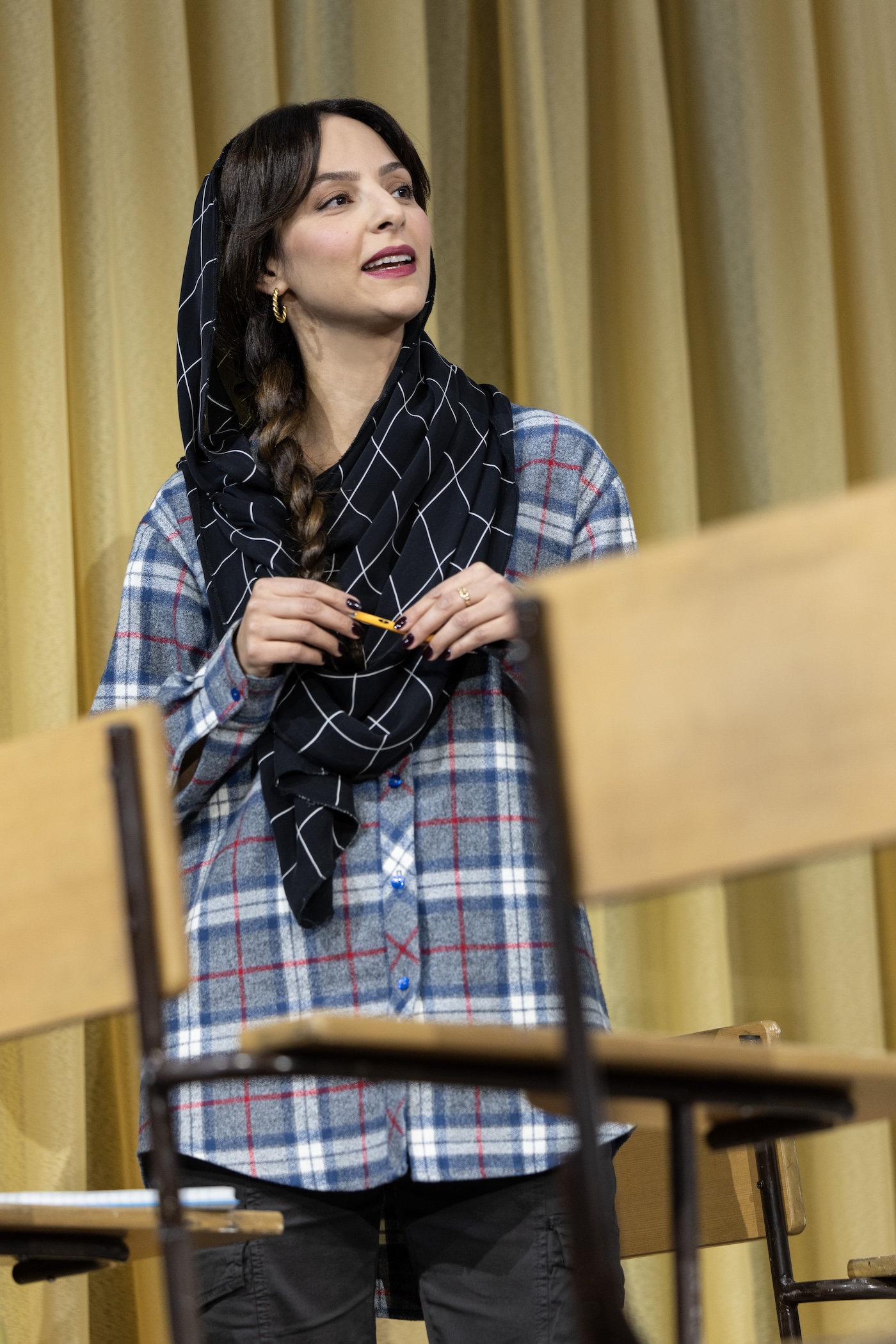
English takes place almost entirely inside a language classroom. How did you approach building a character whose personal identity is constantly shifting depending on which language they are speaking?
Ashe: I don’t actually think her personal identity shifts so much as she is aware that the outside perception of her identity shifts. This is the root of her frustration. She’s so confident about who she is and what she wants and is enraged to feel like an “idiot” when speaking English. I think this is very relatable for anyone who has ever tried to learn a new language — who has struggled to express themselves without fluency.
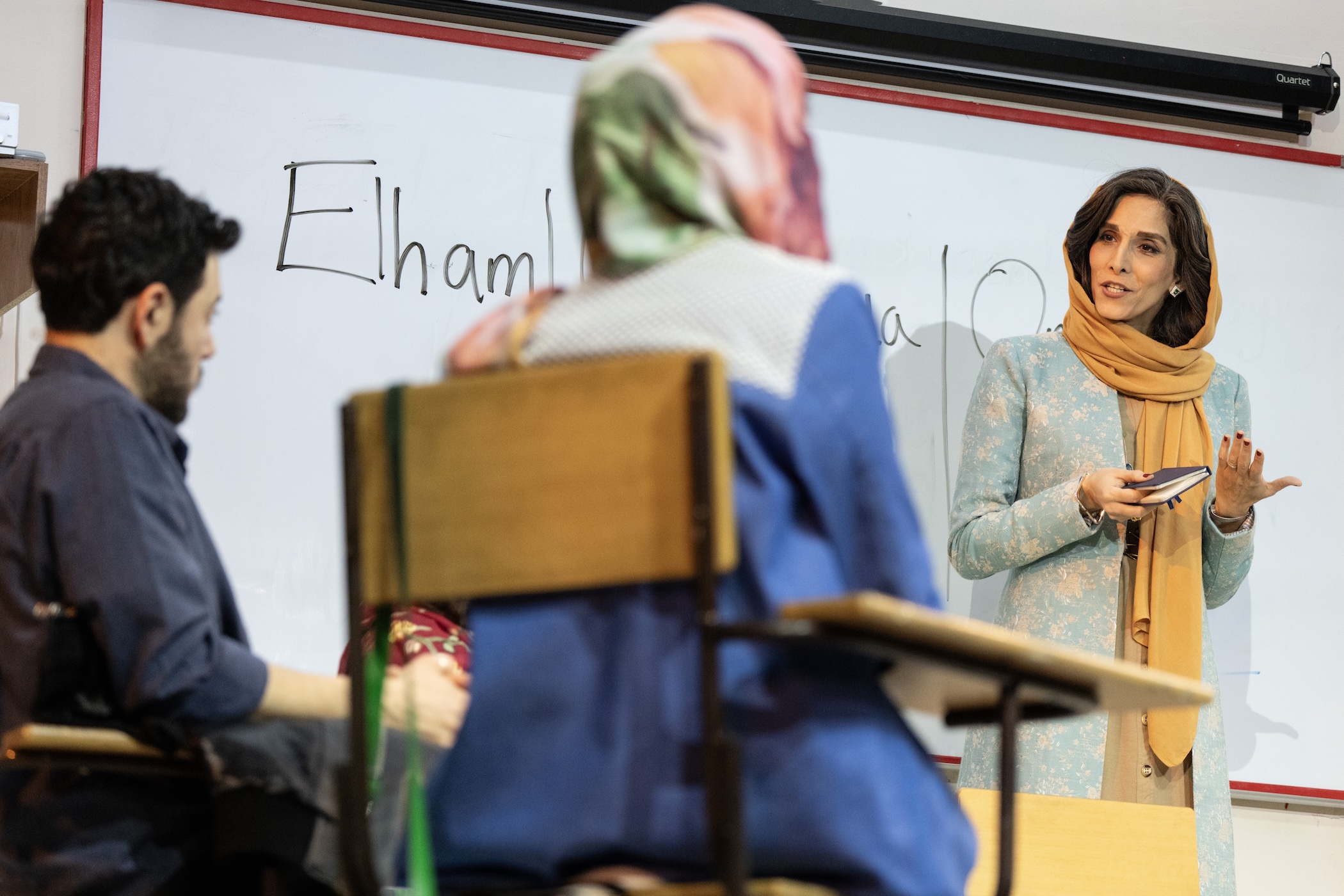
The play employs an interesting dramatic device in which audiences hear fluent American speech when the characters are speaking Farsi, but more hesitant accents when they attempt English. How does performing within that reversal affect the way you think about communication and authenticity onstage?
Ashe: The technical rigor of it is quite a satisfying challenge. But in my opinion, the true genius of this device is in how it lands with the audience. To have these characters speaking accented and unaccented English, with no subtitles to create distance, allows for an emotional intimacy and interiority that I personally haven’t experienced in any other play.
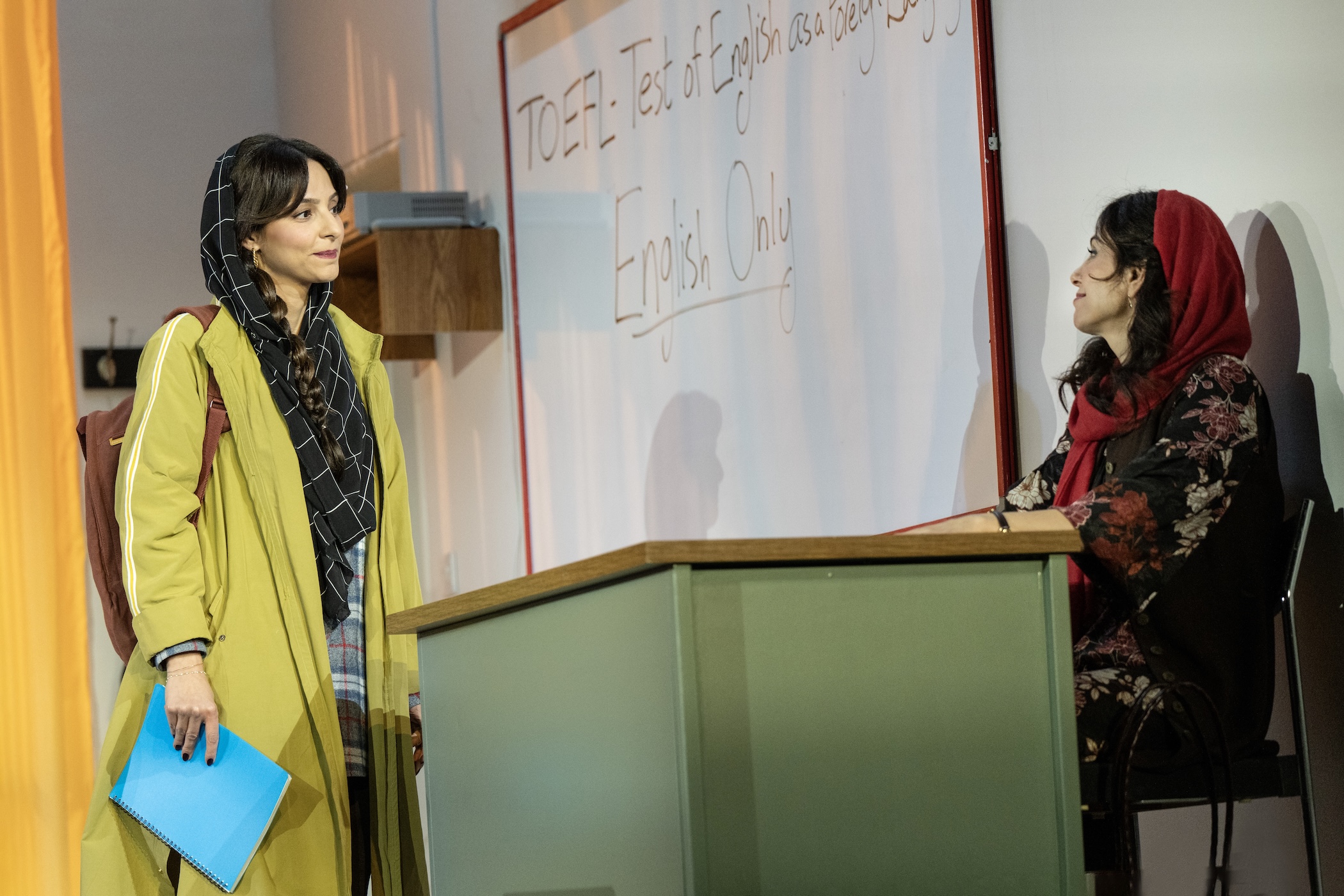
Although the play deals with questions of migration and identity, it also contains moments of humor and everyday warmth. How does the cast maintain that balance between comedy and emotional vulnerability?
Ashe: We have really been led by Sanaz (our playwright) and Knud (our director) in honing this balance and tone. I think we all instinctually and culturally understand that humor is critical, especially when you are navigating difficult situations. For me, laughter and tears live very close to each other in this play, and in life.
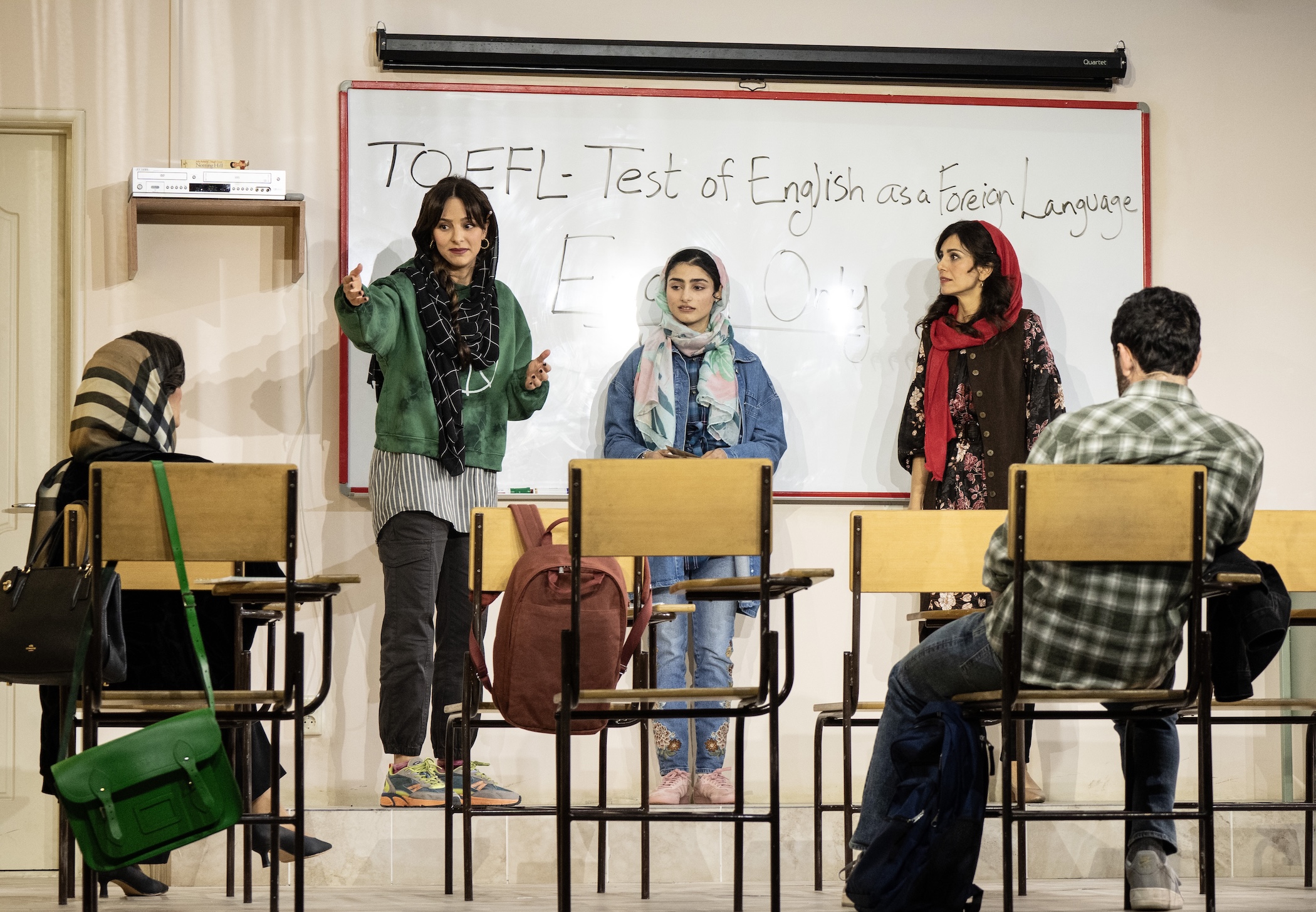
Much of the story unfolds through classroom exercises and group interactions. What has the rehearsal process revealed about the ensemble dynamic among the characters?
Ashe: This is the third time we’re doing this show and each time it has deepened and felt surprisingly different. Getting to explore Sanaz’s incredible script with this group of people has been the joy and privilege of my career.
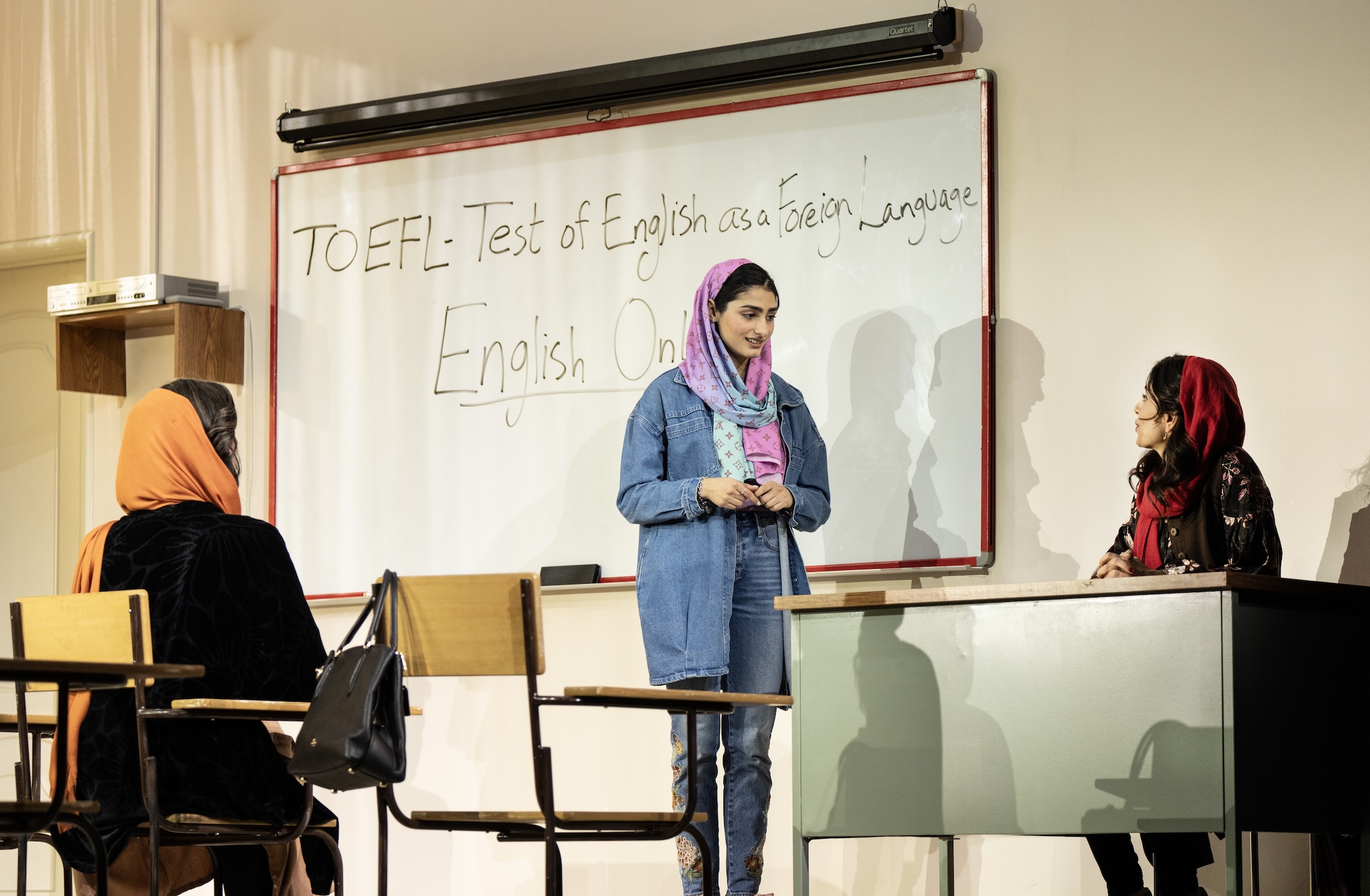
The characters believe learning English may open doors to new opportunities, yet the play also suggests something personal might be lost in the process. How do you see your character navigating that tension?
Ashe: My character, Elham, is deeply struggling with this. She has huge ambitions and it breaks her heart (and frustrates her immensely), that in order to pursue them, she needs to first, learn English, and second, emigrate — leaving behind everything and everyone that she loves. This dilemma is something that many immigrants grapple with.
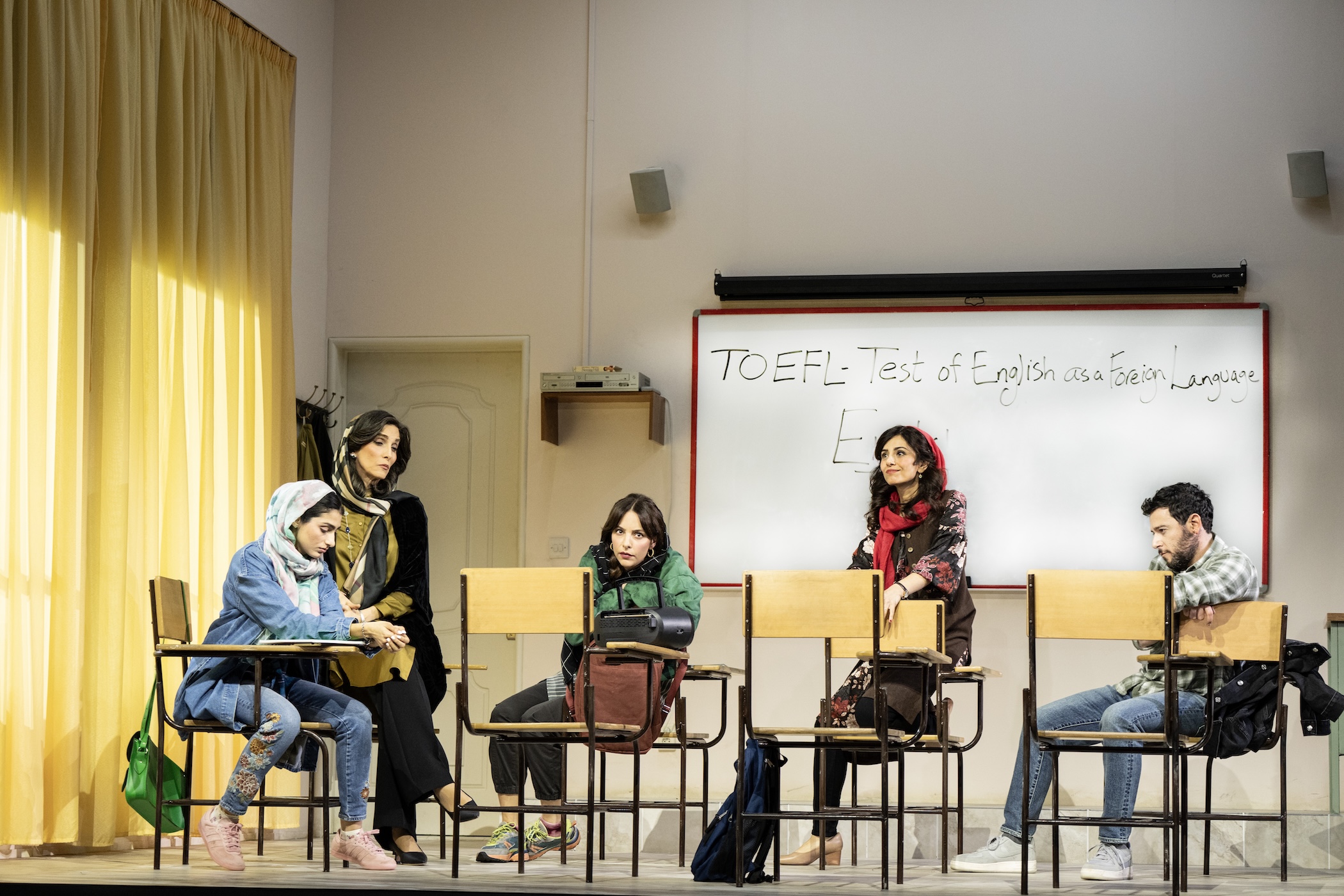
Los Angeles is one of the most linguistically and culturally diverse cities in the world. What conversations do you hope this play sparks among audiences here?
Ashe: The play asks that you look beyond the assumptions you may make when you hear someone with an accent — that impatience towards someone struggling with English and to acknowledge not only the effort (which should be lauded), but also to remember the simple fact that person has a whole universe inside of them, no different than your own.
Cover image caption: Tala Ashe (center) with the cast of English in the Roundabout Theatre Company production. Photo is courtesy of Joan Marcus.
Sanaz Toossi’s English runs at the Wallis Annenberg Center for the Performing Arts through Sunday, April 26th. For tickets and further information, visit thewallis.org.


