East West Players closes its 60th Anniversary Diamond Legacy season with the world premiere of playwright David Henry Hwang’s newly updated 2026 book for Rodgers and Hammerstein’s Flower Drum Song. Directed by East West Players Artistic Director Lily Tung Crystal, the ongoing production runs through May 31st at the Japanese American Cultural & Community Center’s Aratani Theatre in Little Tokyo — the final production before the 880-seat venue sees significant refurbishments.
The musical itself carries a complicated and influential history. When Flower Drum Song premiered on Broadway in 1958, it was one of the first major American musicals centered on Asian and Asian American characters, yet its portrayal of Chinese American life has long prompted debate about representation and authorship. More than four decades later in the early aughts, Hwang — the Tony Award–winning playwright of M. Butterfly — revisited the work with a new book that reexamined the narrative from a contemporary Asian American perspective.
Rather than simply reviving the original script, Hwang reshaped the musical while preserving Rodgers and Hammerstein’s celebrated score. His adaptation reframes the story around themes of immigration, acculturation, and generational identity, restoring elements from C.Y. Lee’s original novel while deepening the emotional lives of its characters. The 2026 revision continues that process, refining the story for a new moment and a new audience.
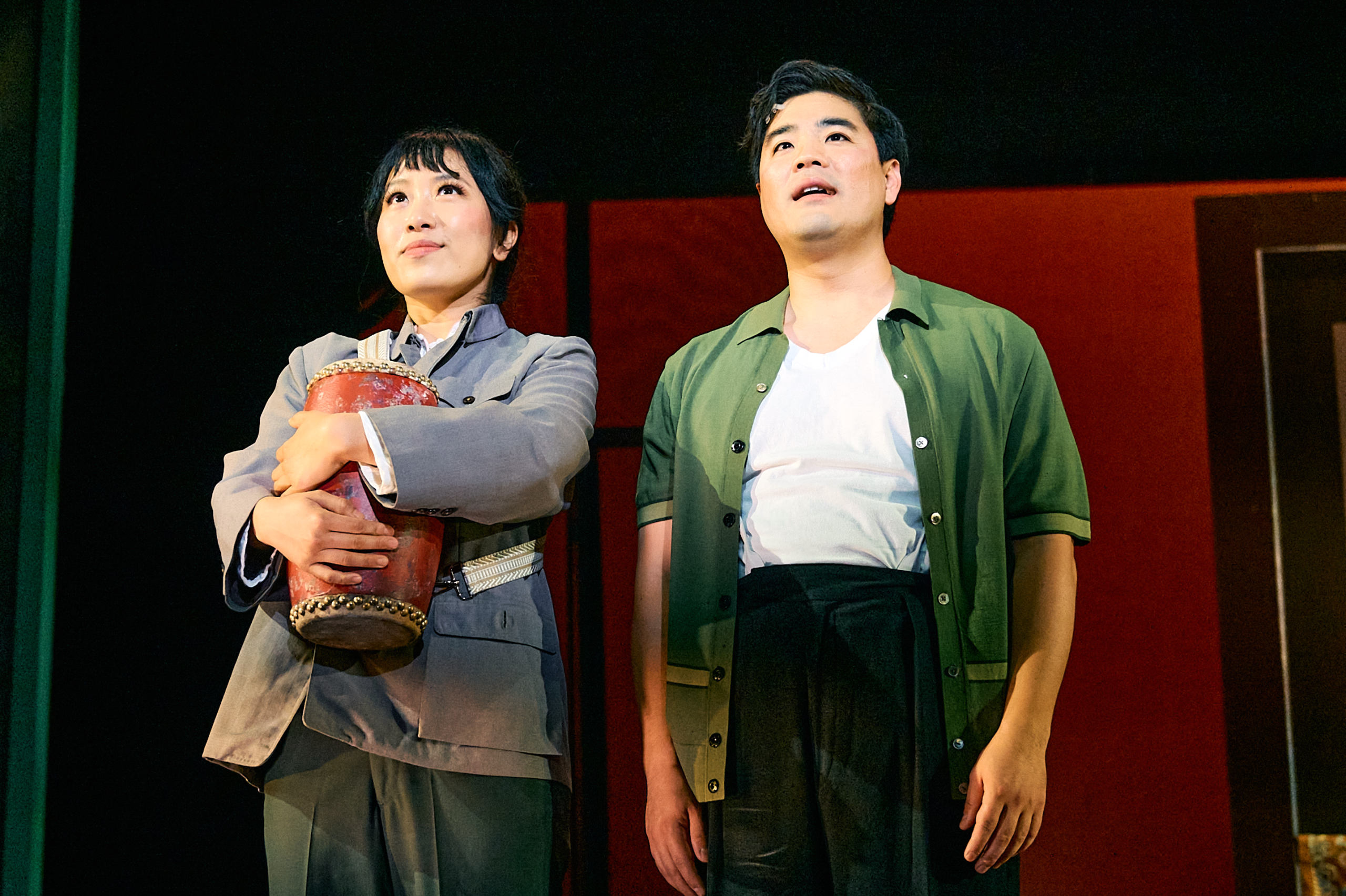
Set in 1960s San Francisco Chinatown, the musical follows Mei-Li, a Chinese opera performer who arrives in America after fleeing Communist China. As she enters the bustling nightlife of Grant Avenue’s clubs and restaurants, the characters around her grapple with questions of belonging, cultural preservation, and the promise — and pressure — of assimilation.
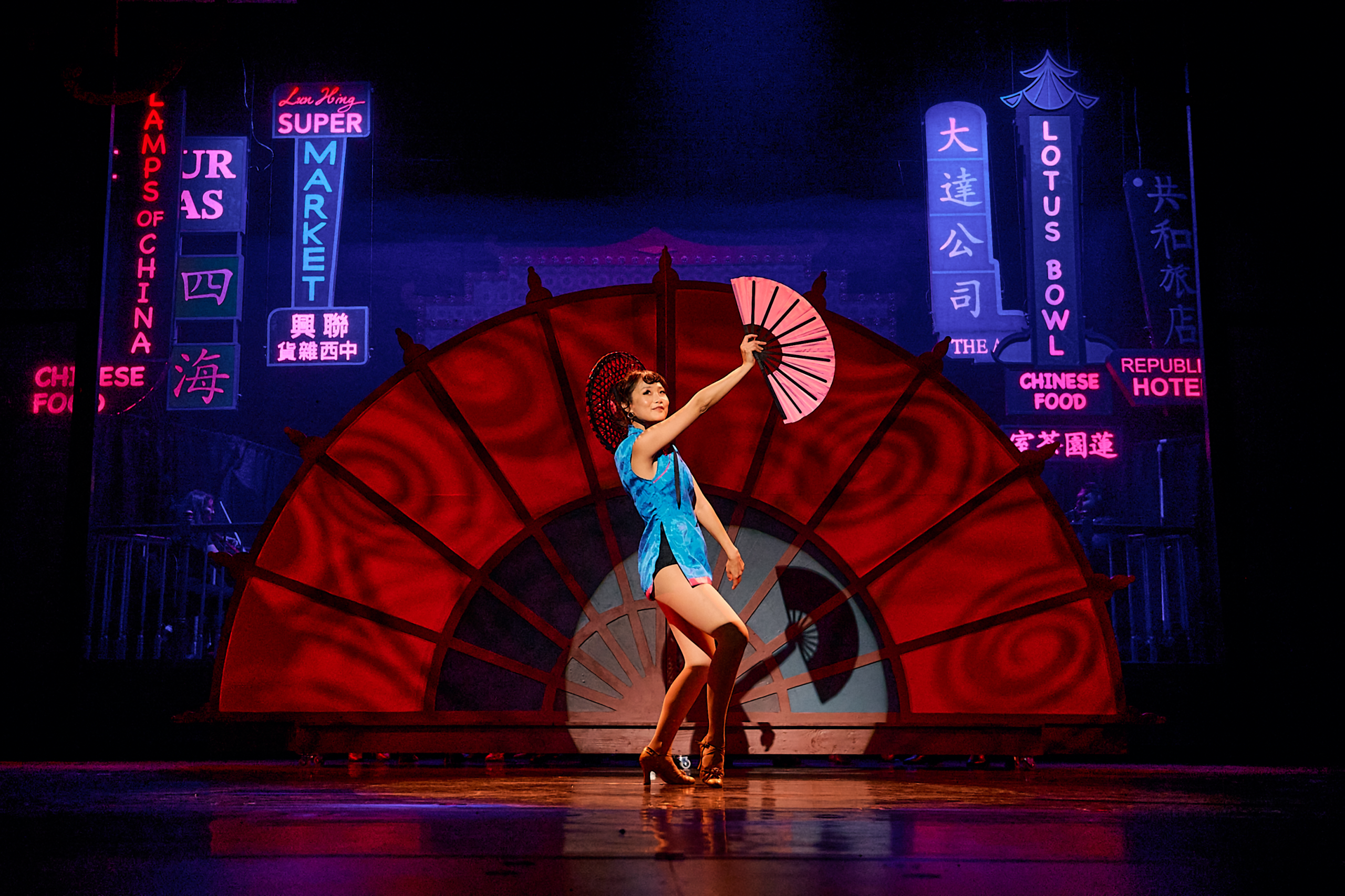
The production brings together a cast that includes Grace Yoo as Mei-Li, Emily Kuroda as Madame Liang, Marc Oka as Wang, Scott Keiji Takeda as Da, and Gedde Watanabe as Chin, with Krista Marie Yu as Linda Low, Kenton Chen as Harvard, and Cooper Bennett as Chao.
For East West Players, the nation’s longest-running Asian American theatre, this show carries particular resonance as an ancestral homecoming of sorts. Staging Hwang’s latest version of Flower Drum Song at the Aratani Theatre places a historically significant musical in dialogue with the artists and communities whose stories it seeks to represent.
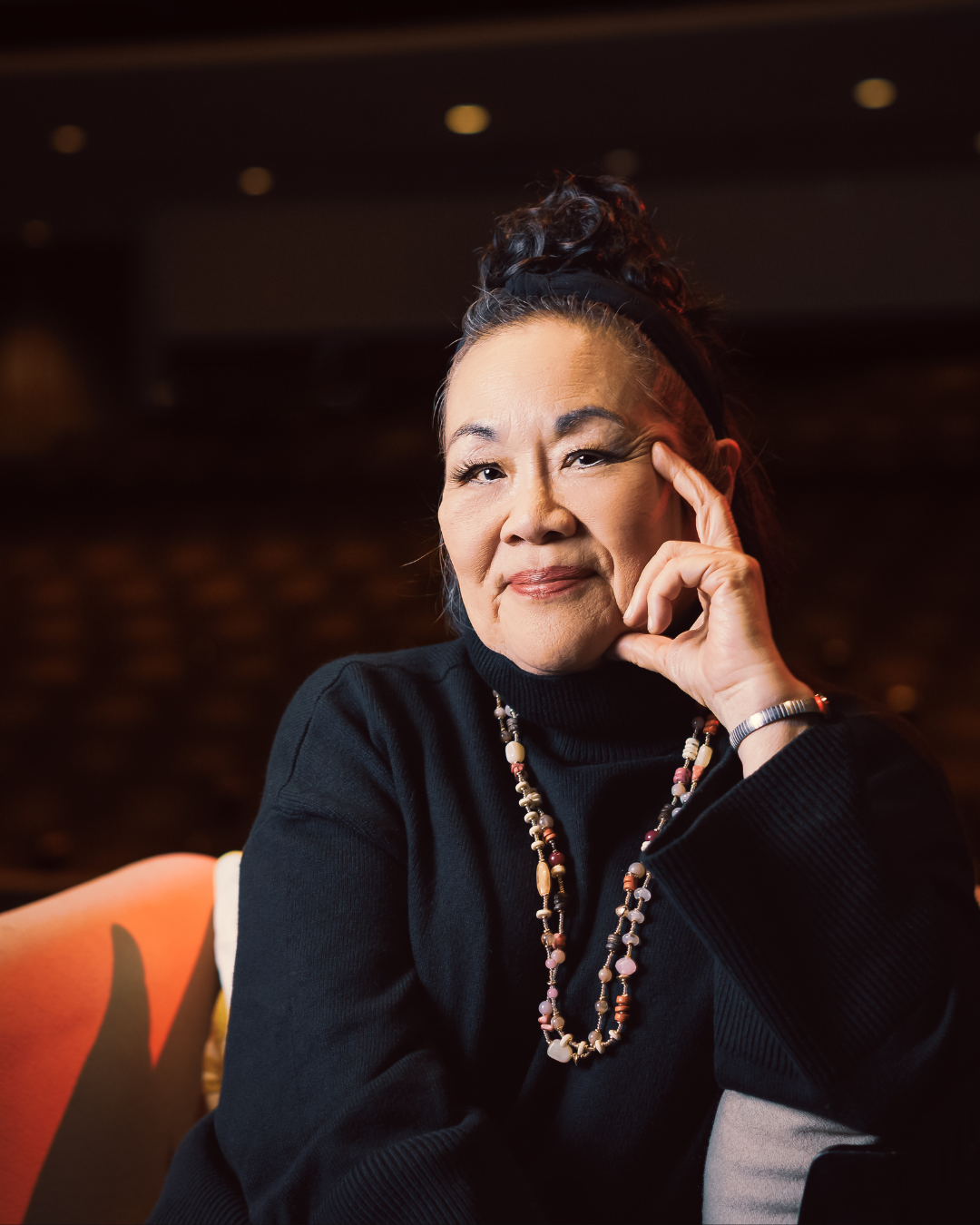
LAexcites recently spoke with Emily Kuroda, who, in addition to being most popularly known for starring in 42 episodes of Gilmore Girls as Mrs. Kim, has been an East West Players staple for years. She discussed the meaning behind this highly underrated musical, her savvy talent-agent character, and bringing Hwang’s newly updated rendition to the stage.
Flower Drum Song has a long and sometimes complicated history in American musical theatre. What drew you to this new production and to David Henry Hwang’s reimagined version of the story?
Kuroda: I’ve been with East West Players since 1978; I always enjoy working at EWP. I’ve known David since he was young — I’ve done a number of his shows, so it’s a chance to work with my friends on a piece that’s very important to me. I did [Flower Drum Song] before 40 years ago in San Francisco, but then I played Mei-Li. Now I’m playing the old hag, which is fine, too [laughs]. This is an opportunity to do art with the people I love. The cast is top-notch, so it’s an honor to work collectively with them. It’s very exciting in the room.
Having worked on stage and on screen for many years, what differences do you notice in making a character feel authentic in one medium versus the other?
Kuroda: There’s really no difference. Sometimes for the stage, you amplify the externals maybe — like a gesture, especially at the Aratani, an 800-seat house. I’ve worked in 20-seat theatres to 3,000-seaters and you adjust your body language to fit the space. When you work in film and TV often, because it’s so intimate, especially the close-ups, you tone down the exterior motions and movements. But the core is the same — it’s the same truth.
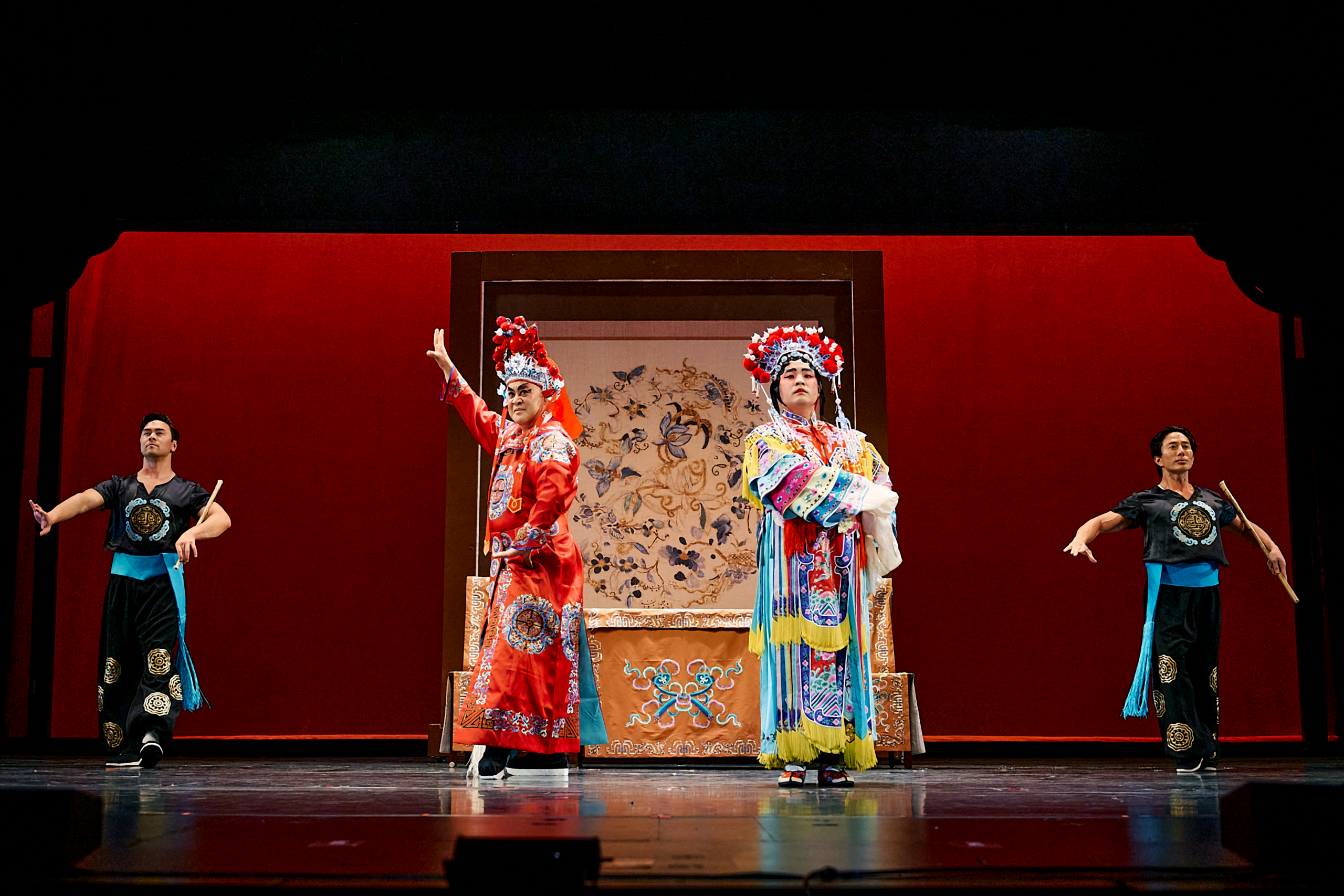
Hwang’s revised book reframes the musical through a contemporary Asian American perspective while preserving Rodgers and Hammerstein’s score. How does that shift influence the way you approach Madame Liang as someone navigating both tradition and change?
Kuroda: Yeah, it’s really hard in doing a musical like this in trying to infuse depth into characters, but I think we are encouraged to think about each character’s backstory, which isn’t necessarily pleasant as it’s set in the ’60s. My character lived through injustice, hatred, and so on.
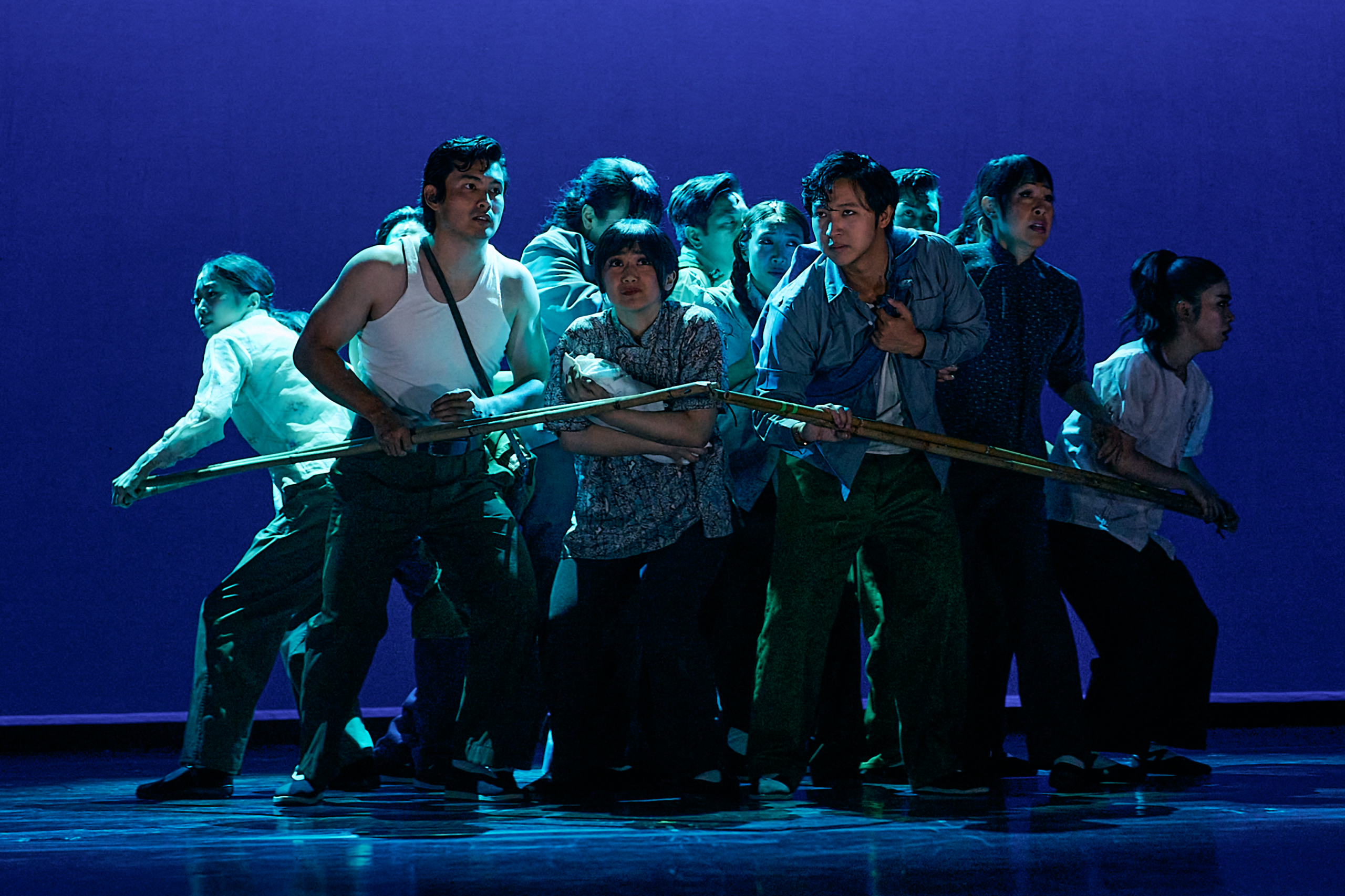
Instead of doing a musical about just Chinatown and Grant Avenue, this play refers to the Chinese Cultural Revolution which brought people here. We’re, as actors, incorporating that into our backstories of where our parents/ancestors came from and being shipped into doing grunt work, doing dangerous work, not being allowed to buy property, and the Chinese Exclusion Act (of 1882). While the play only discusses the Cultural Revolution, we’re incorporating the other injustices, as actors, into our backstories. So, I’m hoping that this [version] has the weight of our history in America underneath it.
We thank our ancestors at the end. We’re not just celebrating Chinatown but our communities, struggles, and strengths. So, it’s more than just a happy end to a happy musical; it’s a celebration of our culture and that we’re survivors. That’s a statement we’re making with this show that we didn’t make with the earlier versions.
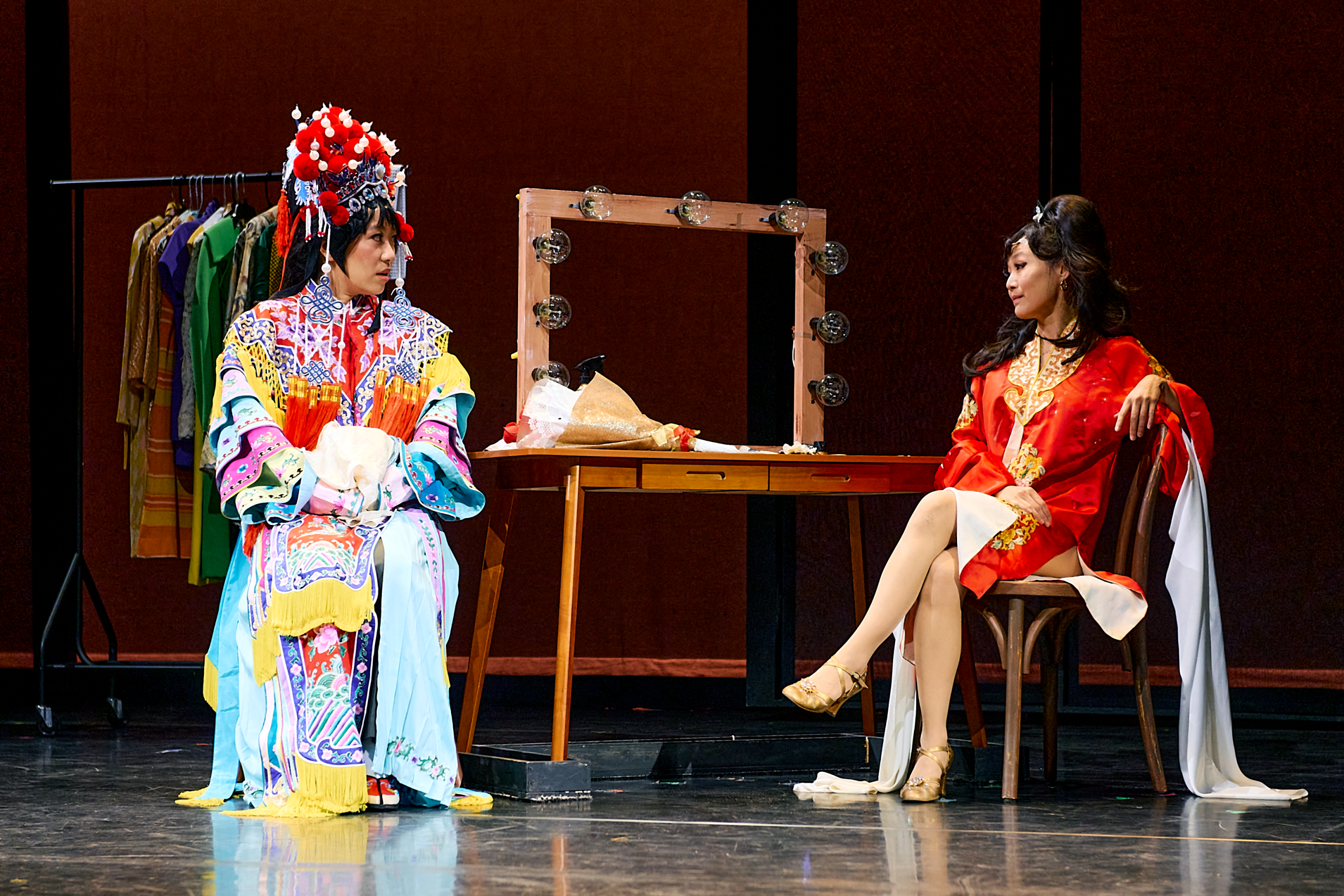
The story takes place in 1960s San Francisco Chinatown but explores themes that still resonate today. How do ideas of identity, assimilation, and cultural belonging surface in your performance?
Kuroda: I think [Madame Liang] comes off as a stereotypical tough cookie, but I think it comes from what she had to do to survive. She’s not only Chinese American but she’s a woman. And nobody took women seriously women back then. She’s a single woman trying to make it into this world. That’s where all the bravado and armor she has comes from — and it works as she’s an excellent businesswoman. It covers her real self which doesn’t come out until the end. She’s a traditionalist; she loves the Chinese culture and needs to have the connection with her past and her ancestors, but that makes her look weak to the Western world, so she puts on this armor to be tough — and she succeeds with that armor. But at the end, she lets her guard down and shows her true self.
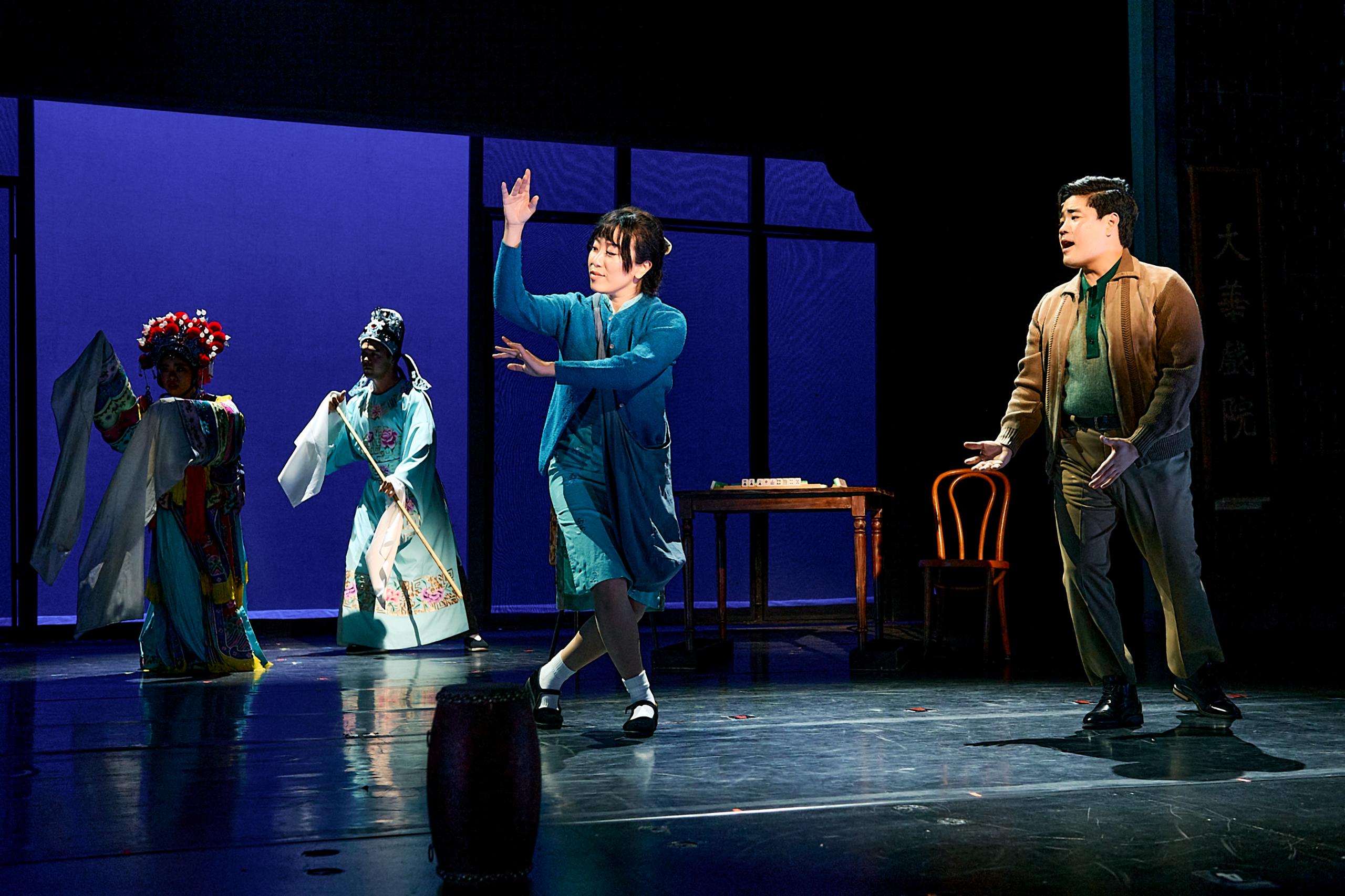
What does it mean to you to be part of this production during East West Players’ 60th anniversary season?
Kuroda: I’m very proud to be part of this production along with my favorite people. Gedde [Watanabe] and I go way back as we did a series (Gung Ho) for ABC in 1986. Gedde was the star, it lasted for a year, and that’s the first time we worked together. Now, here we are in 2026, 40 years later [laughs], but since then we’ve worked many times together. It’s an honor.
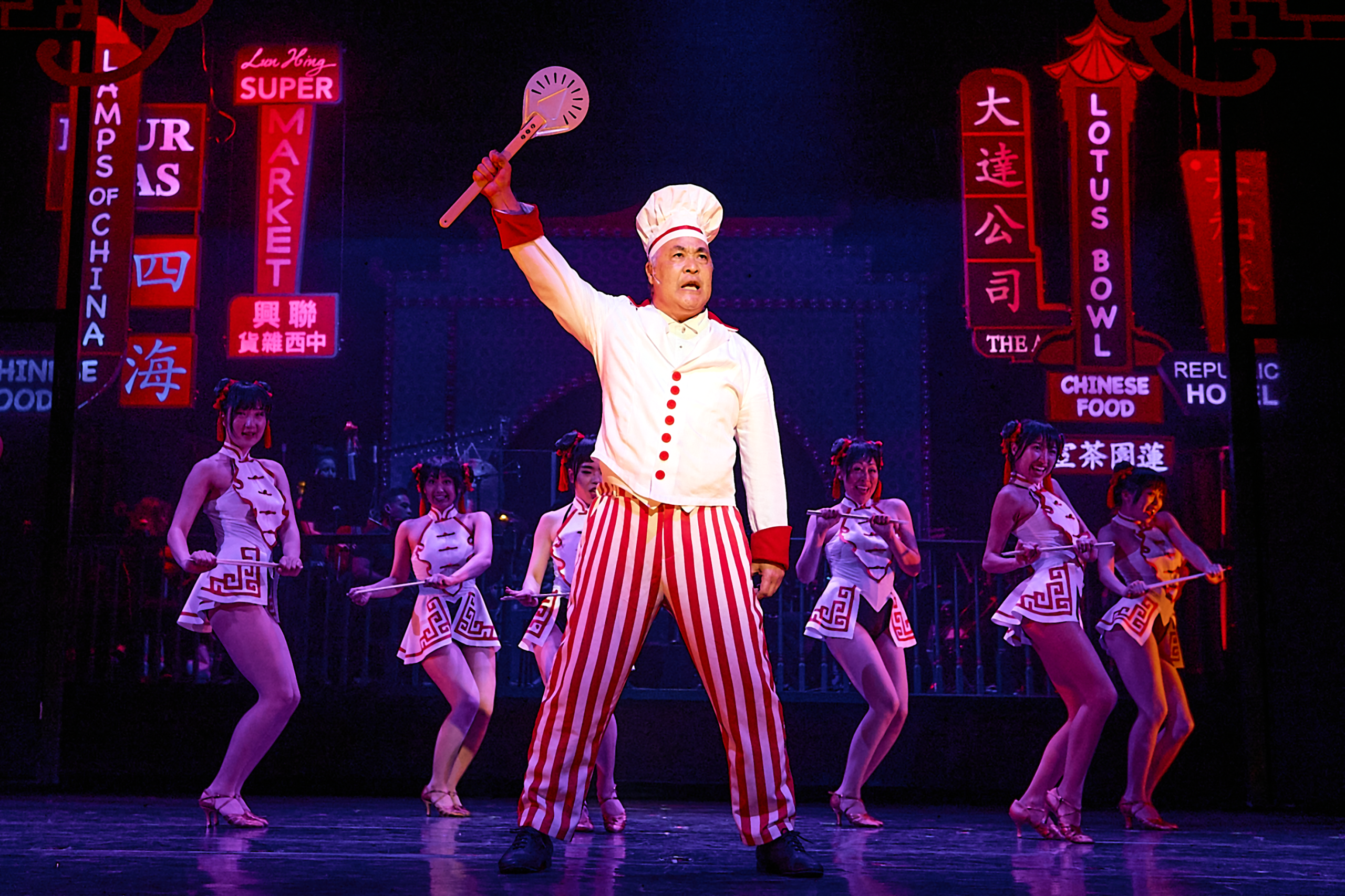
Rodgers and Hammerstein’s songs remain an essential part of the show. In your experience so far, how does the production balance honoring that classic score while trying to convey something a little more contemporaneous?
Kuroda: I think David [Henry Hwang] did a great job — the songs are the same, although we updated some lines. Many will come for the reason that they love the songs. We kept most of it the same. Mei-Li sings “Love Look Away” (a song which previously belonged to the character of Helen who has been removed from Hwang’s updated book). David gave [Mei-Li] a great arc. Now it’s part of [Mei-Li’s] storyline and it’s much more effective. And Grace Yoo is amazing. I think I saw her in Hadestown first on Broadway, then Soft Power in New York. She’s originally an L.A. gal.
Los Angeles, which is exploring more Asian American stories on stage, has some of the most dedicated patrons in the country. What conversations do you hope this production sparks among audiences here?
Kuroda: Not everyone is going to get it, and that’s okay. Tickets will be on TodayTix, which will make the show more affordable for younger people hoping to attend. I’m hoping young groups, not used to coming to the theatre, will come out and support. Those who see it can come away thinking it’s a fun evening, or take away the historical points, or about racism and stereotypes. People will take away what they need to hear, and everyone will be different, but everyone will get something out of the show.
Cover image caption: Left to right are Kenton Chen, Krista Marie Yu, Marc Oka, Gedde Watanabe, and Emily Kuroda in Rodgers and Hammerstein’s Flower Drum Song, produced by East West Players and the Japanese American Cultural and Community Center. Photo is by Mike Palma.
East West Players’ production of Flower Drum Song runs through Sunday, May 31st. The Aratani Theatre is located at 244 South San Pedro St. Los Angeles, CA 90012. For tickets and more information, visit eastwestplayers.org.


My names is Monte James I have been a resident here in San Francisco from 2000/2001 to present. I was pleased to read the New York Times art article yesterday regarding the East West Players revival of David Henry Hwang’s “FLOWER DROM SONG”. The theater production running now May 1, through the end of May.
I represented Oakland born Chinese American watercolor artist Dong Kingman from the mid-1990’s until he passed away in 2000.Among Kingman’s many achievements were the original opening and closing film titles for “55 Days in Peiking”, “King Rat”, and “FLOWER DRUM SONG”. I was pleased to arrange placing the film art in the Academy Motion Pictures archives when Kingman Passed. The Academy hosted a reception in 2000 which was attended by Flower Drum film star Nancy Kwan (Linda Low}. I became acquainted with Ms. Kwan and later was pleased to assist with her life documentary. I do have some Drum Song film related art and correspondence which I will attempt to make available for public to see this month during the current production.
Since 1997 until recently, I have kept residence between San Francisco, Hong Kong and Beijing and continue to be involved in international Asian art and entertainment.
I was very pleased to see your coverage of the Henry Hwang Flower Drum revival. If you know anyone related to the production, I would be happy if they want to be in touch.
Oh, good for you and thanks for the comment ! I very much enjoyed the 2002 FDS revival in L.A., but didn’t catch this show until closing day in L.A., because in my mind I was too familiar w/ the 2002 revival….for some reason I discounted the importance of this update and in my mind considered the 2002 show very recent. (time flies, but my mind didn’t.) So I regretted that I didn’t see this show sooner once I saw closing day’s perf. No chance to see it again. Changes that I didn’t like: lyrics in Grant Avenue….”the girl who serves you all your food is another tasty dish…” But in this show it became: “the girls and boys who serve your food will fulfill your every wish.” My guess is they figured it’s too sexist, but it didn’t make sense to change the lyrics because they also added a gay curtain raiser after the show about “the Queen of Grant Avenue” which had the gay character Harvard doing a ridiculous and demeaning perf. in drag. WTF ?? That seems disingenuous to me. A simple lyric line changed because it might be sexist, and then they cast a gay guy cross dressing as the most demeaning reprsenatation of homos (much like casting blacks years ago as Stepinfetchit.)