Before a single note is sung or a razor is raised, La Mirada Theatre for the Performing Arts and McCoy Rigby Entertainment’s production of Sweeney Todd: The Demon Barber of Fleet Street, directed by Seinfeld‘s Jason Alexander, has already made a decision: you are not simply watching a 19th century story about brooding madness in London — you are becoming enthrallingly immersed in its murky shadows.
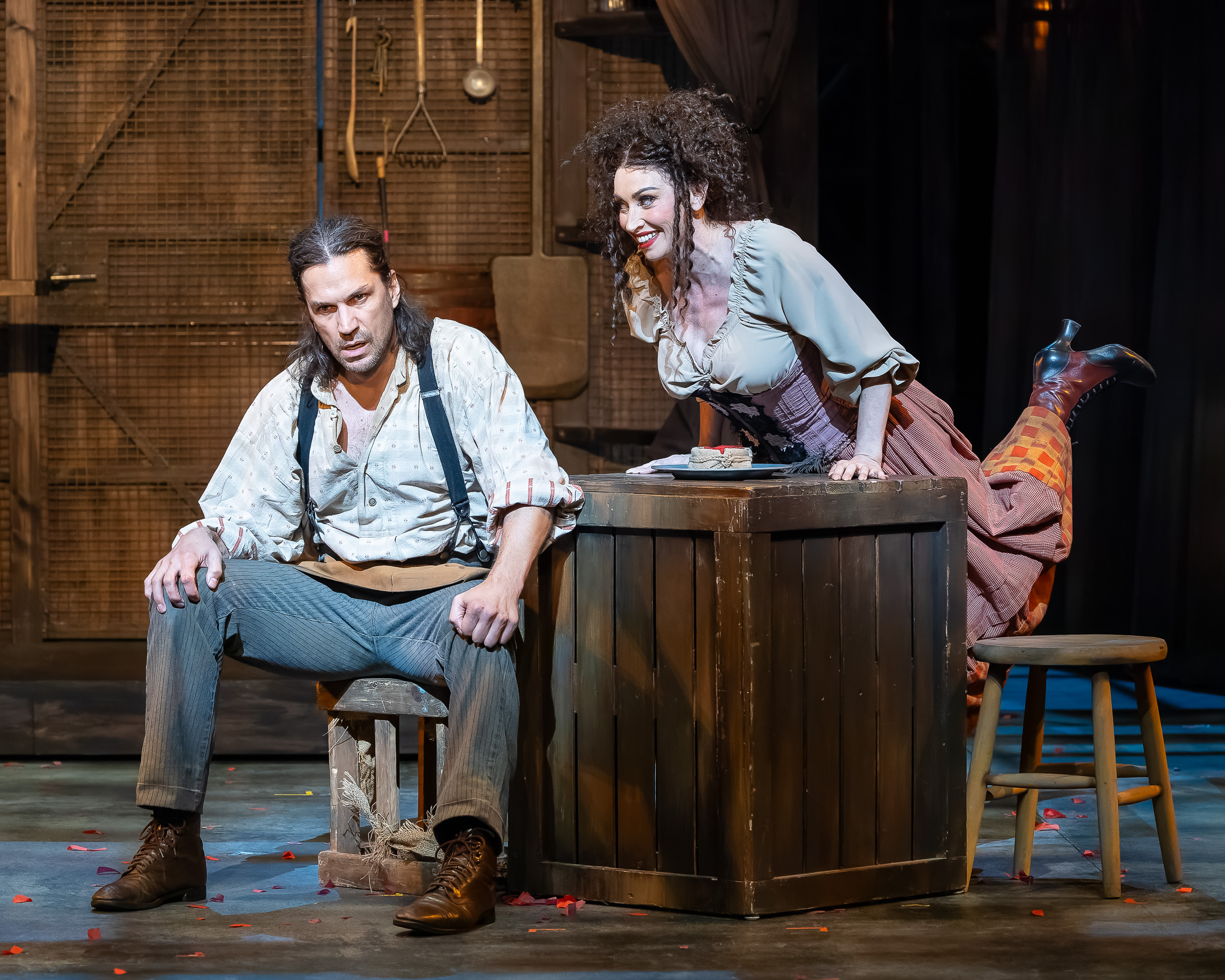
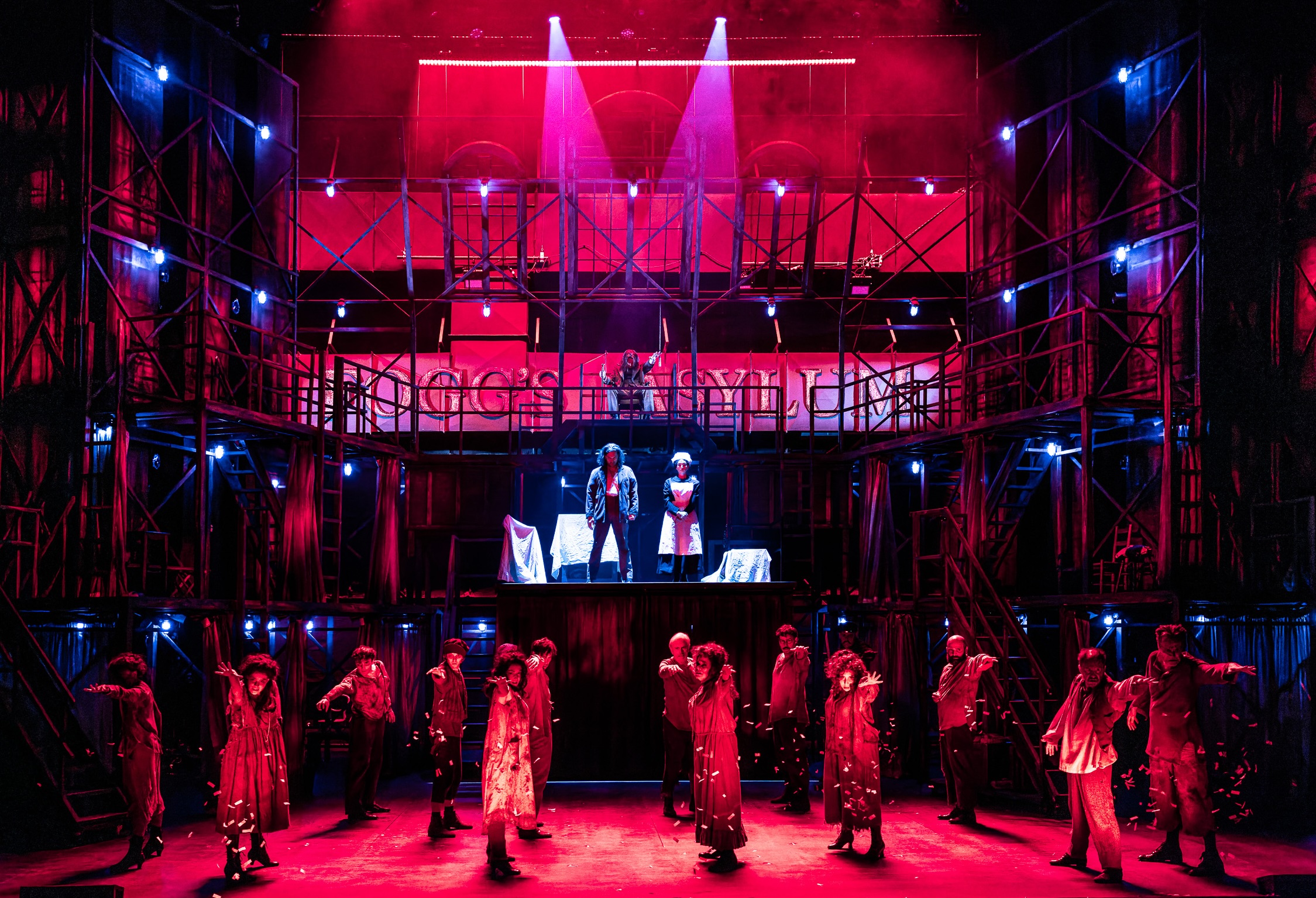
At La Mirada Theatre, this revival of Stephen Sondheim and Hugh Wheeler’s masterpiece doesn’t wait for the curtain to go up to establish its world, which decides that Fogg’s Asylum, though only appearing briefly in the script, becomes the focal point. As Alexander himself said in a social-media promo for the show: “What if it all took place in that asylum, and was performed by the inmates in that asylum?” That idea acts as a conceptual reframe that recasts Sondheim’s grand classic with a novel touch, captured in all its vengeful glory alongside two big Broadway stars in Will Swenson (Sweeney Todd) and Lesli Margherita (Mrs. Lovett) who anchor the raving imaginings (or perhaps recollections) of its bloodthirsty, titular protagonist. This all adds up to an experience that feels like a massive, can’t-miss event on the level with anything the Ahmanson or Pantages has offered in recent memory.
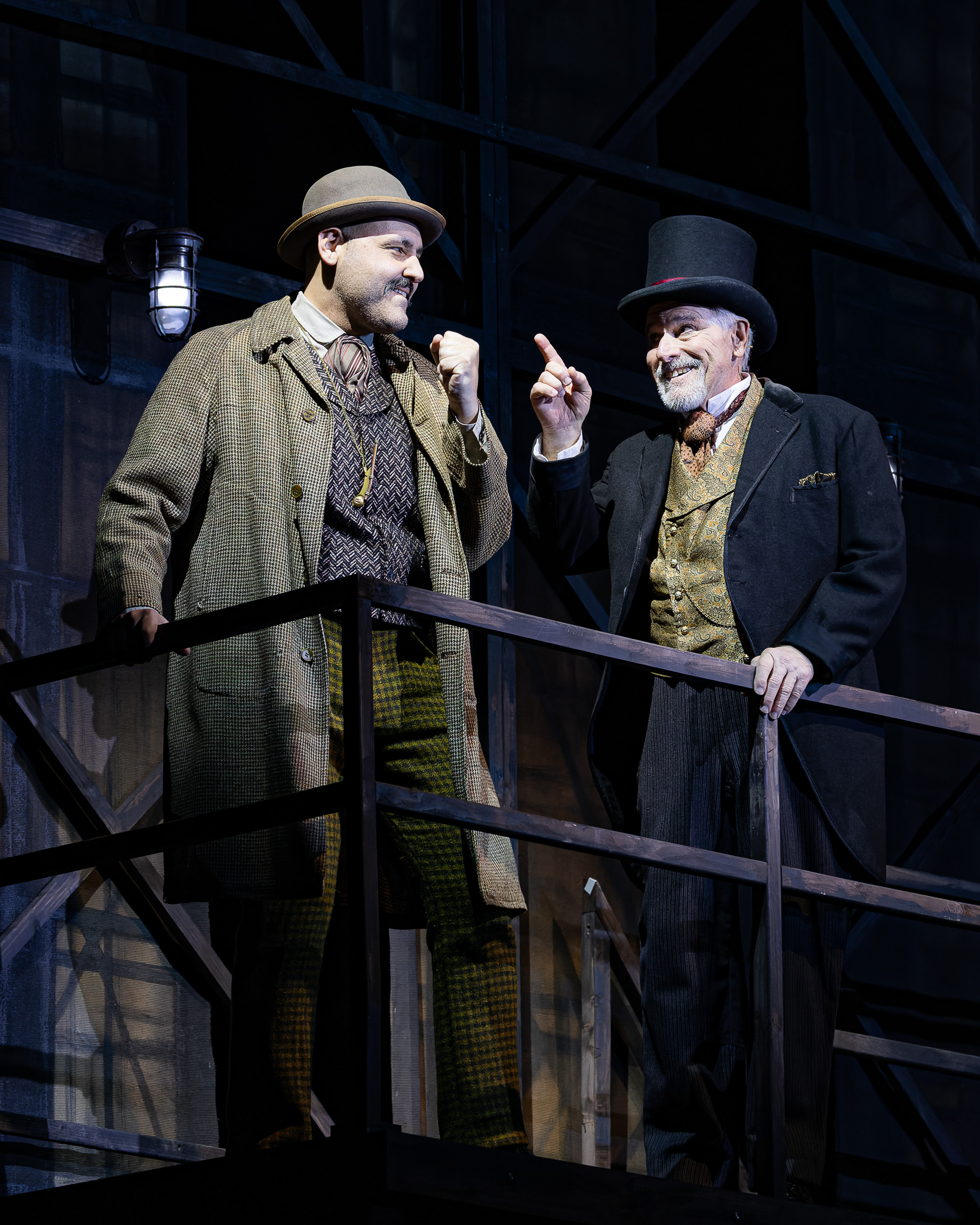
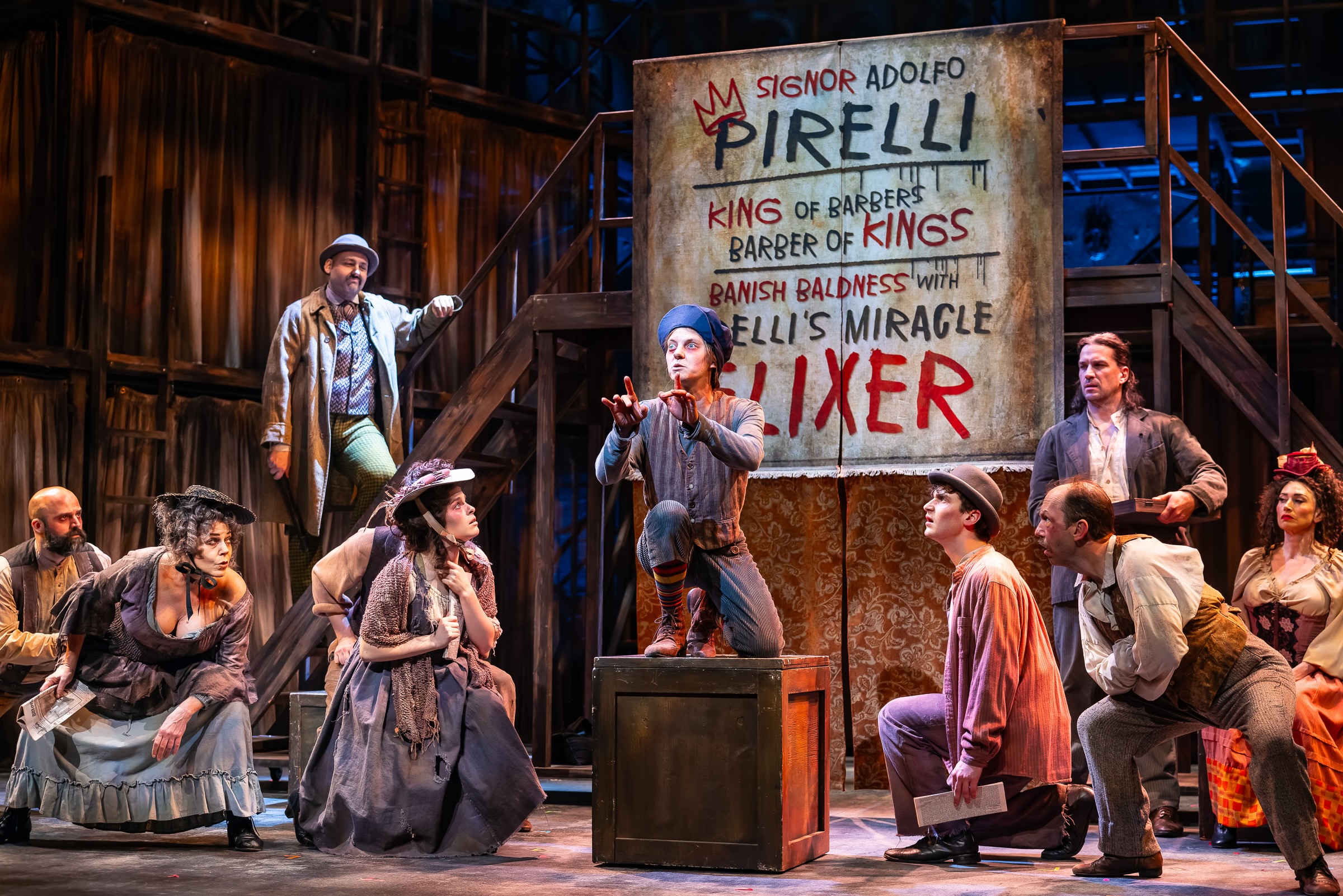
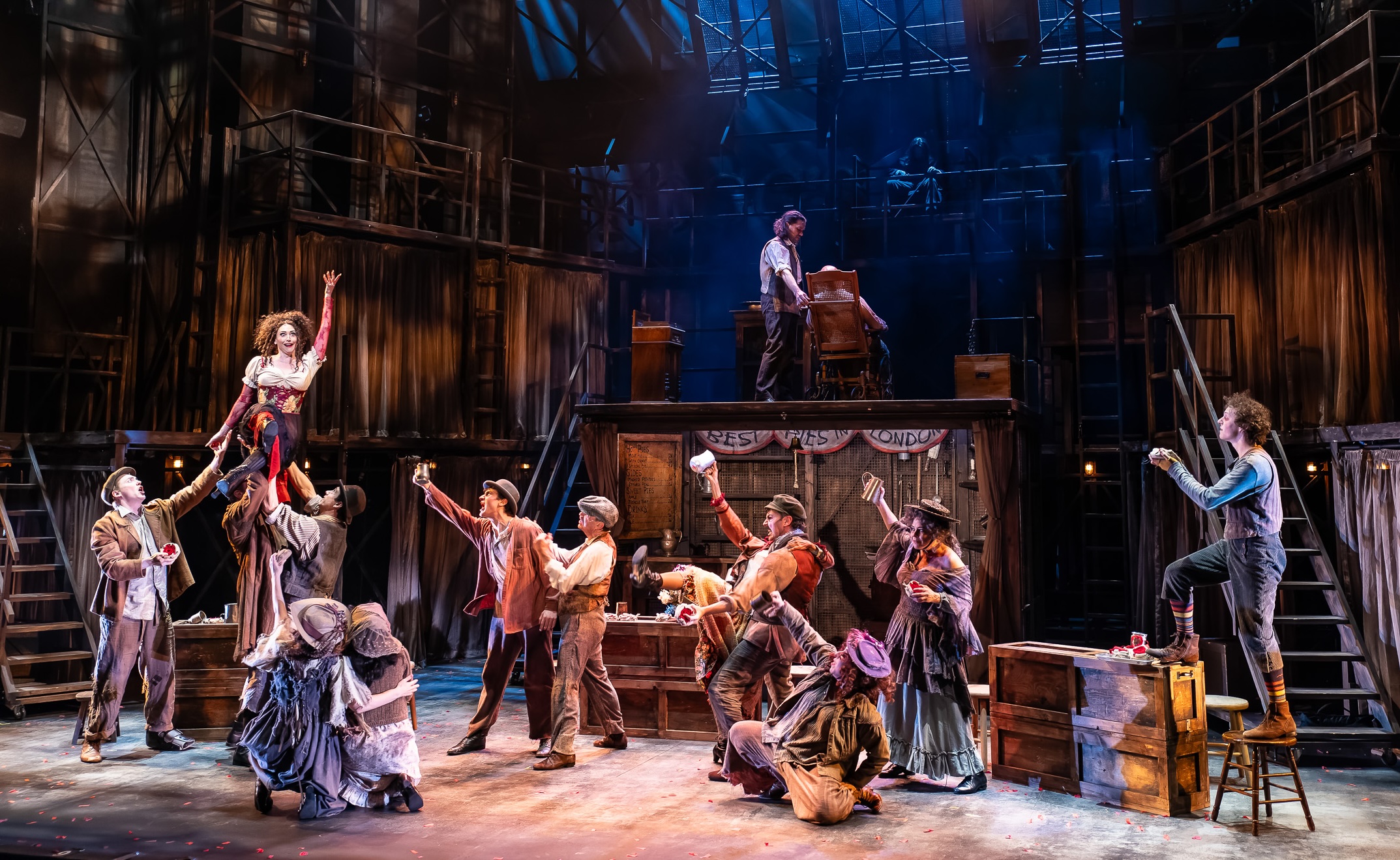
Here, Fogg’s Asylum, rendered almost exclusively by wood and curtains on a massive, three-level scale by scenic designer Paul Tate dePOO III, amplifies the oftentimes emotionally unhinged proceedings. And yet — crucially — Alexander, who familiarized himself with the La Mirada space during the universally loved Fiddler on the Roof in fall 2024, is conscientious about having the concept serve the story, and vice versa, such that the audience finds itself increasingly sympathetic to the idea of revenge, following an egregious injustice, particularly when it’s learned that Todd is exiled 15 years for a crime falsely concocted to sate the lust of the depraved Judge Turpin who, usually accompanied by the similarly corrupt Beadle Bamford, not only rapes Todd’s wife Lucy but subsequently adopts the anguished couple’s daughter Johanna whom he then sickeningly wants to marry.
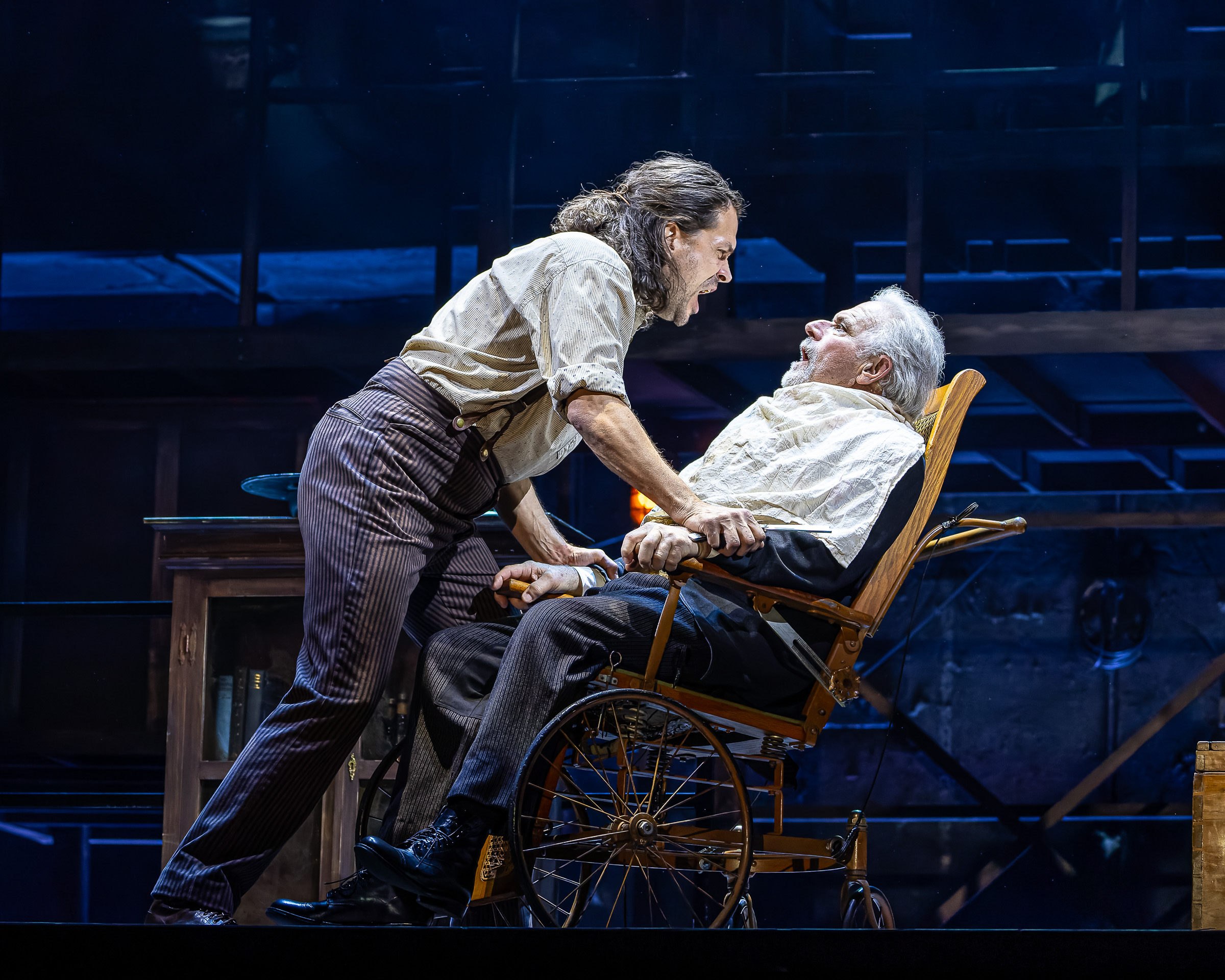
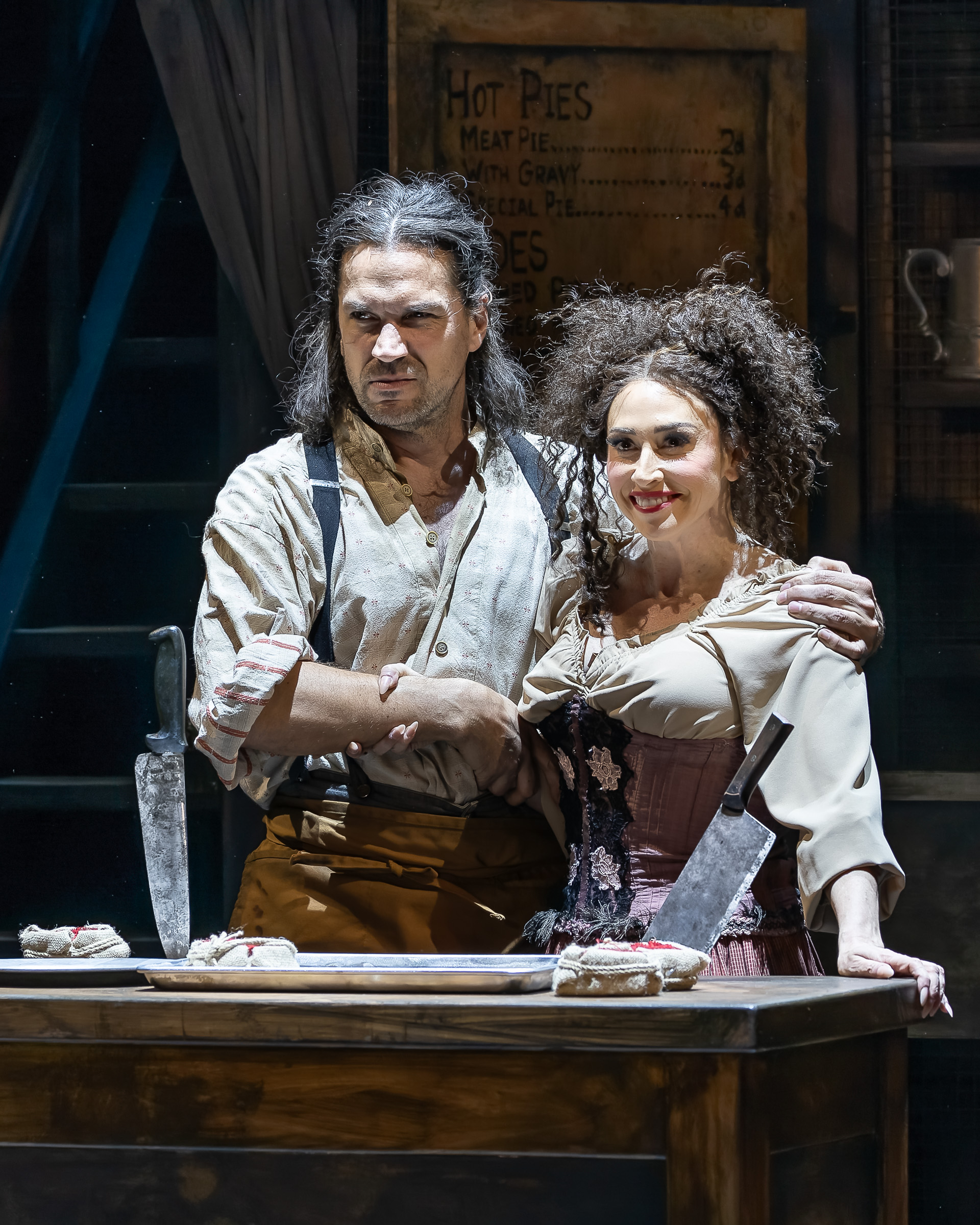
As easy as it would be to be a fiercely determined monster in kind out of the gate, Will Swenson’s long and scraggly-haired Sweeney is a tormented man, hollowed out by loss, driven by a grief so concentrated it coagulates into a distinct purpose. Swenson sings Sondheim’s demanding score with power and clarity, but more importantly, he plays the long emotional game: you can see the humanity still flickering behind the eyes, which makes its eventual extinction all the more chilling. His descent doesn’t feel theatrical, but rather inevitable, reaching a mesmerizing fever pitch in the explosive and goosebumps-inciting “Epiphany.”
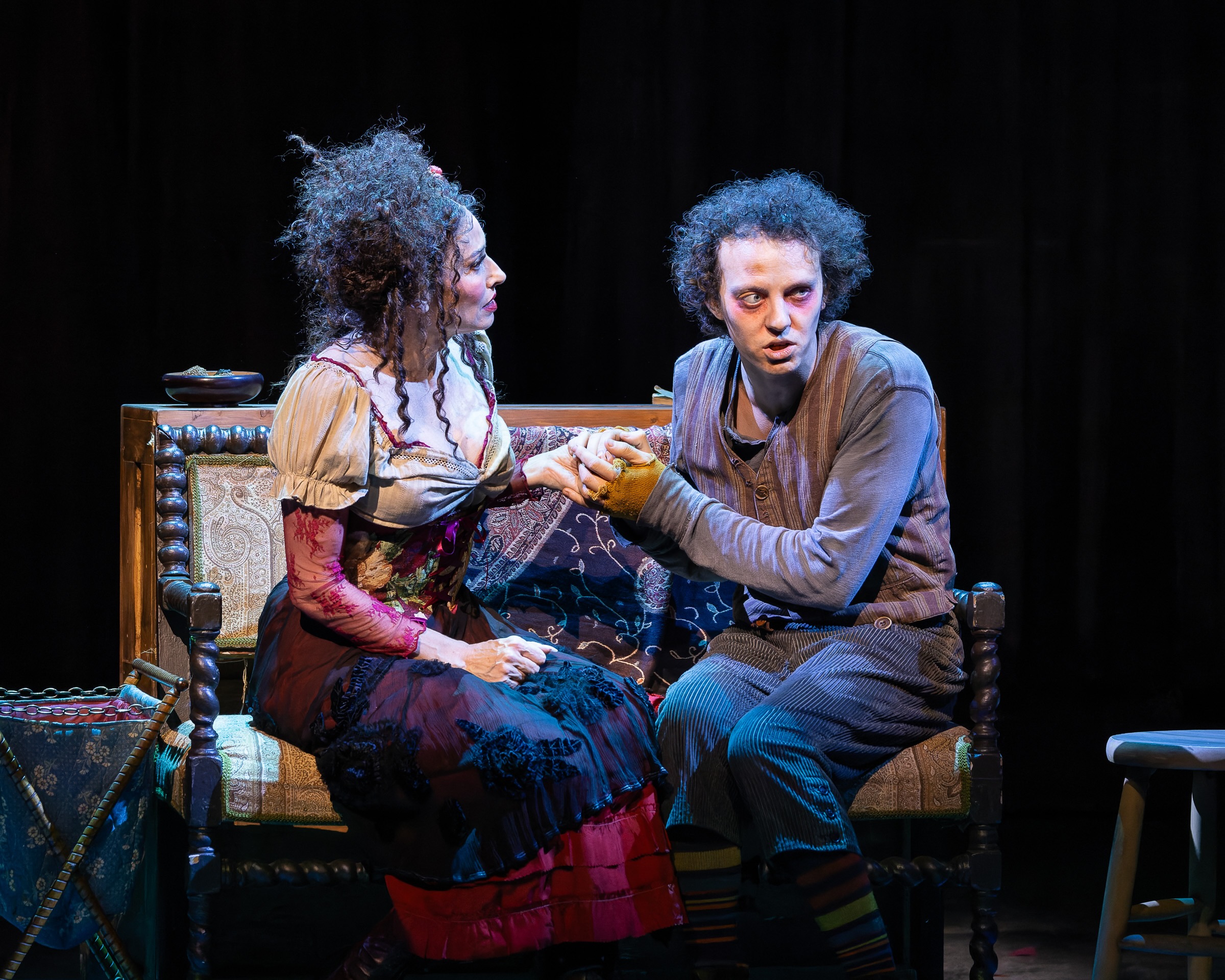
Opposite him, Lesli Margherita’s Mrs. Lovett is a revelation because it does more than just play the hits, so to speak; instead, it goes beyond the script, elevated by playful mannerisms that are ingeniously sprinkled in by the performer’s fitting instincts. Margherita, who also digs into her tool box to affect an accent on par with her much-revered Mrs. Wormwood (from Matilda the Musical) has comic timing that is surgical (e.g., her seagull vocalizations in “By the Sea”) but also recognizably human — after all, Lovett is a survivor amidst the highly unideal confines of her milieu but she also understandingly yearns for signs of a requited love from her partner in meat-pie crimes: Todd.

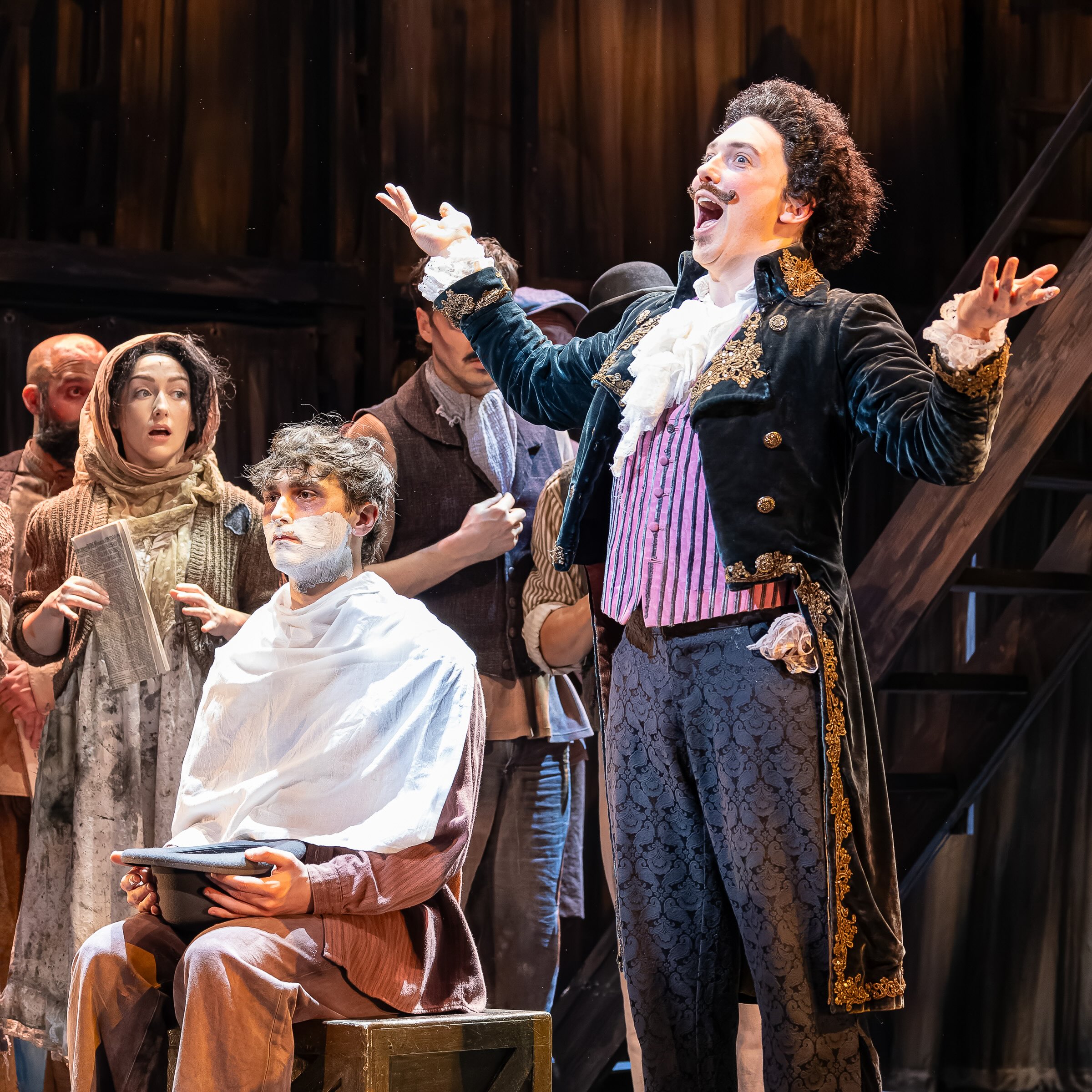
Around Swenson and Margherita, the supporting cast is uniformly strong. Norman Large’s Judge Turpin is repellent without devloving into cartoon villainy, while Nicholas Mongiardo-Cooper’s Beadle Bamford simmers as the self-satisfied and pompously tuneful public official. Andrew Polec’s humorously I-talian and “mustachioed” Pirelli, a certified pied piper when it comes to curing baldness, applying close shaves, and pulling rotten teeth, infuses the musical with ample doses of levity.
Moreover, Austyn Myers brings an appropriately naive and waif-like presence to Tobias — a puppy dog of a traumatized but moral character who is in perpetual need of a master to serve and be guided by. Meghan Andrews’s mysterious Beggar Woman is depicted with a certain distress and devastation that thrillingly resonates — especially upon final reveal — than other portrayals of the same role. Ryan Dietz capably materializes the sadistic nature of Jonas Fogg, the asylum’s proprietor, whose comeuppance can’t come soon enough.
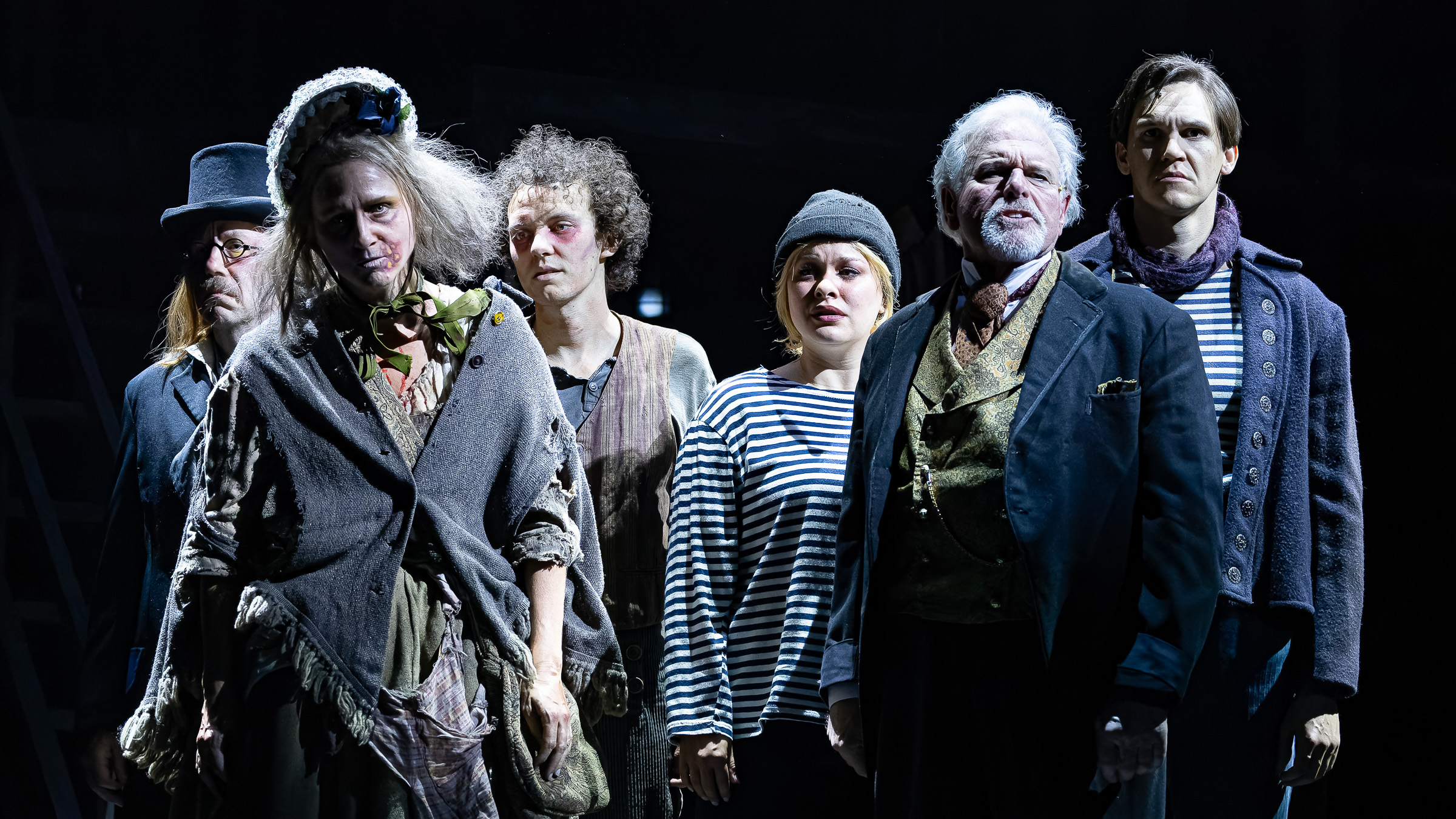
Where this production slightly falters is in the tepid chemistry between Chris Hunter, who realizes Anthony, the wide-eyed male sailor who rescues Sweeney from his plight, and Allison Sheppard who is the coming-of-age Johanna. Despite their indisputable talents — for instance, Sheppard shines with her operatic fragility and Hunter heart-wrenchingly emotes with the crowd-pleasing “Johanna” — the two aren’t entirely believeable as sudden star-crossed romantic partners. Some of this can be attributed to the fact that these characters are pigeonholed in the script, but the actors also don’t gel enough to give their wistful lyrics the immediate viscerality they deserve.
Music director Darryl Archibald keeps Sondheim’s intricate, punishing score tightly marshaled. This is not easy music, and Archibald and his orchestra handle it with confidence and clarity. Likewise, Lee Martino’s choreography works within the production’s claustrophobic frame, favoring agonized movements over spectacular dance sequences for characters seemingly trapped inside a loop they cannot escape.
Augmenting dePOO III’s stage creation is Jared A. Sayeg’s suspense-soaked and haunting red lighting spliced with a general dimness that feels oppresive, raw, and unstable. Jonathan A. Burke’s sound design booms, bellows, and shrieks with an epicness that envelops the plot. Kate Bergh’s costumes are well-worn, alternating between grimy and upstanding. Kaitlin Yagen’s hair, wig, and makeup all conspire to keep us slightly off-balance, artfully straddling the line between grotesque realism and flights of fantasy.

The question of whether this Sweeney Todd speaks to the invented projection of one’s inner demons, or a trauma being relived, allows the observer to wonder if the musical’s themes on violence, exploitation, and insatiable obsession are more institutionally systemic than mere blips along an otherwise normal continuum. The asylum isn’t just a setting; it’s a metaphor for a society that produces “undesirables” and then pretends to be shocked by them.
With an assist by Alexander’s deft and unwavering hand, which has us cleaving to an interpretation that feels all too natural, La Mirada Theatre and McCoy Rigby Entertainment have delivered on a Sweeney Todd that fulfills much of its foregoing hype. This revival is thoughtful without being preachy, bold without being reckless, and lifted by performances that cut deep, honoring the score’s complexities and the legacy of a world that resonates with even non-musical theater fans. This is a post-modern Shakespearean tragedy spliced with moments of laughter.
By the time the final notes of “The Ballad of Sweeney Todd” fade, this heady nightmare will have searingly entertained so much over two hours and forty-five minutes that attendees will be almost relucant to wake from it. This is a Sweeney Todd that not only invites us to peer past its most vulnerable layers via our mind’s eye, but righteously does its title character a true justice.
Cover image caption: Left to right are Lesli Margherita and Will Swenson in La Mirada Theatre for the Performing Arts and McCoy Rigby Entertainment’s production of Sweeney Todd: The Demon Barber of Fleet Street in La Mirada, CA. Photo credit: Jason Niedle/TETHOS.
La Mirada Theatre for the Performing Arts and McCoy Rigby Entertainment’s production of Sweeney Todd: The Demon Barber of Fleet Street runs through Sunday, February 22nd. For more information and tickets to the show, visit lamiradatheatre.com.

